


AC Installation in Deerfield Beach, FL

Replacing or installing a new air conditioning system is one of the most important investments you can make in your home in Deerfield Beach, FL. With long, hot, humid summers, frequent thunderstorms, and coastal salt exposure, the right AC installation not only delivers reliable comfort but also reduces energy bills, prevents moisture problems, and helps your system last longer. Koolflow Air brings experienced, local knowledge to every new air conditioning installation in Deerfield Beach, FL, focusing on accurate sizing, code compliance, corrosion resistance, and long-term performance.
Why a carefully managed AC installation matters in Deerfield Beach
Deerfield Beach homes face specific challenges that change how systems should be selected and installed:
- High cooling loads due to heat and humidity mean systems must control both temperature and moisture effectively.
- Coastal salt air accelerates corrosion on outdoor units and exposed components.
- Hurricane risk and wind-driven rain require secure mounting, elevated pads, and adherence to Florida Building Code requirements.
- Older homes often have ductwork or electrical limitations that must be assessed before choosing a new system.
A proper installation addresses these local realities so you get consistent comfort, lower operating costs, and a system that withstands the Florida environment.
Common new AC installation options for Deerfield Beach homes
Understanding the types of systems available helps you choose the right solution for your property and lifestyle.
- Central split systems: The most common choice for single-family homes. Condenser outside and air handler inside. Best when existing ductwork is in good condition.
- Packaged rooftop units: Suitable for homes or buildings with limited indoor space. All components are housed outside or on the roof.
- Ductless mini-splits: Ideal for room additions, garages, or homes without ducts. Offer zoned control and high efficiency.
- Heat pumps: Popular in South Florida because they provide efficient cooling and can deliver heating when needed.
- High-efficiency and variable-speed systems: Systems with higher SEER and variable-speed compressors control humidity better and run quieter; good match for humid coastal climates.
Each option has trade-offs in cost, efficiency, and suitability for existing ductwork and property layout. Koolflow Air evaluates these factors during the on-site assessment to recommend the best fit.
On-site assessment: what we inspect and why it matters
A thorough, on-site assessment is the foundation of a successful AC installation. Skipping this step or relying on rules of thumb leads to poor performance and premature failure.
During the on-site assessment we evaluate:
- Home load characteristics: Orientation, window sizes, insulation levels, attic ventilation, number of occupants, and typical thermostat settings.
- Existing ductwork: Insulation, leaks, sizing, layout, and static pressure. Damaged or undersized ducts reduce efficiency and comfort.
- Electrical capacity: Service panel capacity, available breaker space, wire sizes, and disconnect requirements.
- Indoor air quality factors: Filter locations, return placement, ventilation needs, and presence of mold or moisture.
- Outdoor conditions: Unit placement, sun exposure, clearance for airflow, flood risk, and salt exposure from nearby ocean.
- Structural needs: Roof, pad, or mounting considerations and access for maintenance.
This assessment feeds into accurate unit sizing and system selection, and identifies any pre-installation work required to avoid surprises during installation.
Accurate unit sizing: Manual J and why it matters in Deerfield Beach
Accurate sizing is non-negotiable. Koolflow Air uses Manual J load calculation methods to determine the exact cooling load for your home, rather than relying on square-foot rules that lead to oversized or undersized systems.
What happens with incorrect sizing:
- Oversized units short cycle: They cool the air quickly but run too briefly to remove humidity, leaving interiors clammy and increasing wear.
- Undersized units: Struggle to reach setpoint, run continuously, increase energy bills, and shorten lifespan.
- Properly sized units: Balance temperature control, humidity removal, and efficiency while extending equipment life.
Manual J considers local climate factors such as solar gain, humidity, and local building practices in Deerfield Beach to produce a realistic load number for selecting capacity.
Selecting the right system type and components
After sizing, the next decision is selecting equipment and matched components. Key considerations include:
- Efficiency ratings: Choose a SEER level appropriate for long-term value. Higher SEER reduces operating costs, which matters with Deerfield Beach electric rates and heavy cooling demand.
- Compressor type: Single-stage, two-stage, or variable-speed compressors affect comfort, humidity control, and noise. Variable-speed systems offer best humidity control for humid climates.
- Corrosion protection: For coastal Deerfield Beach installations, select condensers and coils with corrosion-resistant coatings, epoxy-coated coils, or models designed for coastal installation to resist salt air degradation.
- Matched systems: Ensure the outdoor unit, indoor coil, and air handler are matched for optimum performance and warranty protection.
- Controls and thermostats: Programmable or smart thermostats with humidity control features maximize comfort and efficiency.
- Filtration and IAQ accessories: High-efficiency filters, UV lights, and dehumidification options may be recommended depending on indoor air quality assessments.
Koolflow Air helps you weigh upfront cost versus long-term savings and reliability for Deerfield Beach conditions.
Code compliance, permits, and regulatory considerations
Deerfield Beach installations must comply with Florida Building Code, Broward County permit requirements, and EPA refrigerant handling standards. Typical permit and compliance areas include:
- Mechanical and electrical permits for new units and electrical modifications.
- Anchor and wind-load requirements to secure outdoor equipment against hurricane forces.
- Elevation and pad requirements in flood-prone areas.
- Energy efficiency disclosure and local code compliance for replacement equipment.
- Proper refrigerant recovery and documentation in line with EPA 608.
Koolflow Air coordinates the permitting and inspection process to ensure installations meet code and pass required inspections.
Commissioning and performance testing: verifying the system works as designed
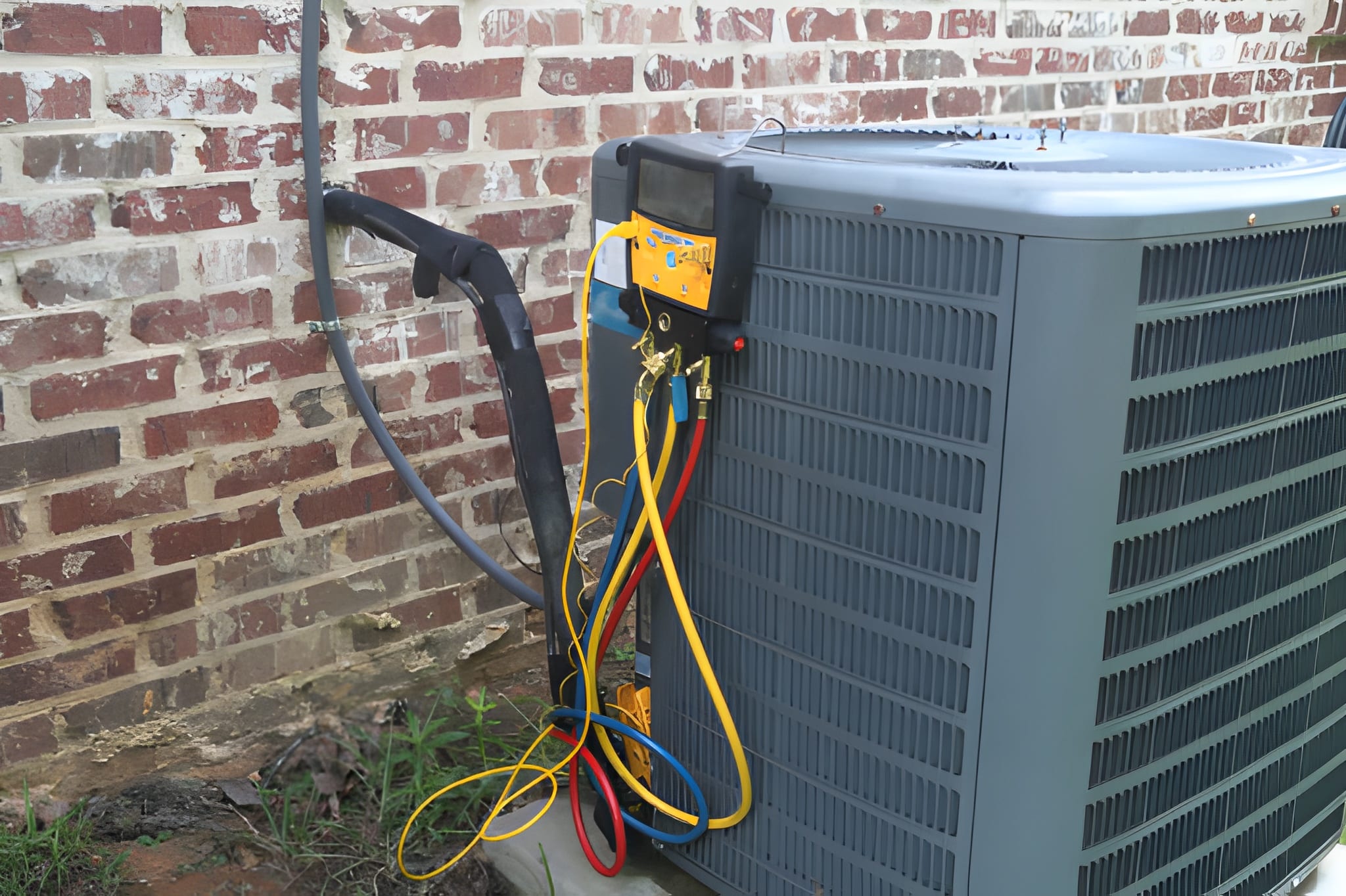
A new installation is not complete until the system is commissioned and tested. Key tests performed after installation include:
- Refrigerant charge verification using superheat and subcooling measurements to ensure proper refrigerant level.
- Airflow testing to measure CFM across supply and return and to verify fan speeds and duct performance.
- Temperature split measurement to confirm proper cooling capacity and detect airflow issues.
- Static pressure checks to ensure ducts and equipment operate within manufacturer limits.
- Electrical load testing to verify amp draw and voltage under load.
- Leak checks on brazed joints and line sets to prevent refrigerant loss.
- Thermostat calibration and placement checks to avoid short cycling or inaccurate readings.
Commissioning confirms the system meets the design intent and delivers the efficiency and comfort you expect in Deerfield Beach conditions.
Post-installation walkthrough: what your technician will explain
After commissioning, a professional installer should walk you through the system operation, maintenance needs, and warranty information. Topics covered typically include:
- How to use the thermostat and any zoning controls.
- Recommended setpoints and strategies for balancing comfort and energy savings in South Florida.
- Filter type and replacement schedule, including where to buy replacement filters.
- How to check condensate drains and clean accessible drain traps to prevent backups and mold.
- What noises or behaviors are normal versus signs of trouble.
- Warranty registration information and what is covered by equipment and labor warranties.
A clear, patient walkthrough ensures homeowners understand how to care for their system and what to expect in the first weeks of operation.
Warranty and maintenance recommendations for Deerfield Beach homes
New equipment typically includes a manufacturer warranty on parts and compressors and may include limited labor coverage. To protect that investment:
- Keep records of the installation, permits, and commissioning report.
- Follow manufacturer maintenance requirements for warranty compliance, such as annual filter changes and professional tune-ups.
- Consider a seasonal maintenance plan that includes coil cleaning, refrigerant leak inspection, electrical tightness checks, and airflow verification.
- For coastal installations, plan more frequent inspections to spot corrosion, fan motor wear, and coil degradation early.
Preventive maintenance extends equipment life, preserves efficiency, and helps detect issues before they become major repairs.
Coastal-specific installation best practices
Deerfield Beach proximity to the Atlantic requires additional considerations to maximize system life:
- Choose corrosion-resistant coatings and materials: Condensers exposed to salt air should have treated coils and protective coatings.
- Elevate equipment: Raise the outdoor unit above known flood levels and ensure proper drainage to prevent standing water.
- Secure equipment for wind: Use straps, anchors, and code-approved mounting to resist hurricane-force winds.
- Plan for rapid service access: Position condensers where technicians can reach them safely for maintenance without damaging landscaping.
These measures reduce the likelihood of premature failure and maintain system efficiency under coastal stressors.
Common post-installation issues and how they are resolved
Even with a proper installation, some issues may appear in the early weeks. Common items and typical resolutions include:
- Short cycling: Usually caused by oversized equipment, thermostat placement, or airflow restrictions. Resolved by adjusting thermostat, improving airflow, or in rare cases, reviewing system sizing.
- High humidity: Indicates inadequate dehumidification from an oversized or single-speed system. Resolved with variable-speed equipment, supplemental dehumidification, or improved airflow control.
- Uneven cooling: Often due to duct imbalances or incorrect register distribution. Balancing dampers, duct sealing, or additional returns may be needed.
- Noisy condenser: Could be improper mounting, loose components, or fan motor issues. Tightening hardware and verifying pad mounting resolves most noise complaints.
- Increased energy bills: Investigate refrigerant charge, airflow, thermostat programming, and duct leakage to identify causes.
A documented commissioning report and warranty coverage make resolving early issues straightforward and prevent long-term damage.
Long-term benefits of proper AC installation in Deerfield Beach
A correctly executed AC installation delivers measurable long-term advantages:
- Lower operating costs through right-sized, efficient equipment.
- Better humidity control for comfort and to protect wood, electronics, and furnishings from moisture damage.
- Fewer repairs and longer equipment life thanks to proper airflow and corrosion protection.
- Improved indoor air quality with correct filtration and ventilation strategies.
- Compliance with local codes and reduced risk during storms due to secure mounting and proper elevation.
These benefits matter not only for daily comfort but also for home resale value and insurance considerations in coastal Florida.
Maintenance checklist for the first year after installation
To protect your new investment and maintain warranty coverage, follow this seasonal checklist during the first year:
- Monthly: Check and replace filters as recommended.
- Spring: Professional tune-up before peak cooling season, verify refrigerant and airflow, clean coils.
- Mid-summer: Inspect exterior unit for debris, check pad drainage and clear vegetation to maintain airflow.
- Fall: Ensure condensate drains are clear and inspect for early signs of corrosion or wear.
- Annual: Full system inspection including electrical, refrigerant, airflow, duct sealing, and thermostat calibration.
Regular maintenance pays for itself in lower utility bills and fewer emergency repairs.


Hear what our satisfied
clients have to say

SERVICE AREAS