


Advanced HVAC Diagnostic Technologies & Methods

Beyond Guesswork: A Guide to Advanced HVAC Diagnostic Technologies
Feeling stuck in a cycle of recurring HVAC issues? You’re not alone. Many property owners and managers face the frustration of repeated service calls for the same problem, often because the diagnosis was based on symptoms rather than the root cause. Traditional troubleshooting has its limits, sometimes leading to costly part replacements that don't solve the underlying issue.
But what if you could move beyond the guesswork?
Today’s leading HVAC technicians operate more like surgeons, using sophisticated diagnostic tools to pinpoint the exact source of a problem with incredible accuracy. This guide is for decision-makers who need definitive solutions, not temporary fixes. We’ll walk you through the advanced technologies that separate a top-tier HVAC partner from the rest, giving you the framework to evaluate your options and choose a team that invests in precision.
The Four Pillars of Modern HVAC Diagnostics
While competitors might offer broad overviews of tools, we believe it's more helpful to understand the diagnostic process. True expertise lies in knowing which tool to use and how to interpret the data it provides. Advanced diagnostics aren't about a single gadget; they're about a comprehensive approach built on four key pillars.
1. Thermographic Inspections: Seeing the Unseen
At its core, thermography (or thermal imaging) uses an infrared camera to visualize temperature differences across a surface. For an HVAC system, this is like having x-ray vision. Instead of guessing where an air leak might be or why a room feels drafty, we can see the exact points of energy loss.
A thermographic inspection can instantly reveal:
- Insulation Gaps: Uncover hidden voids in walls or ceilings where your conditioned air is escaping.
- Ductwork Leaks: Pinpoint leaks in your duct system, which can be a major source of inefficiency and poor air quality.
- Air Infiltration: See exactly where outside air is seeping into your building envelope around windows and doors.
- Overheating Components: Identify electrical connections or motor bearings that are running too hot, signaling a potential failure before it happens.
Case Study: Pinpointing a Hidden Commercial Roof Leak
A local business owner was dealing with inconsistent cooling in their top-floor conference room. Multiple technicians had checked the refrigerant and airflow at the vent with no clear answer. Using a thermographic camera, we scanned the ceiling and immediately saw a large, cool anomaly. This wasn't an HVAC issue at all, it was a slow, undetected roof leak. The water-saturated insulation was compromising the building's thermal barrier, forcing the AC unit to work overtime. The thermal image provided the definitive evidence needed to call a roofer, saving the client from needlessly replacing expensive HVAC components.
2. Advanced Sensor Data Analysis: The Rise of Predictive Maintenance
Modern HVAC systems are smarter than ever, equipped with sensors that monitor everything from refrigerant pressure to compressor cycles and indoor air quality. However, this data is only useful if you know how to analyze it. This is where the industry trend of predictive maintenance comes into play.
Instead of waiting for a breakdown, advanced sensor analysis allows technicians to track performance trends over time. By establishing a baseline for your system's normal operation, we can detect subtle deviations that signal developing problems. This data-driven approach helps us identify:
- Decreasing Compressor Efficiency: Catching a slow decline before the compressor fails entirely.
- Erratic Fan Motor Behavior: Identifying irregular power draws that might indicate a failing motor or bearing.
- Refrigerant Flow Issues: Analyzing pressure and temperature data to diagnose problems far more accurately than with traditional gauges alone.
This proactive strategy is a game-changer for commercial clients, where unplanned downtime can halt business operations. It turns maintenance from a reactive cost into a strategic investment in uptime.
3. Digital Manifold Gauges: Precision Under Pressure
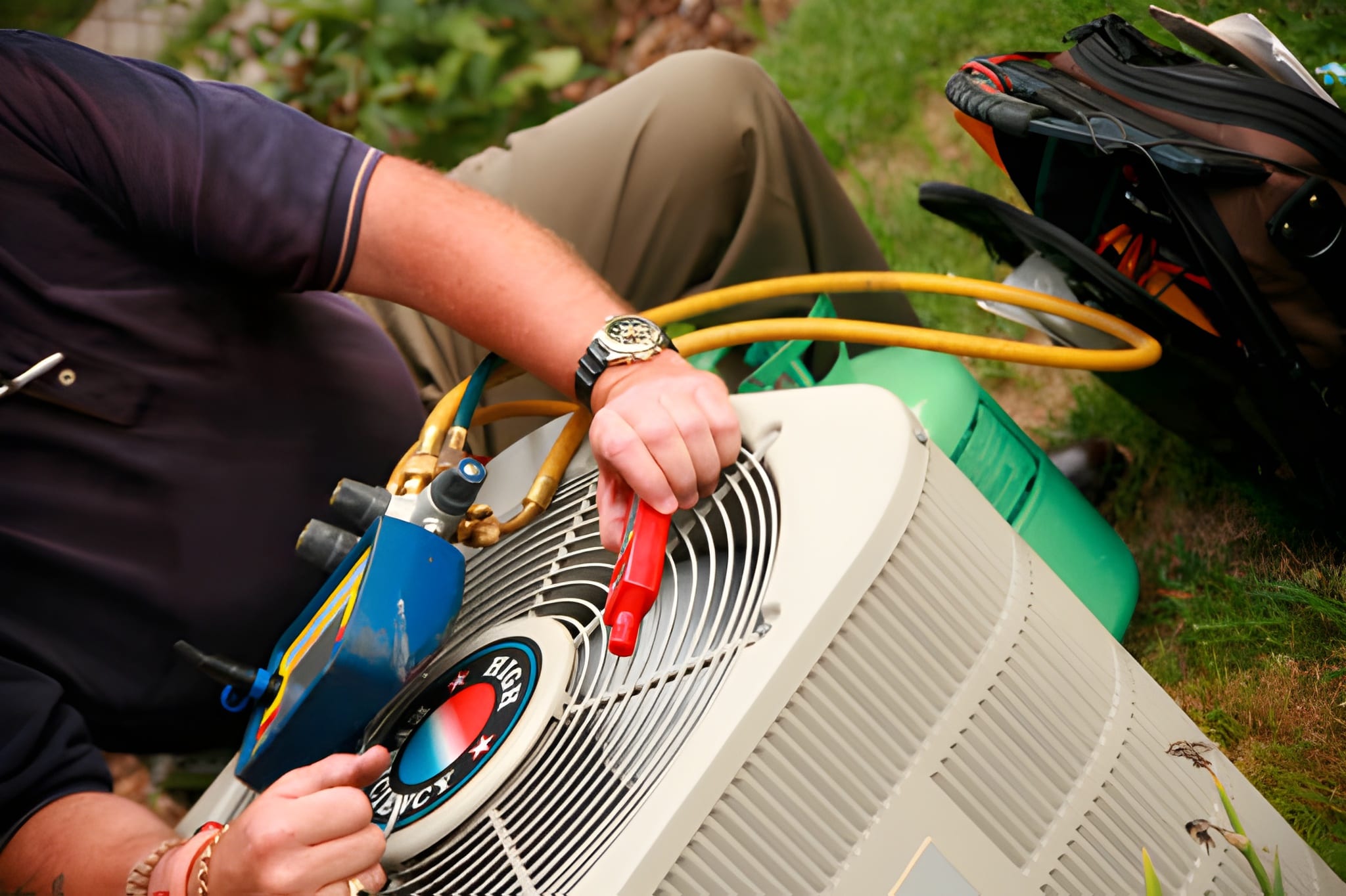
For decades, technicians have used analog gauges to measure refrigerant pressure. While functional, they are prone to human error and can be difficult to read with pinpoint accuracy. Digital manifold gauges are the modern standard for precision.
These devices provide clear, digital readouts of high-side and low-side pressures, but their real power lies in their integrated capabilities. A single digital manifold can:
- Calculate Superheat and Subcooling: Automatically performs these crucial calculations, eliminating manual math and reducing the chance of error. This ensures your system is charged with the exact right amount of refrigerant for optimal performance.
- Perform Leak Tests: Run automated, time-based tests to confirm system integrity with a high degree of certainty.
- Store and Log Data: Many models can connect to a smartphone app, allowing technicians to record system readings and generate reports, creating a valuable service history for your equipment.
This level of precision ensures your system isn't just "working", it's running at peak efficiency, just as the manufacturer intended.
4. Electrical Component Diagnostics: Beyond the Breaker Box
HVAC systems are complex electrical machines. A surprisingly high number of performance issues, from intermittent shutdowns to poor cooling, can be traced back to an electrical fault. Basic troubleshooting might involve checking a fuse or a breaker, but advanced diagnostics go much deeper.
Using tools like multimeters with advanced functions (e.g., capacitance and frequency) and clamp meters, expert technicians can test the health of critical components:
- Capacitors: A weak or failing capacitor can prevent your compressor or fan motor from starting, but it's often misdiagnosed as a much more expensive motor failure.
- Contactors: We can test for pitted or worn contacts that cause intermittent power to the compressor.
- Voltage and Amperage Draws: Verifying that components are receiving the correct voltage and not drawing too much current is essential for preventing premature failure and ensuring safety.
Proper electrical diagnostics protect the most expensive parts of your HVAC system and prevent small, inexpensive failures from cascading into catastrophic breakdowns.
How to Evaluate an HVAC Partner’s Diagnostic Capabilities
When you're comparing service providers, you're not just buying a repair; you're investing in expertise. As you evaluate your options, move the conversation beyond price and ask specific questions about their diagnostic process.
A truly proficient partner should be able to confidently discuss:
- Their Diagnostic Toolset: Do they invest in modern, high-quality tools like thermal cameras and digital manifolds? Their investment in technology often reflects their investment in quality.
- Their Approach to Root Cause Analysis: Ask them to walk you through how they’d diagnose a complex, recurring issue. A top-tier technician will talk about a systematic process, not just swapping parts.
- Data and Reporting: For commercial clients especially, ask if they provide performance reports. A partner who leverages data can help you make smarter decisions about long-term HVAC system care.
- Focus on Efficiency: A key outcome of accurate diagnostics is improved energy efficiency. Ask how their methods help lower operating costs over the life of the equipment.
- Preventative Strategies: The best diagnosis is one that prevents a future failure. Inquire about the benefits of regular maintenance programs that use these advanced techniques to stay ahead of problems.
Frequently Asked Questions
Is this level of diagnostics necessary for my home system?
Absolutely. While the financial impact of downtime is greater in a commercial setting, the goal is the same: fixing the problem correctly the first time. Advanced diagnostics save homeowners money by preventing misdiagnoses, avoiding unnecessary parts replacements, and improving system efficiency, which lowers monthly utility bills.
How do these advanced methods save me money in the long run?
They save you money in three key ways:
- Accuracy: Prevents you from paying for repairs that don't solve the problem.
- Efficiency: Ensures your system runs at its best, lowering energy consumption.
- Longevity: Catches small issues before they become major failures, extending the life of your equipment.
Are all technicians trained to use these tools?
No. Using this equipment effectively requires significant training and experience. The tool is only as good as the technician interpreting the data. It's why our founder's 20+ years of experience and our team's commitment to continuous training are so critical. We don't just own the technology; we've mastered it.
The Kool Flow Inc. Advantage: Expertise in Action
Understanding these technologies is the first step. The next is partnering with a team that has the experience to apply them effectively. At Kool Flow Inc., we’ve built our reputation, ranking in the top 1% of Florida’s licensed contractors, by combining cutting-edge diagnostic tools with decades of hands-on expertise.
We believe in providing definitive answers and lasting solutions. When you work with us, you’re not just getting a repair; you’re getting a precise, data-backed diagnosis that gives you confidence and peace of mind.
Ready to move beyond guesswork? Contact us today for a comprehensive system evaluation and experience the difference that true expertise makes.


Hear what our satisfied
clients have to say


SERVICE AREAS