


Refrigeration Installation in Coral Springs, FL

Installing reliable commercial refrigeration in Coral Springs, FL is more than placing a unit and turning it on. With hot, humid summers, frequent storm season concerns, and strict health and building rules for food service and retail operations, the right design and professional installation are essential to protect perishable inventory, control operating costs, and meet code. Koolflow Air brings focused experience in new refrigeration installation, from initial site evaluation and system sizing to commissioning, operator training, and post-installation maintenance recommendations tailored to Coral Springs homes and businesses.
.jpeg)
Why professional refrigeration installation matters in Coral Springs
Coral Springs climate places continuous demand on refrigeration systems. High ambient temperatures and humidity increase condenser load and can shorten equipment life if systems are undersized or poorly installed. Storms and power interruptions are common in South Florida, so installations must account for surge protection, secure mounting, and accessibility for rapid service. For restaurants, grocery stores, medical clinics, and convenience stores in Coral Springs, a properly engineered refrigeration system protects food safety, minimizes spoilage, and keeps energy bills predictable.
Koolflow Air approaches each installation with a focus on lasting performance and code compliance. Our installations consider your operational needs, local code requirements, refrigerant regulations, and Coral Springs environmental conditions to deliver systems that run efficiently and reliably.
Common refrigeration systems we install in Coral Springs
- Walk-in coolers and freezers for restaurants, catering operations, and grocery backrooms
- Reach-in refrigerators and freezers for commercial kitchens and retail displays
- Refrigerated merchandisers and display cases for convenience stores and supermarkets
- Prep tables and cold plates for food service lines
- Blast chillers and holding cabinets for high-volume kitchens
- Ice makers and dedicated ice storage systems
- Cold rooms and temperature-controlled storage for medical facilities and florists
Each system type has unique installation requirements for electrical service, condensate management, ventilation, and monitoring. Selecting the right equipment and layout is the first step to long-term reliability.
Site evaluation and proper sizing
A thorough site evaluation is the foundation of any successful refrigeration installation. Koolflow Air performs a complete assessment that includes:
- Operational needs analysis: inventory turnover, temperature setpoints, peak load periods, and access patterns.
- Thermal load calculation: estimating sensible and latent loads from ambient conditions, door openings, lighting, product load, and insulation quality.
- Space and layout review: determining equipment footprint, clearances for airflow, and service access.
- Structural assessment: verifying floor loading capacity for walk-ins and heavy equipment, and evaluating roof or wall support for condensing units.
- Utility capacity check: confirming available electrical service, breaker sizing, voltage drop concerns, and potential need for dedicated panels or upgrades.
Proper sizing prevents frequent short cycling, excessive energy use, compromised food safety, and premature component failure. In Coral Springs, accounting for high ambient temperatures and humidity in load calculations is critical to avoid undersized condensers and overloaded compressors.
Selecting refrigerant types and equipment
Refrigerant selection balances system performance, environmental regulations, availability, and long-term serviceability. Options include low-GWP refrigerants and environmentally friendlier blends that comply with current regulations. Our selection process considers:
- Operating temperature requirements for the application
- Compatibility with equipment components and lubricants
- GWP and regulatory phase-down schedules
- Local service availability and technician certification for specific refrigerants
We recommend refrigerants and equipment that offer energy efficiency without sacrificing reliability. In Coral Springs, where outdoor condensers face high heat and humidity, selecting a refrigerant and system optimized for those conditions improves performance and reduces operating cost over the life of the system.
Electrical and plumbing requirements
Safe, code-compliant electrical and plumbing work is essential for refrigeration systems. Typical requirements we address in every installation include:
- Dedicated electrical circuits and appropriately sized breakers with correct voltage and phase
- Properly rated disconnects and overcurrent protection located for service access
- Voltage drop calculations for remote condensing units and long conductor runs
- Condensate drainage with correct traps and routing to floor drains or sanitary lines
- Emergency drain paths where required for safety and health code compliance
- Lightning and surge protection considerations for coastal storm exposure
- Sizing and installation of condensate pumps when gravity drains are not available
Coral Springs properties may require coordination with local electricians or utility providers to ensure service upgrades meet code and operational needs. Our installations ensure electrical connections and plumbing are robust and serviceable.
Code compliance, permits, and local approvals
Refrigeration installs must comply with building codes, mechanical codes, health department requirements, and environmental regulations. In Coral Springs and Broward County this typically includes:
- Building and mechanical permits through the City of Coral Springs or Broward County when required
- Compliance with Florida Building Code mechanical and energy requirements
- Health department approvals for food service operations and grocery retailers
- Proper labeling and documentation for refrigerant type and charge size
- Technician certification and adherence to refrigerant handling rules under federal regulations
Koolflow Air understands the local permitting process and common inspection requirements. We prepare installation documentation, equipment submittals, and as-built drawings to streamline plan review and inspection.
Professional installation procedures
A professional installation follows industry best practices to ensure safety and long-term reliability. Typical steps our technicians follow include:
- Pre-install coordination: confirming equipment deliveries, site access, crane or lift needs, and staging areas to minimize disruption
- Leveling and placement: precise placement of walk-ins and condensing units with vibration isolation pads and secure anchoring where necessary
- Refrigerant piping and brazing: careful routing of suction and liquid lines with proper slope, insulation selection for humid climates, and high-quality braze joints
- Leak testing and pressure testing: nitrogen pressure tests and soap tests, with repairs performed on any leaks found
- Evacuation and dehydration: deep vacuum to remove moisture and non-condensables before charging the system
- Accurate refrigerant charging: using superheat and subcooling targets rather than weight alone to ensure optimal performance
- Electrical wiring and control integration: installing and testing all controls, thermostats, defrost timers, and alarm systems
- Condensate management: routing and testing condensate pumps and trap seals to ensure reliable drainage
During installation in Coral Springs, we place extra emphasis on insulation integrity and condensate solutions because high humidity increases risk of sweating lines and mold if improperly insulated or drained.
Start-up testing and commissioning
A start-up is not complete until the system is commissioned and performance validated. Our commissioning process includes:
- Baseline performance tests: verifying temperatures at critical points, compressor amp draw, and condenser fan and compressor cycling
- Superheat and subcooling checks: adjusting charge and metering to manufacturer specifications and site conditions
- Airflow and door seal testing: ensuring evaporator fans and air distribution meet temperature uniformity expectations
- Safety and control verification: testing high-pressure safety, low-pressure cutouts, defrost control operation, and alarm systems
- Temperature mapping: placing data loggers at representative locations to confirm temperature stability under typical load conditions
- Noise and vibration checks: confirming mounting isolation and reviewing adjacent space noise criteria
Documentation of commissioning results is provided so facility managers and local authorities can verify compliance and system readiness. In Coral Springs, we also test system response to high ambient conditions to verify the equipment will hold setpoints during peak summer days.
Operator training and documentation
A new refrigeration system performs best when operators understand how to use and maintain it. Our installation includes hands-on training and clear documentation covering:
- Normal operating procedures and recommended temperature setpoints
- Interpreting alarm indicators and basic troubleshooting steps
- Door management and best practices to reduce thermal load
- Routine cleaning steps for condensers, evaporator coils, and door gaskets
- How to perform and record routine checks such as temperature logs and refrigerant leak visual inspections
- Emergency procedures for power loss, compressor faults, or high-temperature alarms
Training is focused on practical, day-to-day actions your staff can perform to keep the system running. Proper operator practices significantly reduce emergency service calls and extend equipment life.
Post-installation maintenance recommendations
Planned maintenance preserves performance and prevents downtime. Our recommended maintenance schedule for Coral Springs refrigeration systems includes:
- Daily/weekly checks:
- Monitor and record temperatures at critical points
- Inspect door gaskets and seals for integrity
- Visual check for unusual noises, oil spots, or frost buildup
- Monthly tasks:
- Clean condenser coils or schedule a professional coil cleaning
- Check condensate drains and traps for clogs
- Inspect electrical connections for signs of overheating
- Quarterly maintenance:
- Verify refrigerant pressure and adjust charge if necessary
- Inspect and clean evaporator coils and drain pans
- Test defrost heaters and timers
- Annual inspection:
- Comprehensive system tune-up with amp draw, motor checks, and compressor oil review
- Refrigerant leak inspection and documentation
- Safety device testing and calibration
- Verify firmware or control software updates for controllers and monitoring systems
Special considerations for Coral Springs:
- Corrosion prevention: because South Florida environments can accelerate corrosion, apply protective coatings and select stainless steel or corrosion-resistant hardware when feasible.
- Hurricane season readiness: secure outdoor condensing units, ensure secondary drain paths, and verify that critical food inventory contingency plans are in place.
Planned maintenance reduces energy use, prevents inventory losses, and helps you meet health inspection requirements.
Energy efficiency and lifecycle cost considerations
Choosing energy-efficient components and commissioning systems for optimal performance reduce long-term operating expenses. Considerations include:
- High-efficiency compressors and variable-speed drives for capacity modulation
- Electronically commutated motor (ECM) fans for reduced energy use in evaporators and condensers
- Proper insulation thickness and high-quality door gaskets to limit heat gain
- Accurate controls and defrost strategies to minimize unnecessary run time
- Heat rejection considerations and adequate condenser airflow for Coral Springs high ambient temperatures
An installation that balances upfront equipment cost with efficiency gains will lower total cost of ownership over the system lifecycle. Koolflow Air helps clients evaluate options and select equipment that aligns with operational priorities.
Common installation mistakes and how we avoid them
Errors during installation can lead to repeat service calls and higher operating costs. Common pitfalls include undersized condensers, poorly routed refrigerant lines, inadequate insulation, and improper electrical sizing. Koolflow Air avoids these problems by:
- Performing detailed pre-installation site assessments and load calculations
- Following manufacturer installation guidelines and industry best practices
- Using certified refrigeration technicians trained in proper brazing, evacuation, and charging techniques
- Verifying system performance under real-world Coral Springs ambient conditions during commissioning
Quality installation saves money over time and reduces the risk of emergency failures during peak operating periods.
Why documentation and warranty records matter
Complete documentation protects your investment. Proper paperwork includes as-built drawings, refrigerant charge documentation, start-up test results, and manufacturer warranty registration. This information is vital for:
- Warranty claims and manufacturer support
- Demonstrating code compliance at inspections
- Transfer of knowledge for future maintenance and service
- Loss documentation in case of insurance claims following storm damage
Koolflow Air ensures all installation records are organized and provided to facility managers, helping preserve warranty validity and facilitating future service.
Working with local authorities and inspectors in Coral Springs
Navigating permits and inspections can delay projects if not handled with care. Local permitting authorities in Coral Springs review mechanical and electrical alterations and health departments inspect refrigeration used for food. Koolflow Air coordinates the documentation typically required by inspectors, such as equipment specs, load calculations, and wiring diagrams, to streamline approvals and reduce re-inspection risk.
Long-term partnership and lifecycle planning
A properly installed refrigeration system is an investment that benefits from lifecycle planning. Koolflow Air recommends periodic performance reviews, refrigerant transition planning in light of evolving regulations, and capital planning for equipment at end of life. Proactive replacement planning for compressors, controls, or condensers prevents disruptive failures and supports budget predictability.
Koolflow Air provides the technical documentation and maintenance roadmaps that facility managers in Coral Springs need to make informed lifecycle decisions.
Frequently asked questions
Q: How long does a typical refrigeration installation take?
A: Installation timelines vary by system complexity. A standard reach-in or display case may be completed in a single day, while walk-in coolers, cold rooms, and multi-component systems with electrical or utility upgrades can take several days to a few weeks. Scheduling depends on permitting, equipment lead times, and site conditions.
Q: What permits are required for refrigeration installation in Coral Springs?
A: Permits commonly include mechanical and electrical permits through the City of Coral Springs or Broward County, and health department approvals for food-related uses. Specific requirements depend on the scope of work and whether utility upgrades are needed. Proper permit coordination prevents costly inspection delays.
Q: Which refrigerant is best for my system?
A: The best refrigerant depends on your application, temperature requirements, efficiency goals, and regulatory considerations. Low-GWP refrigerants are increasingly favored to meet environmental standards, but equipment compatibility and local serviceability are equally important. A professional assessment will identify the optimal refrigerant and equipment pairing for your needs.
Q: How do you ensure the system will perform in Coral Springs heat and humidity?
A: We perform ambient-adjusted load calculations, select condensers and compressors sized for South Florida conditions, ensure proper refrigerant charge via superheat and subcooling checks, and validate performance with temperature mapping and stress testing at high ambient conditions to ensure reliable operation.
Q: What should our staff know after installation?
A: Staff should understand normal temperature ranges, how to read and record temperature logs, door management practices, simple condenser and gasket cleaning tasks, alarm meanings, and emergency procedures for power loss. We provide hands-on training and written documentation tailored to your operation.
Q: How often should refrigeration systems be serviced?
A: Routine checks should be done daily to weekly by staff, with professional maintenance at least quarterly for high-use systems and annually for a full preventive inspection. The exact schedule depends on usage intensity and system complexity.
Q: Can installations be made hurricane-ready?
A: Yes, equipment placement, secure mounting, protective screens for condensers, and backup power strategies can be incorporated to minimize damage during storms. We also recommend emergency protocols for rapid temperature recovery and inventory protection after power interruptions.
Q: Do you handle both new installations and replacements?
A: Yes. We install new systems and replace aging equipment, providing site evaluation, code compliance verification, and commissioning for both new and retrofit projects.
Q: Are your technicians certified to handle refrigerants?
A: Our technicians are trained and certified to handle refrigerants safely and in compliance with applicable regulations. Proper certification ensures correct charging, leak detection, and documentation for regulatory compliance.
Q: What documentation will we receive after installation?
A: You will receive as-built drawings, equipment specifications, start-up and commissioning reports, refrigerant documentation, and operator training materials to support warranty claims and future maintenance.
Koolflow Air provides professional refrigeration installation services built for Coral Springs environmental conditions, local code requirements, and operational realities. Our installations emphasize proper sizing, reliable components, precise commissioning, and clear operator training to protect your product, energy budget, and compliance standing for years to come.


Hear what our satisfied
clients have to say

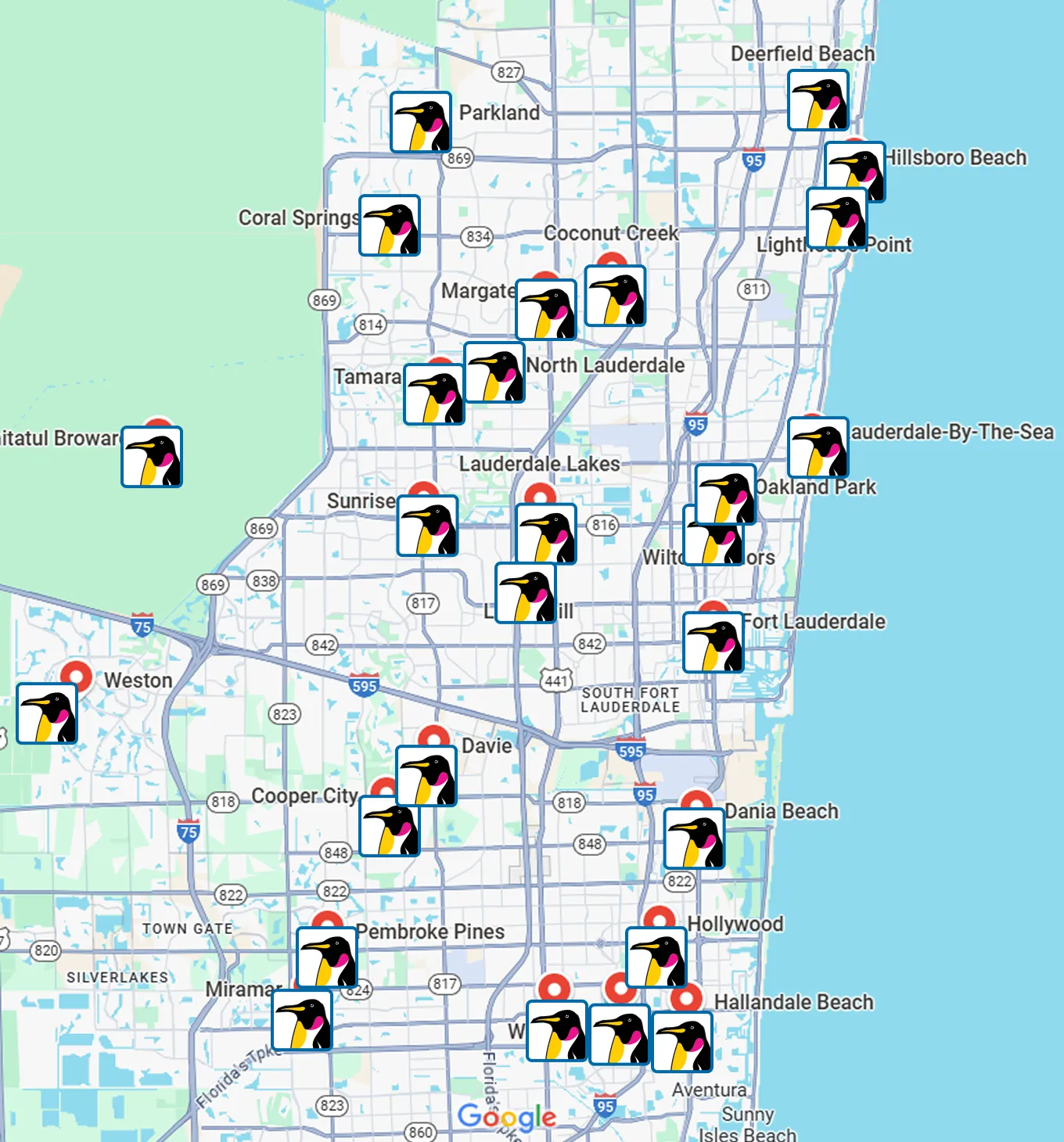
SERVICE AREAS