


Refrigeration Maintenance in Broward County, FL

Refrigeration maintenance programs for Broward County facilities emphasize proactive upkeep to protect cold storage, comply with health codes, and lower energy costs. The service covers tune-ups, coil cleaning, leak checks, thermostat validation, drain and condensate care, door seals, and detailed documentation with planned visits. Diagnostics identify coil fouling, refrigerant leaks, compressor strain, and sensor drift, guiding timely repairs. Regular maintenance reduces downtime, extends equipment life, supports food safety, and ensures reliable performance through coastal and humid conditions.
.jpeg)
Refrigeration Maintenance in Broward County, FL
Reliable refrigeration maintenance is essential for Broward County businesses that depend on chilled or frozen storage—restaurants, grocery stores, hotels, bars, and institutional kitchens. Routine and preventative refrigeration maintenance protects perishable inventory, ensures compliance with health codes, reduces energy costs, and prevents unplanned downtime that can be especially costly during South Florida’s hot, humid months and hurricane season.
What a Refrigeration Maintenance Program Covers
A comprehensive preventative program focuses on keeping systems running efficiently and catching small problems before they become emergency repairs. Core services typically included are:
- Scheduled tune-ups and performance checks
- Condenser and evaporator coil cleaning and fin straightening
- Refrigerant level and pressure checks with leak detection
- Thermostat calibration and control verification
- Filter replacement and air flow inspection
- Drain line clearing and condensate pan cleaning
- Door gasket inspection and replacement
- Fan motor, belt, and electrical connections inspection
- Defrost system testing and heater checks
- Documentation, temperature logs, and recommended repairs
- Maintenance agreements with scheduled visits and priority service
Programs can be customized by equipment type (walk-ins, display cases, reach-ins, freezers, cold rooms) and by operating environment to match the demands of each Broward County facility.
Common Refrigeration Issues in Broward County and Their Causes
Broward County’s climate and coastal location make certain issues more likely. Knowing the common failure modes helps explain why regular maintenance matters.
- Coil fouling and reduced heat transfer — caused by high humidity, airborne particulates, and grease in food-service environments.
- Refrigerant leaks — wear, corrosion, and vibration can create slow leaks that cause system underperformance and higher energy use.
- Compressor stress or failure — often downstream of poor airflow, low refrigerant, or electrical issues.
- Thermostat or sensor drift — incorrect temperature readings lead to overcooling or unsafe holding temperatures.
- Drain clogs and microbial growth — warm, humid air causes condensate buildups and mold that obstruct drainage and trigger overflow risks.
- Corrosion of outdoor condensers — salt air and coastal humidity accelerate metal degradation and electrical connection failures.
- Door seal degradation — worn gaskets let warm air in, increasing run time and causing product temperature swings.
Typical Diagnostic Process During a Maintenance Visit
A methodical inspection isolates performance issues quickly and documents system health:
- Visual inspection of interior and exterior units, door seals, and condensate paths.
- Temperature mapping and verification of setpoints against actual product temperatures.
- Coil inspection and cleaning as needed to restore proper heat exchange.
- Refrigerant pressure and superheat/subcooling checks to assess charge and system balance.
- Leak detection using electronic or ultrasonic methods and dye when appropriate.
- Electrical testing of contactors, capacitors, and wiring for safe operation.
- Airflow and fan performance measurements to ensure adequate circulation.
- Controls and thermostat calibration, plus defrost system evaluation.
- Written report with findings, trending data, and recommended corrective actions.
All diagnostic work should adhere to proper refrigerant handling and environmental regulations.
Common Repairs and Preventative Solutions
Maintenance work often prevents or corrects the following without full system replacement:
- Coil cleaning and fin repair to restore efficiency
- Filter and gasket replacement to maintain thermal integrity
- Refrigerant leak repair and reclaiming/recharging per regulations
- Thermostat or sensor replacement and recalibration
- Fan motor or capacitor replacement to restore airflow
- Defrost system repair or programming to prevent icing
- Corrosion mitigation and protective coatings for coastal equipment
- Drain cleaning and installation of condensate safety switches
Addressing these items during scheduled visits avoids the disruption and higher costs of emergency service.
Recommended Service Frequency for Commercial Operations
Frequency should reflect usage intensity, equipment age, and local conditions. In Broward County, salt air and humidity typically warrant more frequent attention than inland locations.
- High-demand facilities (restaurants, full-service hotels, high-volume grocery aisles): monthly inspections and coil cleanings; weekly visual checks by staff.
- Medium-demand operations (small markets, cafes, convenience stores): quarterly professional service; monthly staff checks.
- Critical cold storage and large walk-ins/freezers: monthly or biweekly inspections and temperature logging; quarterly deep maintenance.
- Outdoor condensers in coastal exposure: coil cleaning and corrosion checks every 1 to 3 months.
- Refrigerant leak detection and full system performance checks: at least annually, with more frequent checks if systems show signs of decline.
Maintenance agreements commonly include a set number of scheduled visits per year plus priority response and documentation, scaled to the operation’s needs.
Benefits of Regular Refrigeration Maintenance
Consistent preventive care delivers concrete operational and financial benefits:
- Extended equipment life and delayed capital replacement
- Lower energy consumption through restored efficiency
- Reduced risk of inventory loss and food safety violations
- Fewer emergency repairs and less disruptive downtime
- Predictable maintenance budgets through scheduled visits
- Better compliance with health department requirements and traceable temperature records
- Faster detection of developing problems before they become costly failures
Seasonal and Local Considerations for Broward County
Plan maintenance with Broward County’s weather patterns in mind:
- Summer heat increases cooling load. Verify system capacity and airflow before peak months.
- Hurricane season requires securing outdoor condensers, clearing debris, and documenting baseline performance to speed recovery after outages.
- Salt spray near the coast accelerates corrosion; select corrosion-resistant components and increase inspection frequency.
- High humidity raises mold and drain issues. Emphasize drain line maintenance and defrost system checks.
What to Expect from a Quality Maintenance Visit
A professional service visit should leave you with clear evidence of work performed and system health:
- A checklist of items inspected and actions taken
- Temperature logs and performance baselines for trending
- Recommendations and priorities for repairs or parts replacement
- Notes on warranty-related maintenance or code compliance concerns
- Scheduling and frequency guidance tailored to your operation
Regular, documented maintenance tailored to Broward County conditions protects inventory, reduces energy costs, and preserves equipment reliability—helping businesses avoid the steep financial and reputational costs of refrigeration failure.


Hear what our satisfied
clients have to say


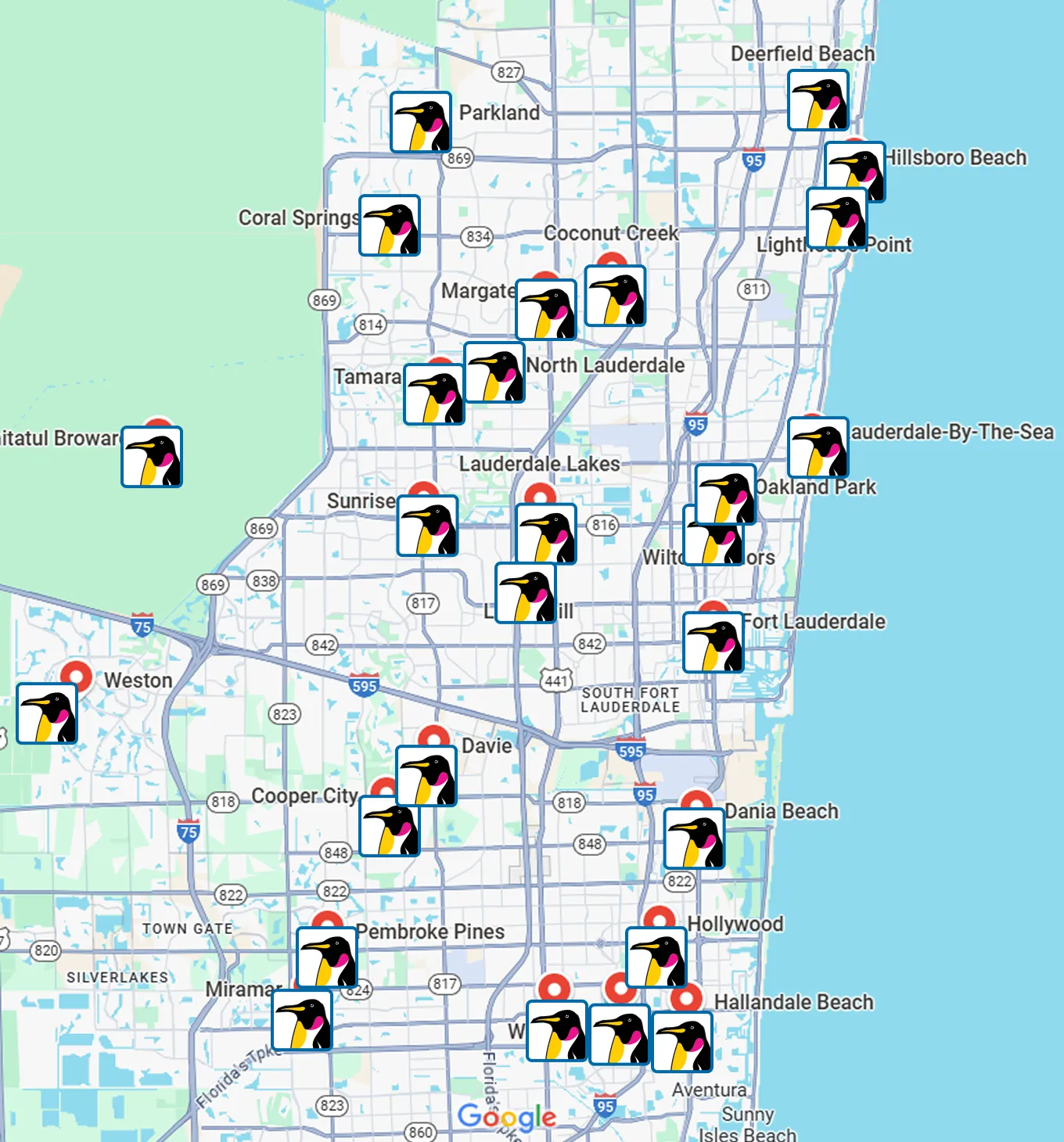
SERVICE AREAS