


Refrigeration Service in Oakland Park, FL
Koolflow Air provides full-service refrigeration solutions in Oakland Park, FL, tailored to both residential and commercial customers. In a coastal South Florida climate where heat and humidity create constant load on cooling equipment, properly maintained refrigeration is essential to protect perishable goods, pharmaceuticals, and household comfort. This our reactive and proactive service capabilities, common local issues, diagnostic and repair approaches, refrigerant recovery and compliance practices, service plans, typical response times, and how scheduling and logistics are handled to minimize downtime.
.jpeg)
Why reliable refrigeration matters in Oakland Park
Oakland Park experiences warm temperatures year round and high humidity for much of the year. Those environmental conditions increase refrigeration run time and stress components such as compressors, fans, coils, and door seals. Commercial operations like restaurants, grocery stores, florists, and medical clinics face immediate risk when refrigeration fails. Residential customers in the area also rely on dependable refrigerators and freezers to protect groceries, medicine, and household needs. Effective refrigeration service reduces spoilage, prevents inventory loss, and lowers energy usage through efficient operation.
Scope of services — comprehensive coverage for every refrigeration need
Koolflow Air offers a full suite of refrigeration services designed to address urgent breakdowns and keep systems healthy over time. Services include:
- Emergency refrigeration repair for walk-in coolers, freezers, reach-in units, display cases, and household refrigerators
- Scheduled preventive maintenance and seasonal tune-ups
- Diagnostic testing and temperature mapping
- Parts replacement: compressors, evaporator and condenser fans, thermostats, sensors, control boards, expansion devices, and more
- System upgrades and retrofits for improved efficiency and reliability
- Refrigerant recovery, reclaim, and compliant disposal
- Leak detection, repair, and verification
- Refrigerant conversion planning for phased-out refrigerants
- Remote monitoring and alarm integration
- Tailored service plans for residential and commercial customers with documentation and reporting
Each service is performed with attention to minimizing operational disruption and meeting local regulatory requirements.
Common refrigeration problems in Oakland Park and how we address them
Local climate and usage patterns lead to specific failure modes. Common issues we see include:
- Compressor failure: Caused by overstress, inadequate oil, electrical faults, or age. Symptoms include loud cycling, failure to reach setpoint, and high head pressures.
- Refrigerant leaks: Salt-air corrosion and vibration can accelerate leaks. Signs are low charge, ice on evaporator, and steady temperature drift.
- Dirty or blocked condenser coils: Coastal dust, pollen, and debris reduce heat rejection and drive up compressor workload.
- Faulty fans or motors: Fans are exposed to humid, often salty air and can fail or lose efficiency.
- Defrost system failures: Resulting in ice buildup, reduced airflow, and performance degradation.
- Door gasket and seal failures: Frequent use in commercial settings leads to warm air infiltration and increased run time.
- Electrical control issues: Faulty relays, contactors, pressure switches, or control boards cause intermittent operation or complete shutdown.
- Thermostat and sensor drift: Incorrect readings lead to temperature excursions, overcooling, or undercooling.
Recognizing these issues early through proactive maintenance saves food, reduces utility costs, and extends equipment life.
Diagnostic process — systematic, measurable, and transparent
Koolflow Air follows a structured diagnostic workflow to identify root causes quickly and accurately:
Reports include measured values to support decisions and regulatory documentation when refrigerant handling is involved.
Repairs and replacement services — practical solutions focused on uptime
When a fault is identified, the repair strategy balances speed of recovery with long-term reliability and cost-effectiveness.
- Emergency repairs: For critical failures, technicians prioritize restoring safe temperatures. Temporary measures such as auxiliary cooling or bypass circuits may be used until permanent parts arrive.
- Component replacement: Replace failed compressors, fan motors, valves, thermostats, and control boards with industry-standard parts. Match replacements to system specifications for correct performance.
- Coil service: Clean and repair condenser and evaporator coils to restore heat exchange efficiency. Coil replacement is recommended when corrosion or corrosion-induced pinholes compromise performance.
- Brazing and piping repairs: Perform certified brazing for line repairs and ensure proper evacuation and dehydration before recharging.
- Electrical repairs: Replace contactors, relays, fuses, breakers, and control components, and tighten connections to prevent future failures.
- Defrost and control system repairs: Fix defrost timers, heaters, sensors, and control logic to prevent ice buildup and maintain stable operation.
Technicians use diagnostic measurements post-repair to confirm performance and document conditions.
Refrigerant recovery, handling, and compliance
Handling refrigerant responsibly is critical. Koolflow Air follows accepted industry and regulatory practices for refrigerant recovery and compliance:
- Recovery and reclaim: Recover refrigerant from systems before major repairs or decommissioning, capture it into approved recovery cylinders, and provide documentation of quantity recovered.
- Regulatory compliance: Follow federal and state refrigerant handling rules, including leak repair protocols, record keeping, and required reporting for commercial installations.
- Refrigerant transition planning: For equipment using phased-out refrigerants, provide retrofit or replacement guidance that considers efficiency, compatibility, and long-term availability of refrigerants.
- Environmental stewardship: Dispose of unusable refrigerant, oily waste, and contaminated materials through proper channels to avoid environmental release.
Detailed refrigerant logs and service records support audits and demonstrate compliance for regulated facilities.
Preventive maintenance and tailored service plans
Regular maintenance is the most cost-effective way to avoid emergencies. Our preventive maintenance services are tailored to the needs of Oakland Park homes and businesses.
Typical preventive maintenance tasks include:
- Cleaning condenser and evaporator coils
- Checking and tightening electrical connections
- Inspecting and replacing door gaskets and seals
- Testing thermostats and sensors for accuracy
- Verifying defrost cycles and controls
- Oil analysis and filter/drier replacement when indicated
- Measuring pressures, superheat, and subcooling to detect early leaks or performance drift
- Lubricating motors and checking fan operation
- Calibration of control systems
- Seasonal performance verification
Service plans can be structured for monthly, quarterly, semi-annual, or annual visits depending on system criticality and usage. For commercial clients, plans often include temperature logging, priority response scheduling, and documented reports that support food safety and regulatory compliance.
Benefits of regular maintenance:
- Reduced risk of spoilage and financial loss
- Longer equipment life and deferred capital expenditures
- Lower energy consumption and operating costs
- Fewer emergency calls and unplanned downtime
- Clear documentation for audits and inspections
System upgrades and energy-focused retrofits
Upgrading an older refrigeration system can deliver improved reliability and lower operating costs. Common upgrade paths include:
- Replacing single-speed compressors with variable speed or inverter-driven compressors for better part-load efficiency
- Upgrading to high-efficiency condensers and evaporators with better coil geometry and corrosion-resistant materials
- Implementing electronic expansion valves for tighter superheat control and improved capacity modulation
- Retrofitting controls for remote monitoring, alarm notifications, and data logging
- Converting legacy refrigerants to modern, more environmentally acceptable refrigerants where feasible
- Installing economizer cycles or reclaimed heat capture for space heating or water preheat in mixed-use facilities
- Upgrading insulation, door seals, and air curtains to reduce infiltration losses in high-use environments
Upgrades are evaluated against lifecycle cost models to determine payback and operational impact within Oakland Park conditions.
Response times and emergency coverage for Oakland Park customers
Rapid response is critical for food service and medical facilities. Service coverage is structured to prioritize emergencies while balancing routine maintenance needs.
- Emergency triage: Systems are triaged based on temperature criticality, volume at risk, and business impact.
- Local response: For Oakland Park locations, typical on-site response windows for urgent calls are communicated at scheduling and are influenced by time of day and traffic conditions. Emergency resources are staged to reduce transit delays.
- Emergency truck stock: Technicians carry common replacement parts and diagnostic equipment to restore operation quickly when possible.
- After-hours protocols: Critical commercial systems can be supported with after-hours response and escalation procedures to protect inventory and reduce losses.
Documented post-repair verification and follow-up service visits ensure the system returns to full reliable operation.
Scheduling, logistics, and service documentation
Scheduling is handled through a dispatch process that coordinates technician assignments, part availability, and preferred service windows to minimize disruption.
- Appointment windows are arranged to avoid peak business hours when possible for commercial clients.
- For residential customers, scheduling considers household routines and availability for access.
- Technicians arrive with diagnostic tools and common parts to reduce repeat trips.
- Digital service reports include findings, measurements, corrective actions taken, parts installed, and recommended next steps. These reports provide a record for maintenance history and regulatory needs.
- Parts sourcing includes original equipment manufacturer options and industry-standard replacements when OEM parts are obsolete or unavailable.
Transparent documentation supports budgeting, regulatory compliance, and future service planning.
Safety, training, and certification standards
Koolflow Air emphasizes technician training and safe practices for refrigerant handling and system repairs.
- Technicians are trained in safe brazing, electrical work, pressure testing, and refrigerant recovery procedures.
- Work follows recognized safety standards for confined spaces, electrical safety, and chemical handling.
- Ongoing training ensures technicians stay current with refrigerant changes, new control technologies, and energy-efficiency best practices.
- Service work is documented to demonstrate adherence to safety and industry standards.
These practices reduce risk on-site and ensure reliable results for customers.
Maintenance tips for Oakland Park homes and businesses
Small actions can significantly reduce the chance of refrigeration failure. Recommended practices include:
- Keep condenser units free of debris, trimming vegetation and scheduling regular cleaning.
- Ensure adequate airflow around outdoor condensing units and indoor evaporators by avoiding storage close to vents.
- Inspect door seals and gaskets monthly; replace if worn to prevent warm air infiltration.
- Avoid overloading display cases and walk-ins to ensure proper airflow and consistent temperatures.
- Maintain logs of temperature excursions and service events to detect patterns indicating developing problems.
- Train staff on basic alarm response and simple corrective steps (e.g., closing doors, checking breakers) while waiting for professional service.
- Consider installing remote temperature monitoring for critical systems to receive alerts before spoilage occurs.
These preventive measures are especially important in Oakland Park's humid, warm environment.
Why Koolflow Air for Refrigeration Service in Oakland Park, FL
Koolflow Air delivers a combination of local knowledge and comprehensive refrigeration capability suited to the needs of Oakland Park homes and businesses. Our approach emphasizes accurate diagnostics, code-compliant refrigerant handling, documented maintenance, and practical upgrades that reduce energy consumption and increase reliability. With tailored service plans and structured emergency response protocols, the focus is on minimizing downtime and protecting inventory in a challenging South Florida climate.
Frequently asked questions
Q: How quickly can Koolflow Air respond to a refrigeration emergency in Oakland Park, FL?
A: Response time depends on time of day and current service demand, but emergency calls are triaged and prioritized so that critical systems receive accelerated dispatch. Local resource staging and emergency truck stocking are used to shorten transit and repair times whenever possible.
Q: Do you handle refrigerant recovery and EPA-required documentation?
A: Yes. Refrigerant recovery, reclaim, proper disposal, and required record keeping are integral parts of our service. All refrigerant handling follows applicable federal and state regulations, and detailed logs are provided for audit and compliance needs.
Q: What preventive maintenance tasks are most important in Oakland Park?
A: For Oakland Park, coil cleaning, fan inspection, door seal checks, defrost system verification, and regular monitoring of pressures and temperatures are high priority due to high ambient heat and humidity that increase system load.
Q: Can older systems using phased-out refrigerants be retrofitted?
A: Retrofit feasibility depends on system design, compatibility of oils and lubricants, and long-term availability of replacement refrigerants. We assess each system and provide options that balance cost, performance, and regulatory considerations.
Q: Do you provide maintenance plans for commercial operations like restaurants or grocery stores?
A: Yes. Maintenance plans can be customized to frequency, documentation needs, temperature logging, priority response, and the specific operational requirements of food service, grocery, and other commercial customers.
Q: Are parts replaced with OEM components or aftermarket options?
A: Parts selection is based on system compatibility, performance needs, and availability. OEM parts are used where necessary for warranty and performance reasons. Industry-standard replacements are used when equivalent performance and reliability are assured.
Q: What kind of diagnostics are performed after a repair?
A: Post-repair diagnostics typically include pressure and temperature measurements, verification of superheat and subcooling, electrical checks, and temperature mapping when required to confirm return to proper operating conditions.
Q: Do you offer remote monitoring or alarm integration?
A: Remote monitoring and alarm integration are available options for critical systems that need real-time alerts and logging. These systems help detect issues early and reduce the risk of spoilage or operational interruption.
Q: How are service visits documented?
A: Service visits are documented with written reports that include findings, measurements, parts installed, actions taken, and recommendations. Reports provide a maintenance history useful for audits and future planning.
Q: What steps can businesses take immediately if a walk-in cooler starts to warm up?
A: Immediate steps include closing doors to reduce warm air ingress, checking breakers and power supply, moving high-risk inventory to secondary cooling if available, and isolating the problem area while arranging prioritized repair. After stabilization, a professional diagnosis should be performed to determine root cause.
Q: Is there special consideration for coastal corrosion in Oakland Park?
A: Yes. Coastal environments accelerate corrosion of outdoor units and line sets. Protective coatings, corrosion-resistant materials, and more frequent inspections are recommended to combat salt-air effects.
Q: How can I evaluate whether to repair or replace an aging refrigeration system?
A: Decisions should be based on age, frequency and cost of repairs, energy consumption trends, refrigerant status, and business risk. A lifecycle cost and reliability assessment helps determine whether replacement yields better long-term value.
Q: What documentation should be kept for regulatory compliance?
A: Keep records of refrigerant purchases and recovery, maintenance logs, leak repair documentation, temperature logs for critical storage, and service reports. These records support compliance with environmental and public health regulations.
Q: Do you service residential refrigerators and freezers as well as commercial systems?
A: Yes. Service offerings include household refrigerators, freezer units, and built-in appliances for residential customers, as well as commercial refrigeration for businesses.
Q: How often should commercial refrigeration be inspected in Oakland Park?
A: Frequency depends on usage and criticality, but most commercial units benefit from at least quarterly inspections, with some high-use or critical systems receiving monthly checks.


Hear what our satisfied
clients have to say

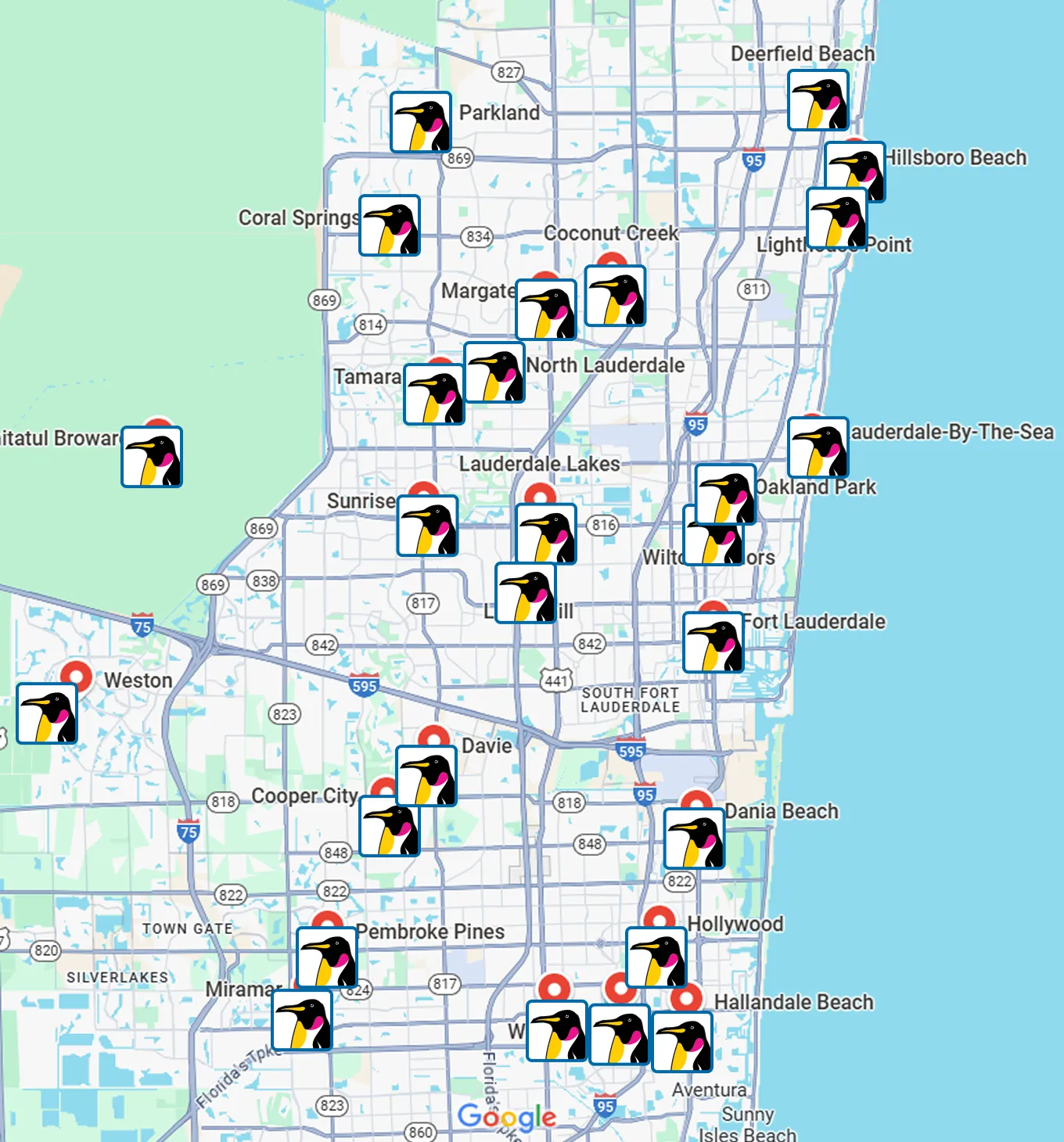
SERVICE AREAS