


Don't Sweat the Bill with These Florida Heat Pump Incentives

How to Save Money with Florida Energy Rebates for AC Upgrades
Florida energy rebates for ac upgrades are available right now through multiple programs — and most South Florida homeowners don't know they're leaving real money on the table.
Here's a quick look at what's currently available:
| Program | Who Offers It | Max Benefit | Key Requirement |
|---|---|---|---|
| FPL Instant Rebate | Florida Power & Light | $200 | SEER2 15.2+, FPL-approved contractor |
| Duke Energy HVAC Rebate | Duke Energy Florida | Up to $1,000 | 16 SEER2 / 7.5 HSPF2, Home Energy Check |
| Florida Public Utilities Rebate | FPU | Up to $500 | 15.0 SEER minimum, ducted system |
| Federal Tax Credit (Section 25C) | IRS | $600 (AC) / $2,000 (heat pump) | Primary residence, IRS Form 5695 |
| Florida Energy Saver HOMES | State of Florida / FDACS | Up to $16,000 | 20%+ energy savings, income tiers |
| Florida Energy Saver HEAR | State of Florida / FDACS | Up to $14,000 | Under 150% Area Median Income |
Heating and cooling can eat up nearly half of a home's energy bill. In South Florida, where your AC runs almost year-round, that adds up fast. The good news is that upgrading to a high-efficiency system doesn't just cut your monthly costs — it can also unlock serious rebates and tax credits that help offset the upfront investment.
Between utility rebates from providers like FPL and Duke Energy, federal tax credits under the Inflation Reduction Act, and Florida's state-level Energy Saver Program, there are multiple ways to get money back. The tricky part is knowing which programs apply to you, what efficiency ratings your new system needs to hit, and how to actually apply without missing a deadline.
This guide breaks it all down so you can make a smart, well-informed decision about your next AC upgrade.

Federal Tax Credits for Florida Energy Rebates for AC Upgrades
When we talk about saving money on a new system, the federal government provides one of the most reliable "rebates" in the form of a tax credit. Under Section 25C of the Internal Revenue Code—strengthened by the Inflation Reduction Act—homeowners can claim the Energy Efficient Home Improvement Credit.
This isn't just a deduction; it’s a dollar-for-dollar credit against the taxes you owe. For a standard central air conditioning unit, you can claim 30% of the project cost, capped at $600 per year. However, if you make the switch to a high-efficiency heat pump, that annual limit jumps significantly to $2,000. Because this is an annual limit, some savvy homeowners choose to spread out their home improvements across different tax years to maximize their total credits.
To qualify, the equipment must be installed in your primary residence. You’ll need to file IRS Form 5695 when you do your taxes. It is also vital to ensure the system meets the highest efficiency tiers recognized by the Consortium for Energy Efficiency (CEE). In our unique environment, choosing the right equipment is about more than just a tax break. Understanding How South Florida Climate Affects Your HVAC System is essential because the heat and salt air can impact how well these high-efficiency units perform over time.
Florida Utility Rebate Programs and Efficiency Requirements
While federal credits are handled at tax time, Florida utility companies offer more immediate "carrots" to encourage energy efficiency. To get these florida energy rebates for ac upgrades, your new system has to play by the utility's rules.
The most important metric you'll hear is SEER2 (Seasonal Energy Efficiency Ratio 2). As of April 2026, most utility programs require a minimum of 15.2 SEER2 for central AC and heat pumps. In many cases, to get the higher-tier rebates, you’ll need to aim for 16.0 SEER2 or higher.
To prove your system qualifies, you must have an AHRI Certificate of Product Ratings. This document proves that your specific combination of indoor and outdoor units (the "matched system") actually hits the efficiency numbers the manufacturer claims. Most rebates are only available for ducted systems where both the air handler and the condenser are replaced at the same time. Also, even the most efficient system won't save you money if it isn't maintained; check out How Often Should You Service Your AC in Florida to keep those efficiency ratings high for years to come.
Qualifying for Florida Energy Rebates for AC Upgrades via FPL
For our neighbors in Broward and Miami-Dade counties served by Florida Power & Light (FPL), the process is designed to be "instant." FPL offers a $200 instant rebate for new AC systems that meet a 15.2 SEER2 rating or higher.
The catch? You must use one of FPL's Participating Independent Contractors (PICs). When you work with an approved contractor, you don't have to mail in a form and wait weeks for a check. Instead, the $200 is applied as a direct credit on your invoice. It’s a seamless way to lower your investment on day one. Considering that a new system is a major decision, it helps to know How Long Does an AC System Last in South Florida so you can calculate your long-term return on investment.
Duke Energy and Florida Public Utilities HVAC Incentives
If you are located in a Duke Energy Florida service area, the incentives can be even larger—reaching up to $1,000 for high-efficiency heat pump replacements. Duke Energy typically requires a Home Energy Check (an energy audit) to be completed within a specific window (usually 24 months before or shortly after installation) to qualify for their Home Energy Improvement rebates.
Duke Energy offers different tiers:
- $1,000 Rebate: For replacing existing electric strip heat with a high-efficiency heat pump (16 SEER2 / 7.5 HSPF2 or higher).
- $500 Rebate: For upgrading an older heat pump to a new, high-efficiency model.
- $300 Rebate: For standard high-efficiency central AC upgrades.
Florida Public Utilities (FPU) also offers a Residential Heating and Cooling Efficiency Upgrade Program. They provide rebates ranging from $250 to $500 for HVAC upgrades, with a base requirement of a 15.0 SEER rating. Just be mindful of the clock—most FPU and Duke applications must be submitted within 90 days of installation. If your current unit is on its last legs, deciding whether to Repair vs Replace Your AC in South Florida becomes much easier when you realize you could get a four-figure check back from your utility provider.
The Florida Energy Saver Program: HEAR and HOMES
Now, let's look at the "big guns." As of April 2026, the Florida Energy Saver Program is in full swing. Backed by approximately $346 million in federal funding and administered by the Florida Department of Agriculture and Consumer Services (FDACS), these programs are designed to help Floridians—especially those in low-to-moderate income brackets—drastically reduce their energy bills.
The program is split into two main branches:
- HEAR (Home Electrification and Appliance Rebates): This is specifically for households earning less than 150% of the Area Median Income (AMI). It provides point-of-sale discounts for high-efficiency electric equipment like heat pumps.
- HOMES (Home Efficiency Rebates): This program is open to all income levels but provides higher incentives for those with lower incomes. It focuses on whole-home energy savings.
If you’re unsure if your current system is worth saving or if you should jump into these new programs, our guide on How to Decide Between AC Repair and Replacement can help you weigh the technical health of your unit against these massive new incentives.
Maximizing Florida Energy Rebates for AC Upgrades through HOMES
The HOMES program is unique because the rebate amount is tied directly to how much energy you save. If your AC upgrade and other improvements (like insulation) are predicted to save at least 20% of your home's energy use, you qualify for a rebate. If you hit the 35% savings tier, the rebate can double.
For low-income households (under 80% AMI), the HOMES program can cover 100% of the project cost up to $16,000. For higher-income households, it typically covers 50% of the cost up to $4,000. These are often applied as point-of-sale discounts by qualified contractors, meaning you don't have to pay the full amount upfront and wait for a reimbursement.
| Feature | Federal Tax Credit (25C) | Utility Rebates (FPL/Duke) | State Program (HOMES/HEAR) |
|---|---|---|---|
| Max Amount | $2,000 (Heat Pump) | $200 - $1,000 | $4,000 - $16,000 |
| Speed | Annual Tax Return | Instant or 6-12 Weeks | Point-of-Sale Discount |
| Income Limits | None | None | Tiers based on AMI |
| Combine? | Yes (with Utility) | Yes (with Tax Credit) | No (cannot stack HEAR with 25C) |
How to Apply and Stack Your Savings
Navigating florida energy rebates for ac upgrades can feel like a part-time job, but "stacking" is the secret to maximum savings. Stacking simply means using more than one incentive for the same project. For example, you can often combine an FPL instant rebate with a Federal Tax Credit. However, there are rules—you generally cannot combine the HEAR point-of-sale rebate with a federal tax credit for the exact same piece of equipment.
To ensure you actually get your money, follow this checklist:
- Verify the Contractor: Ensure they are Florida-licensed (per Chapter 489) and, if using FPL, that they are a Participating Independent Contractor.
- Pull Permits: Florida Building Code mandates a permit for every AC replacement. Skipping this voids manufacturer warranties and disqualifies you from almost all rebate programs.
- Get the AHRI Certificate: This is your "golden ticket." It proves your system's efficiency.
- Save the Invoice: It must be detailed, showing model numbers for both the indoor and outdoor units.
- Check the ENERGY STAR Rebate Finder: Use this tool or utility portals to double-check for any local municipal incentives we haven't covered here.
Required Documentation Checklist:
- Signed Rebate Application (for FPU/Duke)
- Final Paid Invoice with model/serial numbers
- AHRI Certificate
- Proof of Permit and Passed Inspection
- Utility Account Number
Frequently Asked Questions about Florida AC Rebates
Can I combine federal tax credits with utility rebates?
Yes! In most cases, utility Demand Side Management (DSM) programs (like those from FPL or Duke) can be "stacked" with the Section 25C federal tax credit. This allows you to get an upfront discount or rebate check and a credit on your tax return. Just remember that the new state-funded HEAR rebates usually cannot be combined with the 25C credit for the same unit.
What is the minimum SEER2 rating for Florida rebates?
For most Florida utility rebates, the floor is 15.2 SEER2. However, to be safe and maximize your savings, we recommend systems that are 16.0 SEER2 or higher. Always verify the specific rating on the AHRI directory before signing a contract.
When will the HEAR and HOMES programs be available?
As of April 2026, the programs are fully operational in Florida. The HEAR program launched first, followed by the HOMES program. You can check the Florida Department of Agriculture and Consumer Services (FDACS) portal to find qualified contractors and register your interest.
Conclusion
Upgrading your air conditioner in South Florida isn't just a matter of comfort—it's a significant financial decision. With the right florida energy rebates for ac upgrades, you can turn a necessary home improvement into a savvy investment that pays for itself through lower monthly bills and thousands of dollars in incentives.
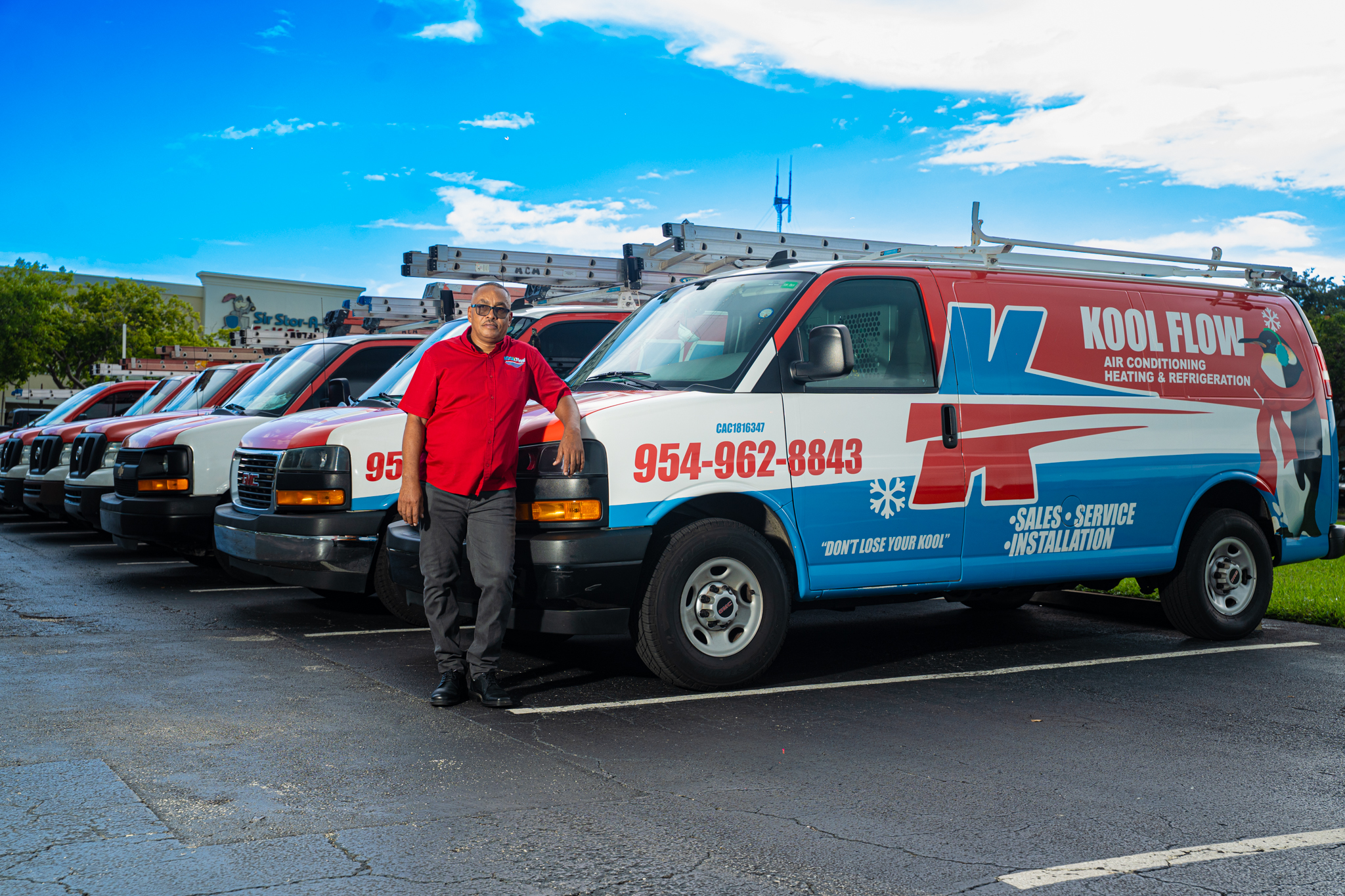
At Kool Flow Air Conditioning Contractor, we’ve spent over 20 years helping our neighbors in West Park, Fort Lauderdale, Hollywood, and across Broward, Miami-Dade, and Palm Beach counties stay cool without breaking the bank. As a family-owned business, we pride ourselves on honest pricing and helping you navigate the complex world of efficiency ratings and rebates. We can help you select a system that qualifies for the maximum available credits while ensuring it's built to withstand the South Florida heat.
Don't leave your rebate money on the table. Schedule your energy-efficient AC upgrade today and let us help you find the perfect balance of comfort and savings.


Hear what our satisfied
clients have to say

SERVICE AREAS