


How to Decide Between AC Repair and Replacement Without Breaking the Bank

Is It Time to Repair or Replace Your AC? Here's How to Decide

How to decide between AC repair and replacement comes down to a few key factors: the age of your unit, the extent of the required fix, how often it's been breaking down, and your system's overall energy efficiency.
Quick Answer: Repair or Replace?
| Situation | Recommended Action |
|---|---|
| Unit is under 10 years old, minor issue | Repair |
| Unit is 10-15+ years old, major failure | Replace |
| Repair is extensive relative to system value | Replace |
| Frequent breakdowns in the past 2-3 years | Replace |
| Rising energy consumption despite regular maintenance | Replace |
| Unit under warranty, isolated problem | Repair |
For South Florida homeowners, a failing AC isn't just an inconvenience — it's a real comfort and health issue. The heat and humidity here put serious strain on cooling systems, and an unreliable unit can leave your family sweltering while performance continues to decline.
The tricky part is knowing when to stop investing in an aging system and when a repair is still the smarter, more reliable call. Make the wrong choice and you could either rely on a unit that's already on its last legs — or replace something that had years of good service left.
This guide walks you through exactly what to look for so you can make a confident, informed decision.
Key Factors on how to decide between ac repair and replacement
When we sit down with homeowners in West Park or Fort Lauderdale, the first thing we look at is the "big picture" of the cooling system. An air conditioner isn't just a box that blows cold air; it’s a complex piece of machinery with a finite lifespan.
The Average Lifespan: 10 to 15 Years
In most parts of the country, a central AC unit might last 15 to 20 years. However, here in South Florida, our systems work overtime. Between the relentless humidity and the salt air near places like Hillsboro Beach and Pompano Beach, the average lifespan of an AC unit is typically 10 to 15 years. If your unit is celebrating its 10th birthday, it’s officially entered the "retirement zone." At this stage, major components like the compressor or evaporator coil are more likely to fail.
Energy Efficiency and SEER Ratings
Technology has moved fast. If your unit was installed over a decade ago, it likely has a low SEER (Seasonal Energy Efficiency Ratio) rating. Older units often hover around 10 to 13 SEER. Modern ENERGY STAR certified units are significantly more efficient. In fact, upgrading from an old 10 SEER unit to a new 16 SEER model can noticeably reduce your energy consumption. When you realize a new system could improve your home's efficiency, the replacement starts looking like a very smart long-term investment.
Maintenance History
How well has the unit been treated? A system that has received regular professional attention through an AC Maintenance Broward County Guide will almost always outlast a neglected one. If you’ve skipped annual tune-ups, the internal friction and dust buildup have likely aged the components prematurely. We always recommend checking your service records; if you’ve had to call for repairs more than once a year, the system is telling you it’s tired. You can find more info about AC services to see how professional care impacts longevity.
The Logic of Comfort: Evaluating Age and Reliability
Deciding whether to fix a broken part or buy a whole new system shouldn't be a guessing game. We use logical benchmarks to help our customers in Broward County make the most sustainable choice.
| Repair Benefits | Replacement Benefits |
|---|---|
| Addresses immediate mechanical issues | Lower monthly energy consumption |
| Extends life of a relatively new unit | Brand-new 5 to 10-year warranty protection |
| Quick fix for minor electrical or drain issues | Improved indoor air quality and humidity control |
| Keeps existing ductwork setup as-is | Peace of mind during peak summer heat |
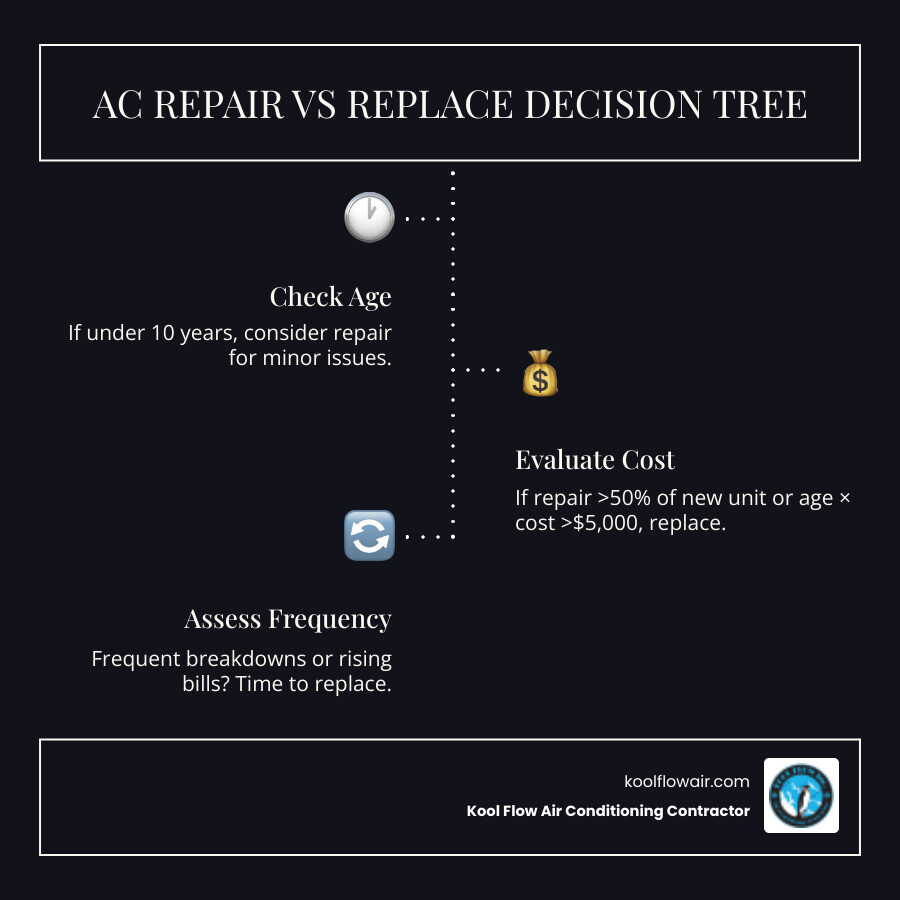
The Age and Reliability Rule: how to decide between ac repair and replacement
This is a helpful standard in the HVAC industry. You take the age of your AC unit and evaluate it against the frequency and severity of repairs. If the unit is older and requires frequent intervention, you should strongly consider replacement.
- Example A: Your AC is 12 years old and needs a major component fix. At this age, it is often more practical to shop for a new unit rather than investing in an aging machine.
- Example B: Your AC is 5 years old and needs a minor fix. In this case, a repair is almost certainly the better move to maximize the unit's remaining lifespan.
This logic helps you visualize the long-term value of your decision. Investing in a 12-year-old machine is often a temporary solution—you fix one part today, but another component might fail tomorrow. If you are facing a tough decision, our team for AC Repair Broward County FL can provide the honest diagnostics you need to evaluate these factors accurately.
The Major Component Rule
Another way to look at it is the component rule: If the fix involves a primary part like the compressor on a unit where the warranty has expired, replacement is often the logical choice. Why invest heavily in an old system that has already reached its expected service limit?
Professional Tips on how to decide between ac repair and replacement
Don't just look at the immediate fix; look at the performance. A system that "runs" but doesn't "cool" effectively is inefficient every second it's turned on. If your home in Coral Springs or Miramar feels clammy or hot despite the AC running constantly, the system's operational efficiency has likely plummeted. In these cases, AC Replacement Broward County FL offers a fresh start with a system designed for modern efficiency standards.
Red Flags: When Your AC Signals It’s Time to Retire
Sometimes, the signs that you need a new AC aren't found on a service report, but in how your home feels. If you notice these "red flags," your system is likely on its last legs.
- Uneven Cooling: Are some rooms in your Davie home freezing while the kitchen feels like a sauna? This often means the compressor can no longer keep up with the demand or that the blower motor is failing.
- Excessive Noise: A healthy AC should hum quietly. If you hear grinding, squealing, or banging, it’s a sign of serious mechanical failure. While some noises are fixable, they often point to a system that is physically wearing out.
- High Humidity: In South Florida, the AC's job is as much about removing moisture as it is about lowering the temperature. If your skin feels sticky or you notice mold spots near vents, your AC is no longer dehumidifying effectively.
- Rising Energy Consumption: Have you noticed your energy usage creeping up even though you haven't changed your habits? As parts wear out, the motor has to work twice as hard to produce the same amount of cold air.
- Frequent Breakdowns: If you have our number on speed dial because the system fails every few months, you’re trapped in a cycle of temporary repairs. Check out our Affordable AC Repair Guide Broward County to see if your current issues are minor or symptoms of a larger collapse.
- Dust Accumulation: Older systems often have leaky ductwork or failing filtration, leading to more dust in your home and poorer air quality.
Refrigerant Phase-Outs and Technical Considerations
One of the biggest factors in how to decide between AC repair and replacement today is something you can't even see: the refrigerant.
The R-22 and R-410A Transition
If your unit was built before 2010, it likely uses R-22 refrigerant (often called Freon). The EPA phased out the production and import of R-22 in 2020 because it’s harmful to the ozone layer. Because it is no longer produced, the remaining supply is limited. If an old R-22 system develops a leak, maintaining it can be difficult and impractical.
Furthermore, R-410A—the refrigerant that replaced R-22—is also being phased down in favor of newer, even more eco-friendly options like R-454B. If your system is leaking refrigerant and is more than 10 years old, it’s almost always better to replace it with a modern unit that uses current, readily available refrigerants. Our AC Repair West Park FL Guide covers more on how these local environmental factors affect your repair options.
Mismatched Components
Homeowners sometimes try to save by replacing only the outdoor condenser while keeping the old indoor evaporator coil. This is a mistake. Modern AC units are designed as "matched systems." If the indoor and outdoor components don't match, the system won't reach its rated SEER efficiency, and the mismatched pressure can cause the new compressor to fail prematurely. We always recommend replacing both together to ensure your warranty remains valid and your system runs perfectly.
Efficiency Incentives
The good news is that modern standards encourage upgrading. High-efficiency replacements often meet current environmental guidelines, and many local Florida utility providers offer programs for installing ENERGY STAR certified equipment. These incentives can help support the transition to a more reliable and efficient system.
Frequently Asked Questions
What is the average lifespan of a central air conditioner?
In the South Florida climate—specifically in areas like Hollywood, Dania Beach, and Weston—you can expect a central AC unit to last between 10 and 15 years. The combination of high heat, constant operation, and salt air (if you're near the coast) causes components to wear out faster than they would in cooler climates. Regular maintenance is the single most important factor in pushing that lifespan toward the 15-year mark.
How does a high SEER rating save energy?
SEER stands for Seasonal Energy Efficiency Ratio. Think of it like MPG for your car. A higher number means the system uses less electricity to produce the same amount of cooling. Moving from a 10 SEER unit to a 16 or 18 SEER unit can lead to a significant reduction in your monthly energy usage. Over the course of a decade, those efficiency gains provide substantial value.
When should I call a professional to evaluate my system?
You should call an expert if you experience a sudden drop in performance, hear strange noises, or see your energy usage spike without explanation. If you’re facing a repair that makes you hesitate, it’s the perfect time for a professional "repair vs. replace" evaluation. For residents in Fort Lauderdale, our AC Repair 24 Hour Fort Lauderdale Guide is a great resource for when those emergencies happen in the middle of the night.
Conclusion
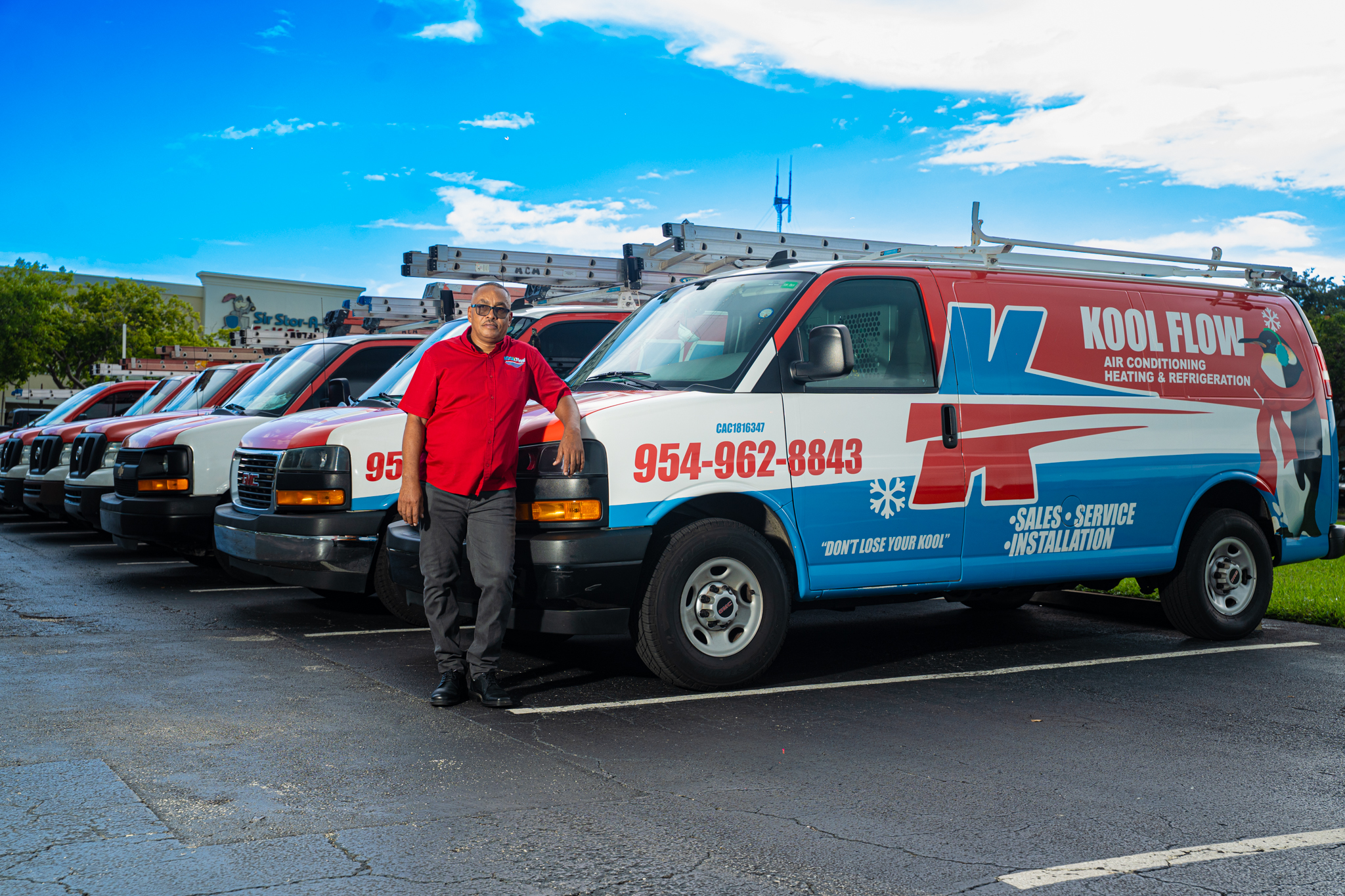
At Kool Flow Air Conditioning Contractor, we understand that how to decide between AC repair and replacement is an important decision for your home. As a family-owned business with over 20 years of experience serving South Florida—from West Park to Pompano Beach—we pride ourselves on providing honest, transparent evaluations. We aren't here to recommend something you don't need; we're here to ensure your home stays cool and your comfort is prioritized.
Whether you need a reliable fix to get through the week or a full system upgrade to improve your home's efficiency for the next decade, we offer the dependable cooling solutions you deserve. We even offer a 5-year maintenance plan to ensure your new investment stays in peak condition for years to come.
If you’re tired of the "AC dilemma" and want an expert opinion you can trust, contact us today. Let’s get your home comfort back on track with the best Air Conditioning solutions in South Florida.


Hear what our satisfied
clients have to say

SERVICE AREAS