


How South Florida Climate Affects Your HVAC System and What to Do About It
Why South Florida's Climate Is One of the Hardest on HVAC Systems in the U.S.
How south florida climate affects your hvac system comes down to three relentless forces working against your equipment every single day: extreme heat, suffocating humidity, and — for coastal homeowners — salt-laden air. South Florida sits in ASHRAE Climate Zone 1, the most demanding hot-humid classification in the country. From May through October, temperatures routinely climb past 90°F while relative humidity stays above 70%. That combination forces your air conditioner to run almost constantly, with no seasonal break to recover.
Here is a quick summary of the main ways South Florida's climate stresses your HVAC system:
- Extreme heat forces your compressor to work harder and longer, accelerating wear on every moving part
- High humidity means your system must remove moisture from the air (latent load) on top of cooling it down, straining capacity
- Salt air (in coastal areas) corrodes condenser coils, fan blades, and metal housings — sometimes cutting years off your system's lifespan
- Near-constant runtime leads to faster filter clogging, more frequent drain line blockages, and higher risk of mold and mildew inside the unit
- Hurricane season (June 1 – November 30) overlaps directly with peak cooling demand, adding flood and wind damage risks on top of daily climate stress
Unlike most of the country, where HVAC systems get a natural rest during mild seasons, South Florida's units face a roughly nine-month cooling marathon. That changes everything about how you should maintain, size, and protect your system.
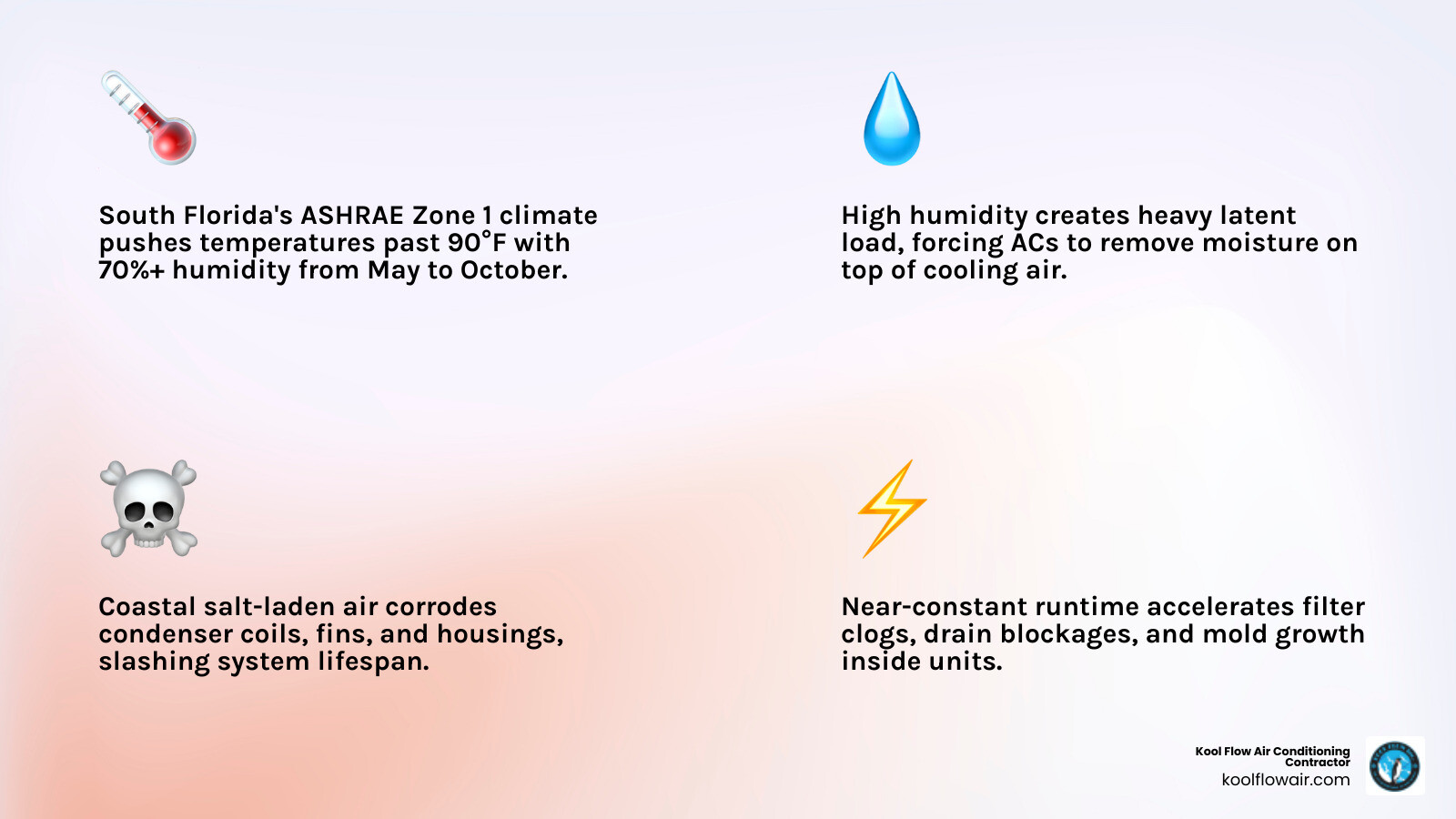
How South Florida Climate Affects Your HVAC System: The Main Culprits
When we talk about how south florida climate affects your hvac system, we have to look at the chemistry and physics of our tropical environment. In cities like Fort Lauderdale, Hollywood, and Miami, your AC isn't just a luxury; it’s a life-support system.
The first culprit is the ambient temperature. When it’s 95°F outside with a heat index of 105°F, your outdoor condenser unit is trying to "dump" heat into air that is already boiling. This creates a massive workload for the compressor.
Then there is the relative humidity. South Florida routinely sees humidity levels exceeding 70%. In the HVAC world, we distinguish between "sensible heat" (the temperature you see on the thermometer) and "latent load" (the moisture in the air). Your system has to work twice as hard because it must wring out gallons of water from the air before you can actually feel "cool." If your system isn't maintained, this moisture lingers, leading to the problems we detail in our Ac Maintenance Broward County Guide.
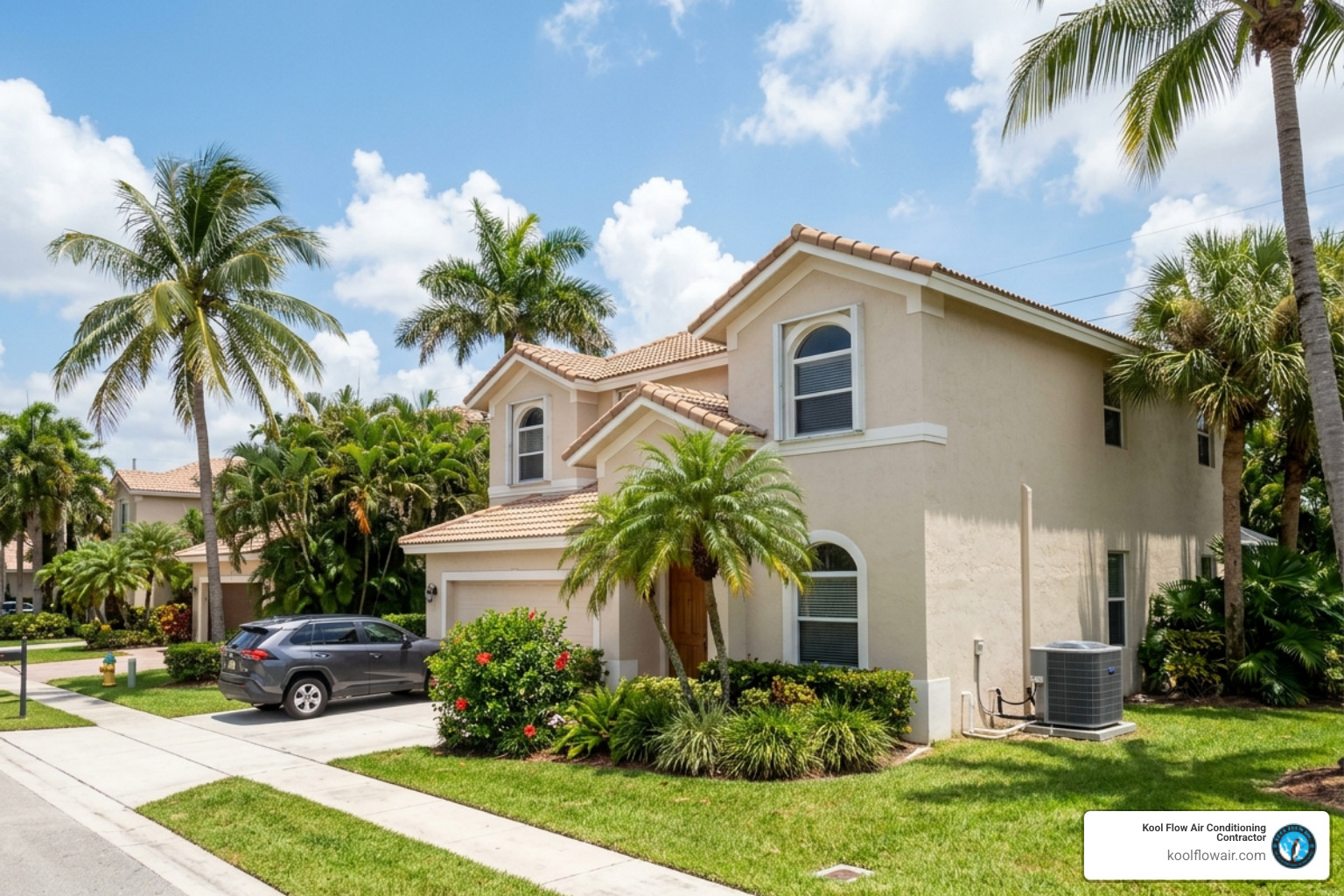
Finally, for those of us living in coastal spots like Pompano Beach or Deerfield Beach, salt-laden air is a silent killer. Salt is highly corrosive. It eats away at the delicate aluminum fins on your condenser coils, reducing their ability to release heat. This can shorten a system’s lifespan from a standard 15 years down to just 7 or 10 years if left unprotected.
Why High Humidity and Heat Strain Your HVAC System
In the "Sunshine State," the dew point—the temperature at which air becomes saturated with water—often reaches the mid-to-upper 70s. This is incredibly high. When this humid air hits your cold evaporator coils, it turns into liquid water.
If your system is sized incorrectly or the coils are dirty, you face several issues:
- Mold Growth: Constant moisture in the dark, cool environment of your air handler is the perfect breeding ground for mold and mildew. This doesn't just smell bad; it poses health risks.
- Short-Cycling: If a system is too large, it cools the room so fast that it doesn't have time to remove the humidity. You end up with a home that is cold but "clammy."
- Increased Wear: Because the system is fighting both heat and water, components like the blower motor and compressor run longer cycles, leading to premature mechanical failure.
We always recommend checking out our Residential Ac Maintenance Guide Broward County Fl to understand how to keep these humidity-related issues at bay.
How South Florida Climate Affects Your HVAC System in Coastal Areas
Living near the ocean is a dream, but for your AC, it’s more like a nightmare. Salt air causes galvanic corrosion. This happens when salt acts as an electrolyte between different types of metal in your unit (like copper tubes and aluminum fins).
To combat this, we look for systems that meet ASTM B117 standards, which involve rigorous salt spray testing. Protective coatings, like epoxy or specialized "Blue Fin" or "Gold Fin" coatings, can be applied to the coils to create a barrier against the salt. Without these, your condenser fins will eventually turn to powder, a common sight in places like Lauderdale-By-The-Sea. For more specific tips on handling these coastal challenges, see our Ac Maintenance Fort Lauderdale Tips 2026.
Common HVAC Failures Triggered by Tropical Weather
Because our climate is so aggressive, we see the same "Florida-specific" failures over and over again. Understanding how south florida climate affects your hvac system means knowing what to look for before a total breakdown occurs.
- Compressor Overload: During a July heatwave in Pembroke Pines or Miramar, your compressor might run for 18 to 20 hours a day. If the coils are even slightly dirty, the internal heat builds up until the compressor's safety switch trips—or worse, the motor burns out.
- Clogged Condensate Drains: This is arguably the #1 service call in South Florida. The high humidity produces so much water that algae and "slime" grow in the drain lines. If the line clogs, the water backs up, potentially flooding your closet or ceiling.
- Electrical Malfunctions: The combination of salt air and high humidity can lead to "pitting" on electrical contactors. This causes the parts to stick or fail to engage, leaving you without cooling on a Sunday afternoon.
- Refrigerant Leaks: Corrosion doesn't just stay on the outside. It can create tiny "pinhole" leaks in the copper coils. Once the refrigerant level drops, the system can't move heat efficiently, often leading to the evaporator coil icing over.
- Musty Odors: Often called "Dirty Sock Syndrome," this is caused by bacteria and mold buildup on the indoor coils due to constant moisture.
If you’re noticing any of these signs, don't wait. Check our Best Ac Repair Guide Broward County Fl or, if it’s the middle of the night, our Ac Repair 24 Hour Broward Guide for immediate assistance.
Essential Maintenance and Protective Strategies for Homeowners
To survive the South Florida climate, your maintenance routine needs to be more robust than someone living in a cooler, drier state. We’ve put together a comparison to show you the difference:
| Maintenance Task | Standard Climate (Dry/Cool) | South Florida Climate (Hot/Humid/Salty) |
|---|---|---|
| Biannual Tune-ups | Recommended | Essential |
| Filter Replacement | Every 3 months | Every 30-60 days |
| Coil Rinsing | Once a year | Every 1-2 months (Coastal) |
| Drain Line Flush | Optional | Every 6 months |
| Duct Inspection | Every 5 years | Every 2 years (Check for mold/leaks) |
Biannual tune-ups are the cornerstone of a healthy Florida AC system. We recommend one visit before the "Big Heat" hits in May and another in the "Shoulder Season" (November-February) to address any wear and tear from the summer marathon.
One DIY tip we give all our neighbors in Coral Springs and Weston: Rinse your outdoor unit. Using a gentle garden hose (no pressure washers!), rinse the salt and dust off your condenser coils once a month. This simple act can significantly extend the life of the metal components.
For more professional strategies, take a look at our Ac Maintenance Best Tips Broward County Fl and keep an eye out for the Best Ac Repair Deals Broward County Fl to keep your costs manageable.
Smart System Choices for the Sunshine State
When it’s time for a new unit, you can't just buy any off-the-shelf system. Because of how south florida climate affects your hvac system, you need equipment designed for high-latent-load environments.
- Variable-Speed Compressors: Unlike standard "on/off" systems, variable-speed units can slow down and run longer cycles at lower power. This is perfect for South Florida because it provides constant dehumidification without freezing you out.
- High SEER2 Ratings: As of 2023, the Department of Energy requires a minimum SEER2 of 14.3 in the Southeast. However, in places like Sunrise or Plantation, investing in 16 or 18 SEER2 can lead to massive utility savings because our cooling season is so long.
- Heat Pumps: Don't let the name fool you. Heat pumps are excellent at cooling and are incredibly efficient during our mild winters (those two weeks in January where it hits 50°F).
- Manual J Load Calculation: Never let a contractor "guesstimate" your AC size based on square footage alone. A proper Manual J calculation accounts for South Florida's sun exposure, window types, and humidity levels.
- HVHZ Compliance: If you live in Miami-Dade or Broward County, your outdoor unit must be installed with hurricane-rated brackets and meet High Velocity Hurricane Zone (HVHZ) standards for wind resistance up to 185 mph.
Choosing the right system is a big decision. We’ve simplified the process in our Affordable Ac Installation Guide Broward County Fl. And if you're looking for value, our Best Affordable Ac Repair Fort Lauderdale insights can help you decide whether to repair or replace.
Frequently Asked Questions about Florida HVAC
How do hurricanes and flooding impact my HVAC system?
Hurricanes bring three main threats: wind, rain, and power surges. High winds can turn loose debris into projectiles that crush condenser fins. Heavy rain and storm surges can submerge the outdoor unit. If your unit is flooded, do not turn it on. Saltwater is incredibly destructive to electrical components. You’ll need a professional post-storm inspection to check for mud, salt deposits, and electrical shorts. In flood-prone areas like parts of Fort Lauderdale, we often recommend elevating the outdoor unit on a taller concrete or composite pad.
What are the best thermostat settings for South Florida homes?
The goal in Florida is to balance comfort with humidity control. We generally recommend:
- When Home: 75°F - 78°F.
- When Away: 80°F - 82°F (don't turn it off completely, or the humidity will cause mold).
- Humidity Setting: If you have a smart thermostat with humidity control, aim for 45% to 55%.
Using ceiling fans allows you to feel comfortable at a higher temperature, which saves money. Just remember: fans cool people, not rooms. Turn them off when you leave!
Conclusion
At Kool Flow Air Conditioning Contractor, we’ve seen how south florida climate affects your hvac system over the last 20+ years. We are a family-owned business based in West Park, FL, and we understand that a broken AC in July isn't just an inconvenience—it’s an emergency.
Whether you are in Davie, Miramar, or Boca Raton, we pride ourselves on providing reliable cooling, honest pricing, and flexible financing. We don't just fix units; we build long-term relationships with our neighbors. That’s why we offer a comprehensive maintenance plan to catch those salt and humidity issues before they turn into expensive repairs.
Don't let the Florida sun win. Protect your home with a 5-year maintenance plan and enjoy the peace of mind that comes with expert care. Give us a call today—we’re here to keep you cool!

Hear what our satisfied
clients have to say

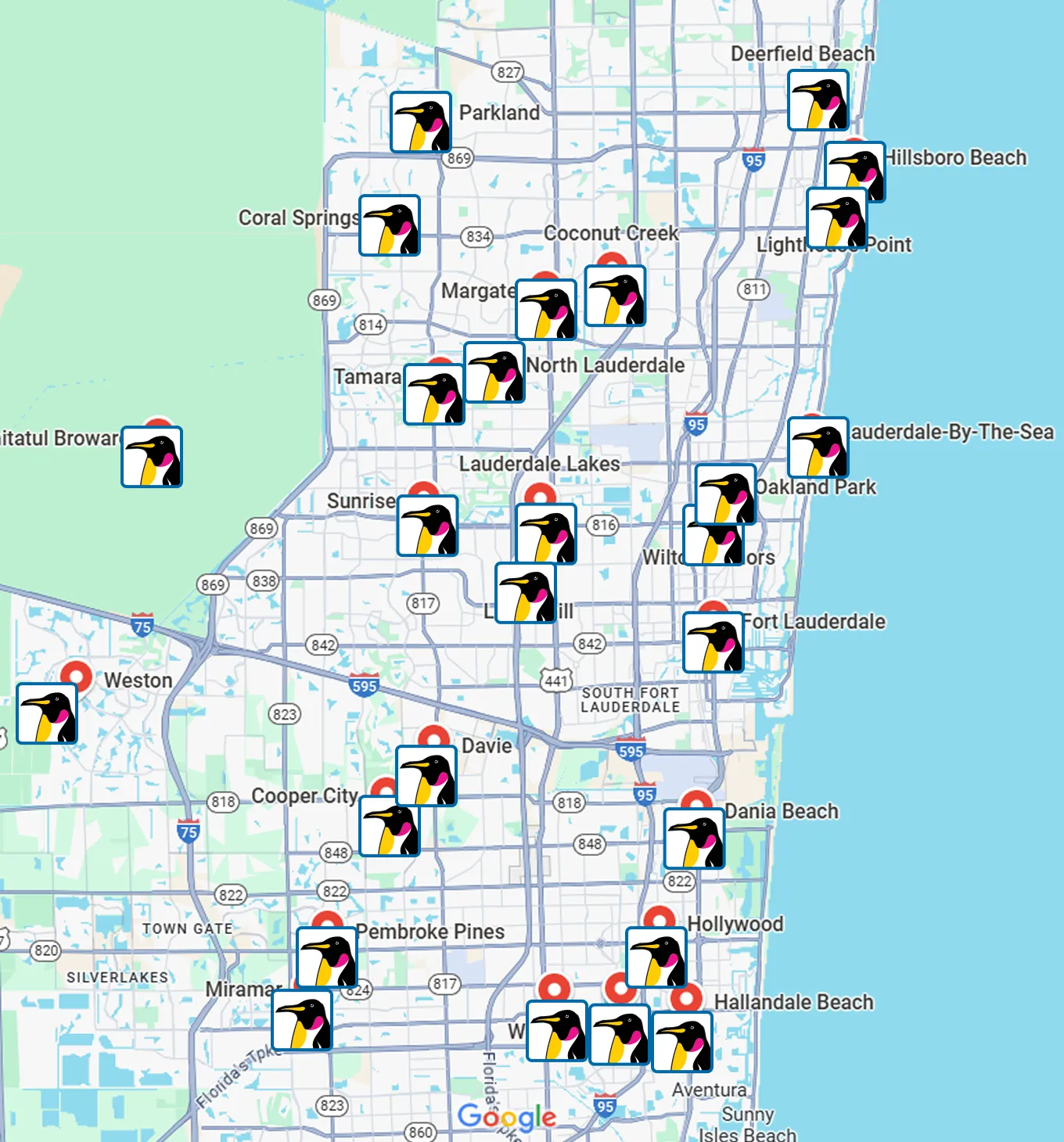
SERVICE AREAS