


Salt Air Corrosion on HVAC Equipment Explained

Why Salt Air and Your HVAC System Are a Serious Concern for South Florida Homeowners
How does salt air affect your HVAC system is one of the most important questions any coastal homeowner can ask — and the answer directly impacts how long your equipment lasts and how much you spend keeping it running.
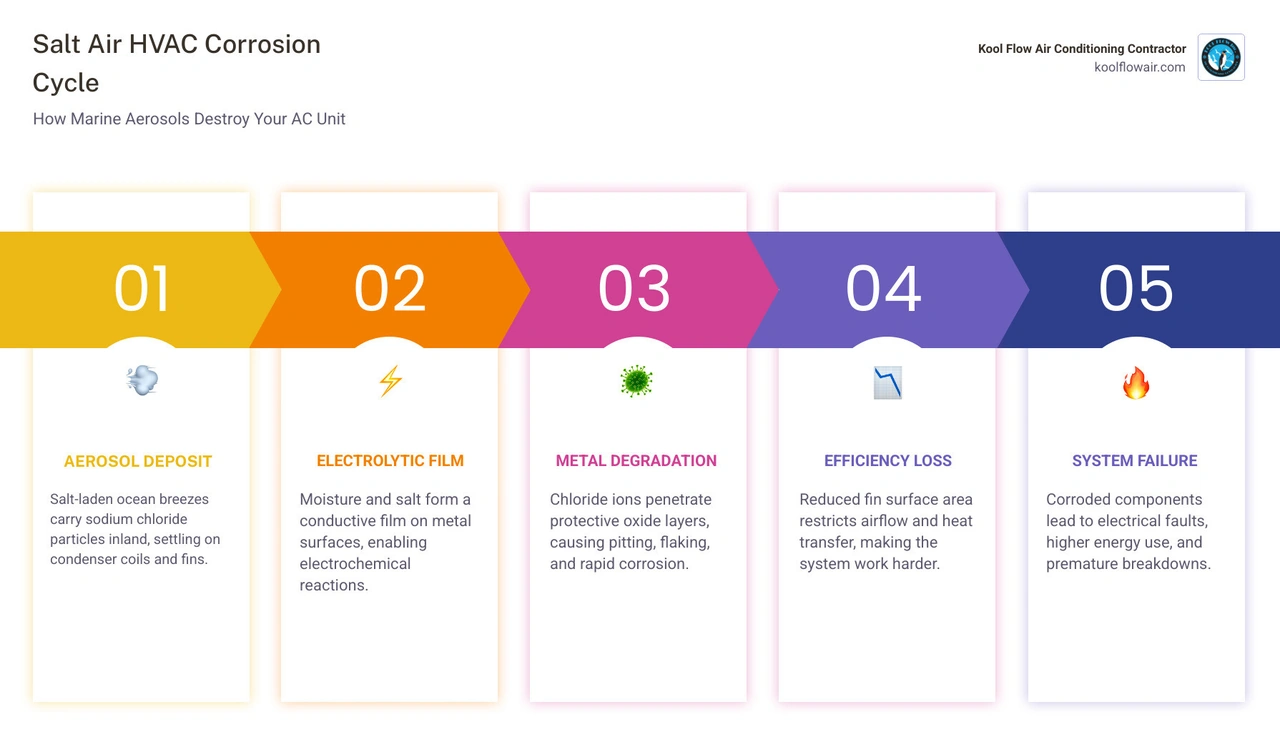
Salt air is a mixture of sodium chloride and water vapor carried inland by ocean breezes. When it settles on your outdoor HVAC unit, it triggers an electrochemical process that eats through metal surfaces — fast. Here is a quick breakdown of the main effects:
- Accelerated corrosion — Chloride ions break through protective metal layers, causing pitting and rust at rates 4 to 8 times faster than in inland environments
- Reduced efficiency — Corroded condenser coils and aluminum fins restrict airflow and heat transfer, forcing your system to work harder
- Higher energy bills — A struggling system draws more power to maintain the same cooling output
- Shortened lifespan — Units that would typically last 10 or more years can fail in as little as 5 years without protection
- Indoor air quality problems — Salt particles entering your ductwork can contribute to musty odors, filter saturation, and biological growth
- Electrical damage — Salt and moisture corrode terminals and wiring, leading to intermittent failures or sudden breakdowns
South Florida's Climate Zone 1A — very hot and very humid — makes this problem worse than in most other coastal regions. High humidity accelerates the electrolytic activity that drives corrosion, meaning the combination of heat, moisture, and salt is especially punishing on HVAC equipment here.
The good news is that with the right maintenance, materials, and protective measures, you can dramatically extend the life of your system even in a demanding coastal environment.
How Does Salt Air Affect Your HVAC System and Performance?
Living in beautiful areas like Fort Lauderdale or Pompano Beach means enjoying the ocean breeze, but your air conditioner isn't quite as fond of that salty air as you are. When we look at how does salt air affect your HVAC system, we have to talk about the physical and chemical changes that happen to the unit over time.
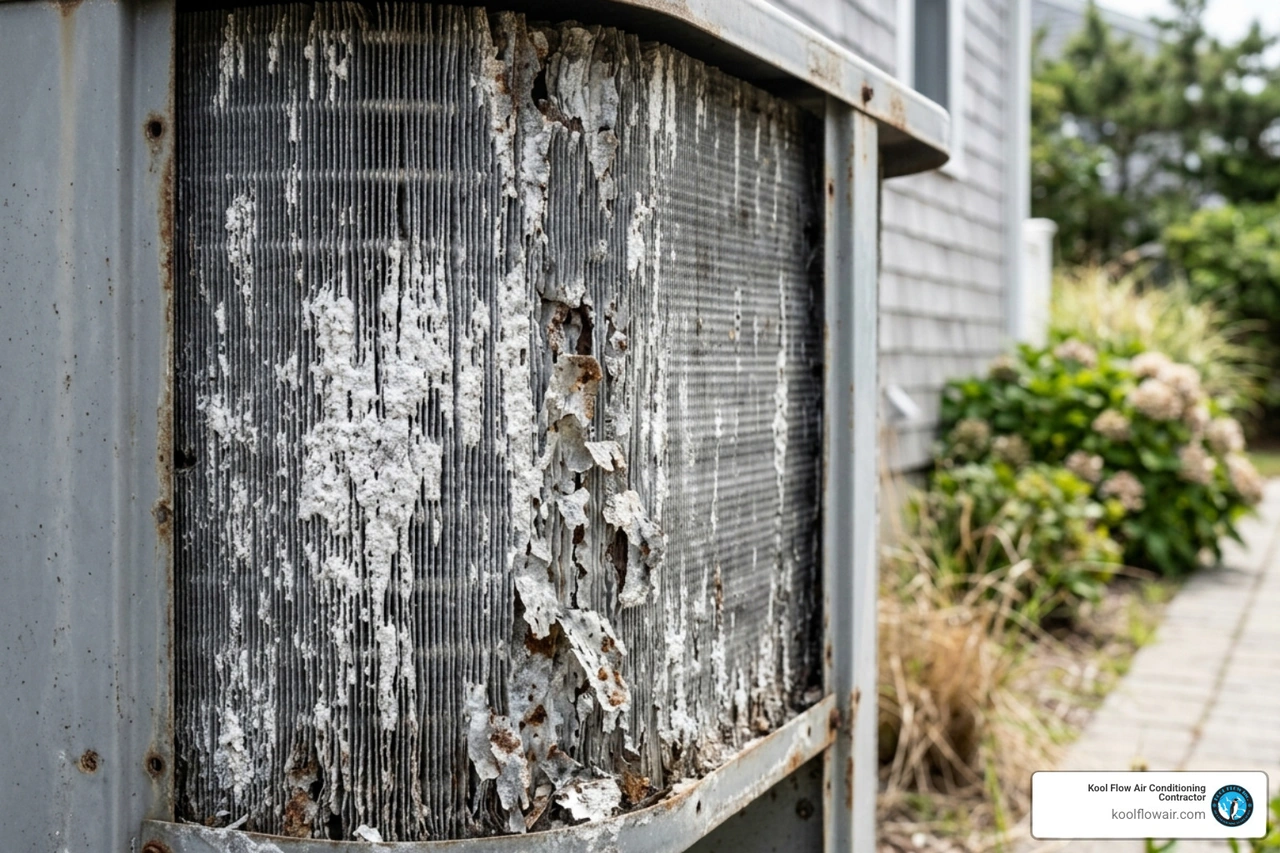
The most immediate impact is on heat transfer efficiency. Your outdoor unit (the condenser) is designed to release heat from your home into the outside air. To do this effectively, it uses thousands of thin aluminum fins. Salt air causes these fins to corrode and "flake" away. As the surface area of these fins disappears, the system loses its ability to shed heat.
This leads to a cascade of performance issues:
- Airflow Restriction: As corrosion builds up, it creates a "crust" or film that physically blocks air from moving through the coils.
- Energy Consumption: Because the system can't shed heat efficiently, the compressor has to run longer and work harder, causing your energy bills to skyrocket.
- Component Strain: The increased workload puts immense pressure on the fan motor and compressor, leading to premature mechanical failure.
Understanding How South Florida Climate Affects Your HVAC System is essential for anyone living near our coastlines. The high humidity in our region acts as a "multiplier" for salt damage, keeping the salt moist and active on the metal surfaces for longer periods.
HVAC Lifespan Comparison: Coastal vs. Inland
| Feature | Inland Environment | Coastal Environment (Unprotected) |
|---|---|---|
| Expected Lifespan | 10–15 Years | 5–7 Years |
| Visible Corrosion | After 7–10 Years | Within 1–3 Years |
| Maintenance Need | Annual | Quarterly / Semi-Annual |
| Efficiency Loss | Gradual | Rapid (after 3 years) |
Identifying Early Signs of Salt Air Damage to Your HVAC System
You don't have to be an HVAC expert to spot the early warning signs of salt damage. If you catch these early, you might save yourself from a full system replacement.
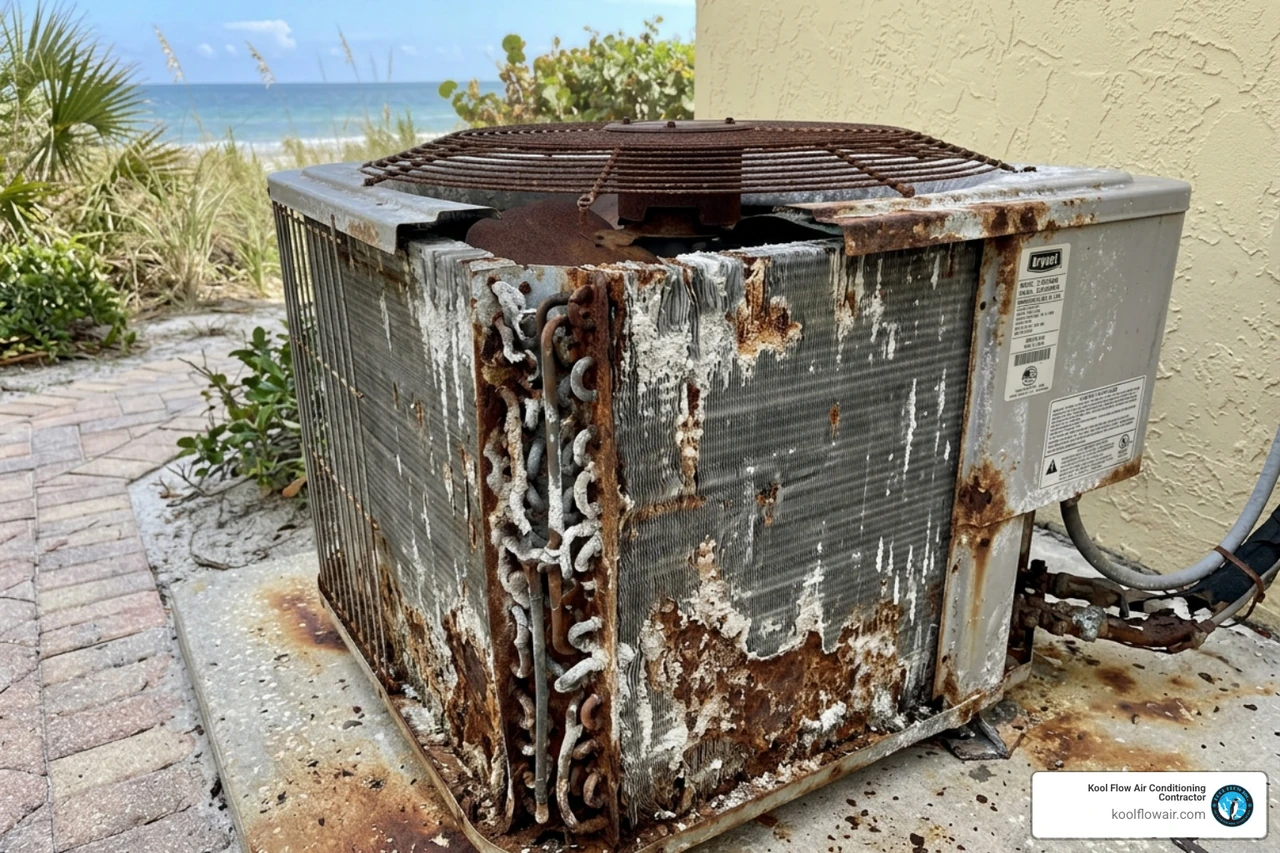
- Pitting Corrosion: Look closely at the metal surfaces. Do you see tiny "craters" or pockmarks? This is pitting, where chloride ions have eaten deep into the metal.
- White Powdery Deposits: This is often the first sign. A white, chalky substance (aluminum oxide) appearing on the fins indicates that the metal is actively oxidizing.
- Flaking Metal: If the aluminum fins feel brittle or fall off when touched, the structural integrity of the coil is compromised.
- Reduced Cooling Capacity: If your home is taking longer to cool down than it did last year, salt buildup on the coils is likely the culprit.
Ignoring these signs is a recipe for disaster. We've detailed What Happens if You Skip AC Maintenance in Florida for homeowners who want to know the long-term risks of letting salt take over.
Impact on Indoor Air Quality and Ductwork
Most people think salt air only affects the outdoor unit, but it can actually find its way inside. Salt particles are incredibly small and can be pulled into the system through tiny leaks in your ductwork or during the cooling process.
When salt enters the indoor environment, it can lead to:
- Chloride Ion Infiltration: Salt particles settle on indoor coils and electrical components, causing "hidden" corrosion inside your home.
- Metallic or Musty Odors: As metal components corrode, they can release distinct smells. Furthermore, salt attracts moisture, which can lead to biological growth (mold and mildew) inside the dark, damp environment of your air handler.
- Filter Saturation: Salt particles can clog your air filters much faster than standard dust, requiring you to change them every 1–2 months rather than the standard 3 months.
Ensuring your Ductwork in Miami-Dade County FL is properly sealed is a critical defense against salt air entering your living space.
Vulnerable Components in Coastal Environments
While the entire outdoor unit is at risk, certain parts are "magnets" for salt damage.
1. Condenser Coils and Aluminum Fins:These are the most vulnerable. Most residential systems use a combination of copper tubes and aluminum fins. When salt air gets between these two different metals, it creates a "galvanic cell" — essentially a tiny battery that uses the salt water as an electrolyte to eat the aluminum away.
2. Copper-to-Aluminum Junctions:The points where different metals meet are usually where leaks occur first. Salt accelerates the failure of these joints, leading to refrigerant leaks that are difficult and expensive to repair.
3. Electrical Terminals and Wiring:Salt is highly conductive. When it builds up on electrical terminals, it can cause short circuits, blown capacitors, or even "pitting" on the contactors. This often results in a system that won't start or shuts down unexpectedly.
4. Fan Motor and Housing:The fan motor is responsible for pulling that salty air through the unit. If the motor housing isn't properly coated, it will rust from the inside out, eventually seizing the motor.
If you are already noticing these issues, you may need an AC Repair in Margate FL to stabilize the system before the damage becomes permanent.
Professional Maintenance for Salt Air and Your HVAC System
Standard maintenance isn't enough when you live within a few miles of the Atlantic. Coastal systems require a specialized approach.
At Kool Flow, we recommend quarterly inspections for homes within 1,500 feet of the ocean and semi-annual inspections for those within 5 miles. A professional visit should include:
- Deep Coil Rinsing: Using specific low-pressure techniques to remove salt without flattening the delicate fins.
- Anti-Corrosion Treatments: Applying coatings that meet ASTM B117 standards (which test for 1,000 hours of salt spray resistance).
- Protective Coatings: We often recommend phenolic epoxy or electrofin coatings. These create a microscopic barrier that prevents chloride ions from ever touching the bare metal.
Our AC Maintenance in Fort Lauderdale FL is specifically designed for these conditions. For the best protection, our Maintenance Plan provides the consistent care needed to fight back against the "salt creep" that happens between visits.
Strategies to Mitigate Salt Air Damage
You don't have to be a victim of your environment. There are several proactive steps you can take to protect your investment.
- Fresh Water Rinsing: This is the easiest DIY step. Once a month (or after a big storm), gently rinse your outdoor unit with a garden hose. Do not use a pressure washer, as this will destroy the aluminum fins. The goal is simply to wash away the salt film before it can bond to the metal.
- Strategic Unit Placement: If you are installing a new unit, place it on the side of the house shielded from the prevailing ocean winds. Using the house itself as a windbreak can reduce salt exposure by up to 50%.
- Landscaping and Windbreaks: Planting salt-tolerant hedges or installing a breathable fence around the unit can help filter out some of the salt-heavy mist before it reaches the intake. Just ensure you maintain at least 2–3 feet of clearance for airflow.
- Elevated Bases: Keeping the unit off the ground prevents it from sitting in "salt pools" that form during heavy Florida rains.
For more tips on longevity, check out our guide on How to Extend the Life of Your AC in Florida.
Selecting Coastal-Rated HVAC Equipment
If it’s time for a new system, don't just buy a standard "off-the-shelf" unit. Look for "Coastal" or "Marine" rated models. These units typically feature:
- Coated Coils: Factory-applied epoxy or phenolic coatings on the entire coil assembly.
- Stainless Steel Fasteners: Standard screws and bolts will rust shut within a year; stainless steel stays removable for future repairs.
- Sealed Electrical Boxes: To prevent salt air from reaching the sensitive control boards.
- Composite Fan Blades: These won't corrode like aluminum or steel blades.
Many homeowners are also finding that a Mini-Split vs. Central AC for Humid Climates is a better choice for coastal rooms or additions, as they often have more robust protective options for the outdoor components. Explore our full range of Air Conditioning Services to see which coastal-ready system is right for your home.
Frequently Asked Questions about Salt Air and HVAC
How far inland can salt air affect my system?
Many people believe they are safe if they can't see the ocean from their front porch. However, salt air can travel much further than you think. Depending on wind patterns and storm activity, salt particles can affect HVAC systems 10–15 miles inland.
In areas like Weston or Coral Springs, you might not see the "crust" as quickly as someone in Hollywood Beach, but the cumulative effect over 5 years is still significant. This is why we recommend a Residential AC Maintenance Guide for Broward County FL even for those living further from the coast.
How often should coastal HVAC units be cleaned?
For high-exposure zones (within 1,000 feet of tidal water), a quarterly professional cleaning is the industry standard. For homes in the 1–5 mile range, semi-annual service is usually sufficient.
Monthly rinsing with fresh water at home is highly recommended between these professional visits. If you're wondering what happens during these sessions, see What Does an AC Maintenance Visit Include.
When should I replace a corroded unit instead of repairing it?
There comes a point where salt damage is "terminal." We generally recommend replacement over repair if:
- Coil Perforation: The corrosion has caused multiple refrigerant leaks in the coils. Patching these is usually a temporary fix that costs more in the long run.
- Structural Failure: The cabinet or base pan is so rusted that it can no longer safely support the heavy compressor or fan motor.
- Extreme Efficiency Loss: If your energy bills have doubled and the fins are mostly gone, the unit will never be efficient again.
We can help you decide through HVAC Performance Audits and Energy Optimization to see if your current unit is still worth saving.
Conclusion
Living in South Florida is a dream, but the salt air can quickly turn your HVAC system into a nightmare if you aren't prepared. Understanding how does salt air affect your HVAC system is the first step in protecting your home’s most expensive appliance. From the corrosive "pitting" on your coils to the hidden damage in your electrical terminals, salt is a constant threat in our coastal environment.
At Kool Flow Air Conditioning Contractor, we’ve spent over 20 years helping our neighbors in West Park, Fort Lauderdale, and throughout Broward and Miami-Dade counties fight back against corrosion. As a family-owned business, we understand that you need reliable cooling that doesn't break the bank. Whether you need a specialized coastal maintenance plan or a new, salt-resistant installation, we’re here to help.
Don't let the salt air eat away at your comfort. Explore Our Services today and let us help you keep your AC running strong, season after season!

Hear what our satisfied
clients have to say

SERVICE AREAS