


A Business Owner's Guide to Refrigeration Service Frequency

Why Knowing How Often Should Commercial Refrigeration Be Serviced Can Save Your Business
How often should commercial refrigeration be serviced depends on your usage, but here is a quick breakdown most businesses can follow:
| Operation Type | Recommended Service Frequency |
|---|---|
| High-volume restaurants | Every 3 months (quarterly) |
| Grocery stores & supermarkets | Every 3 months (quarterly) |
| Small delis & cafes | Every 6 months (biannually) |
| Convenience stores | Every 6 months (biannually) |
| 24/7 operations | Monthly checks + quarterly professional service |
| Pharmaceutical or lab settings | Every 2 months + quarterly + annual audit |
Most commercial refrigeration units should receive a professional inspection at least twice a year. High-use operations benefit more from quarterly visits.
Think about this for a moment: your walk-in cooler does not care if it is a Saturday night dinner rush or a holiday weekend. When it fails, it fails. And by then, the cost goes far beyond a service call — you are looking at spoiled inventory, health code violations, and lost revenue.
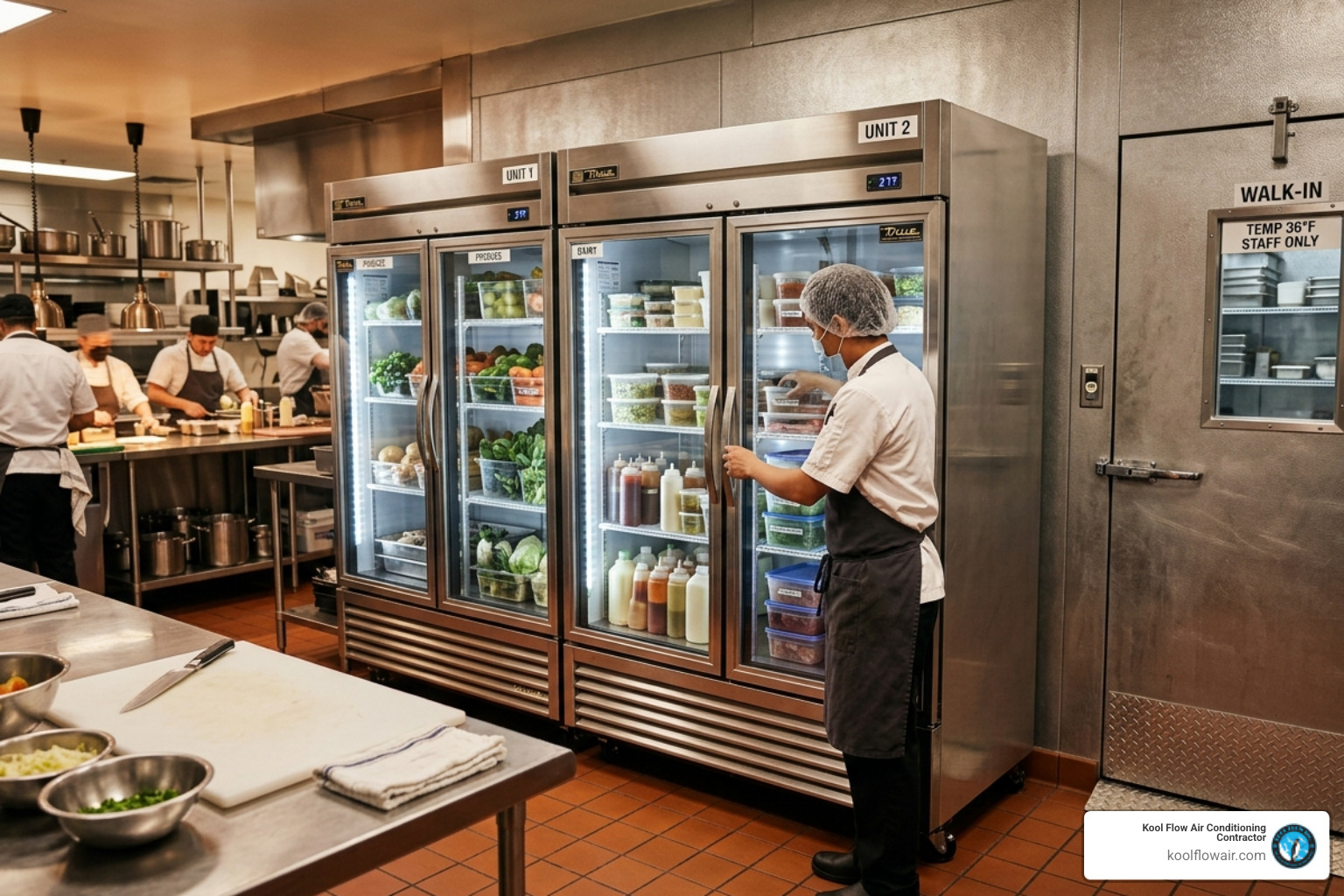
Commercial refrigeration systems run continuously under heavy loads. Unlike the fridge at home, these units face hundreds of door openings per day, greasy kitchen air, and demanding temperature requirements. That level of stress makes regular servicing not just helpful, but essential.
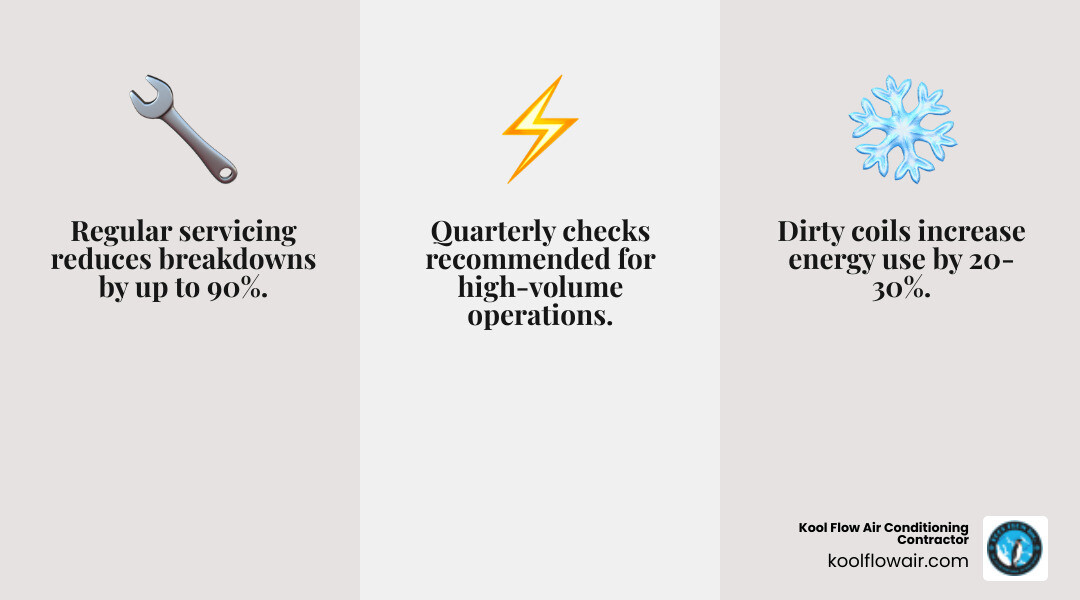
Neglecting maintenance does not just risk a breakdown. Research shows dirty coils alone can reduce cooling efficiency by up to 30%, force compressors to work 40% harder, and drive energy consumption up by 20% or more. The good news? Regular professional maintenance can reduce breakdowns by up to 90%.
This guide will walk you through exactly how to determine the right service schedule for your business, what those visits should cover, and how to keep your equipment running reliably between appointments.
Determining How Often Should Commercial Refrigeration Be Serviced
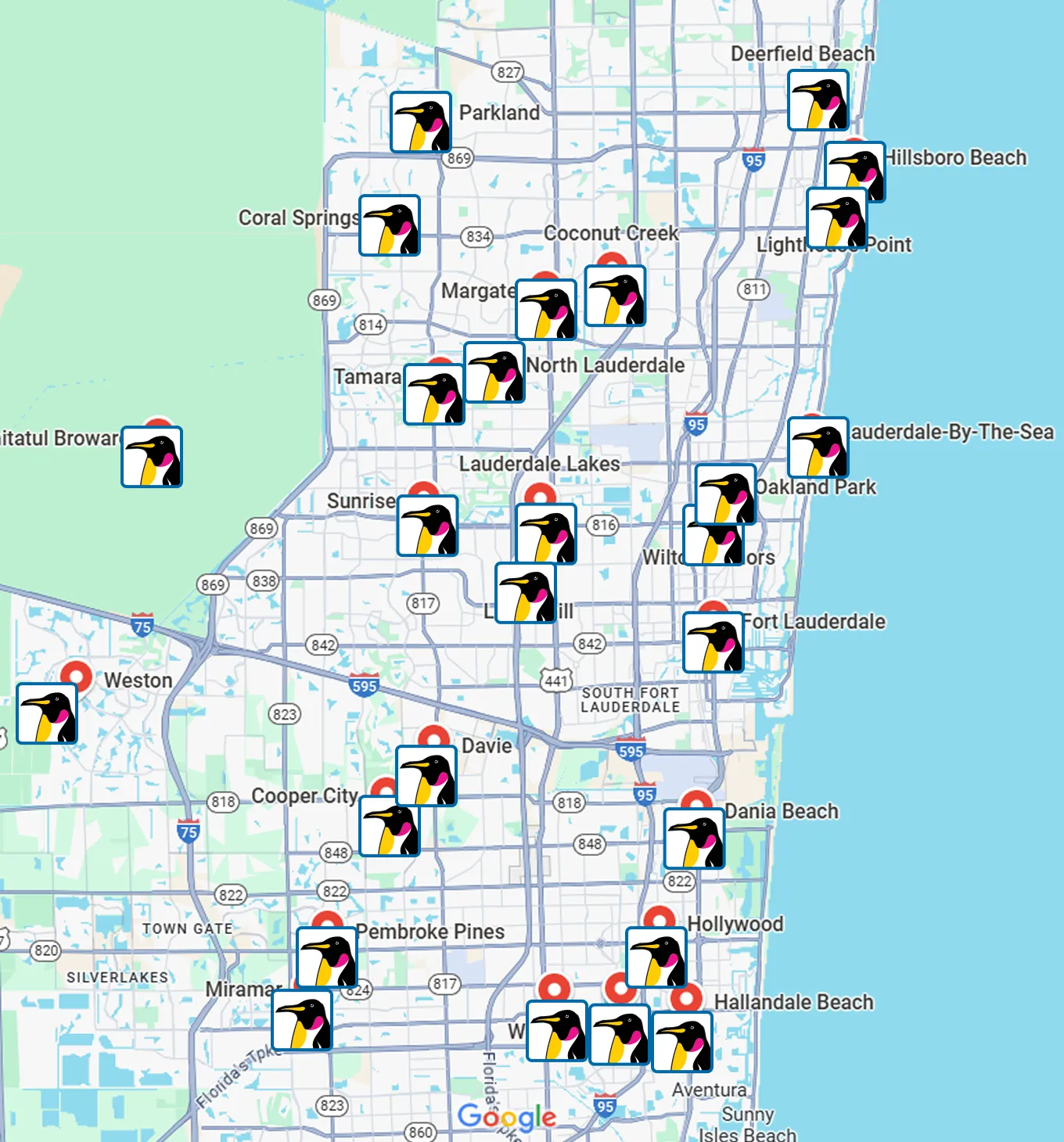
When we talk to business owners across South Florida, from Hollywood to Coral Springs, the most common question we get is: "Do I really need to do this every few months?" The short answer is yes, but the specific timing depends on your unique setup.
The industry standard suggests that how often should commercial refrigeration be serviced falls within a 3-to-6-month window. For a standard office breakroom or a low-traffic florist, a biannual (twice a year) inspection is usually sufficient. However, for the majority of food service and industrial operations, quarterly intervals are the "sweet spot."
Why quarterly? Because refrigeration components like condenser coils and evaporator fans are constantly pulling in air. In a commercial environment, that air is filled with dust, flour, or grease. Over 90 days, enough debris can accumulate to significantly impact performance. By scheduling service every three months, we can catch small refrigerant leaks or failing motors before they turn into a 2:00 AM emergency. For more detailed insights on keeping your units in top shape, check out our Refrigeration Maintenance Best Tips Fort Lauderdale guide.
High-Volume vs. Low-Volume Operations
Not all businesses put the same amount of "miles" on their cooling equipment. A high-volume restaurant kitchen in Pembroke Pines might open its reach-in coolers 300 times during a single dinner shift. Every time that door opens, cold air escapes, and the compressor has to kick in to recover. This constant cycling wears down electrical components and puts immense pressure on the compressor.
Compare that to a convenience store where display cases might stay closed for longer periods. While the load is more stable, these 24/7 facilities still require consistent monitoring because the equipment never gets a "day off."
We also recommend seasonal adjustments. In South Florida, our summers are brutal. Scheduling a professional deep-clean in the spring ensures your system is ready for the peak heat of July. If you operate in the Pembroke Pines area, our Refrigeration Maintenance Pembroke Pines Guide offers specific local advice for these high-demand periods.
Environmental Impact on Frequency
The environment surrounding your refrigerator is just as important as what is inside it. If your condensing unit is located near a cooking line, it is likely sucking in vaporized grease. This grease acts like glue, trapping dust on the coils and creating a thick mat that prevents heat transfer.
Other factors that might require you to increase your service frequency include:
- Airborne Dust: Bakeries or warehouses often have high levels of particulates that clog filters and coils.
- Ambient Temperature: If your kitchen is poorly ventilated and runs hot, your refrigerator has to work twice as hard to stay cool.
- Coastal Salt Air: For our clients in places like Hillsboro Beach or Lauderdale-By-The-Sea, salt air can accelerate corrosion on copper pipes and aluminum fins.
- Humidity Levels: High humidity leads to faster frost buildup on evaporator coils, which can eventually block airflow entirely.
Factors That Influence Your Maintenance Schedule
To help you visualize where your business stands, we have put together a comparison of maintenance needs based on typical South Florida business types:
| Business Type | Key Stress Factors | Recommended Service |
|---|---|---|
| Full-Service Restaurant | Grease, high door traffic, heat | Quarterly |
| Supermarket | Large scale, 24/7 runtime | Quarterly |
| Medical/Lab | Precision temp needs, compliance | Bimonthly |
| Small Office/Cafe | Lower traffic, cleaner air | Biannual |
| School/Institutional | High volume during lunch peaks | Quarterly |
Beyond business type, we always look at the specific "Commercial Refrigeration Maintenance Tips West Park FL" businesses use to stay ahead of repairs. Factors like the age of the unit and how often staff are trained on "door discipline" (keeping doors closed!) play a massive role in how often a professional needs to step in.
The Role of Equipment Age
Is your equipment a seasoned veteran or a fresh install? Systems over five years old generally require more frequent check-ups. As parts age, they experience "component fatigue." Bearings in fan motors dry out, electrical connections can loosen due to vibration, and seals may become brittle.
Furthermore, older units often use legacy refrigerants. With changing environmental regulations, monitoring these older systems for leaks is critical not just for performance, but for legal compliance. Regular servicing helps mitigate the efficiency degradation that naturally occurs as a system wears down. To learn more about managing older systems, see our Refrigeration Maintenance Guide West Park FL.
Impact of Kitchen Environment
We cannot stress enough how much the "micro-climate" of your kitchen matters. A reach-in refrigerator tucked into a cool, well-ventilated corner will outlast a unit placed right next to a charbroiler or deep fryer.
If your ventilation quality is poor, the condenser airflow is compromised. When the condenser cannot "breathe," the heat it removes from the cabinet has nowhere to go. This causes the internal pressure of the system to skyrocket, leading to a "blown" compressor—one of the most expensive repairs in the industry.
Essential Maintenance Tasks by Equipment Type
When we perform Refrigeration Services, we don't just give the unit a quick wipe-down. A professional visit is a comprehensive technical audit.
A typical professional visit includes:
- Cleaning Condenser Coils: Removing the "blanket" of dust and grease.
- Checking Refrigerant Levels: Ensuring there are no tiny leaks that could lead to a slow "death" of the system.
- Inspecting Evaporator Fans: Making sure they are spinning at the correct RPM and aren't iced over.
- Testing Electrical Connections: Tightening terminals and checking for frayed wires.
- Calibrating Thermostats: Ensuring the temperature the display shows is actually the temperature inside.
How often should commercial refrigeration be serviced for walk-in coolers?
Walk-in coolers are the heavyweights of your kitchen. Because they are often located in back-of-house areas, they are easy to forget—until they stop working. Because of their size and complexity, we recommend professional service every 3 months.
Specific tasks for walk-ins include checking drain lines for clogs (which can lead to ice skating rinks on your floor) and inspecting floor heaters. In freezers, floor heaters prevent the ground from freezing and buckling. We also check door hinges and gaskets to ensure a perfect seal. If you are considering a new unit, our Commercial Refrigeration Installation Guide West Park FL covers what to look for in a high-quality setup.
How often should commercial refrigeration be serviced for reach-ins and display cases?
Reach-ins and display cases are the workhorses of the front-of-house. Because they are visible to customers, lighting systems and glass cleanliness are vital for sales. However, from a mechanical standpoint, the biggest issue is often airflow obstruction.
Staff often overstuff these units, blocking the vents and preventing cold air from circulating. During a professional visit, we inspect the gasket seals (the rubber strips around the door). A cracked gasket is like leaving a window open with the AC on—it wastes energy and strains the motor. For those in the Pembroke Pines area, check out our Commercial Refrigeration Installation Guide Pembroke Pines FL for tips on maintaining these specific unit types.
Signs Your System Needs Immediate Professional Attention
Sometimes, you cannot wait for your scheduled quarterly visit. Your equipment will often "talk" to you before it fails. Keep an eye (and ear) out for these red flags:
- Temperature Fluctuations: If your milk is at 38°F in the morning but 45°F by noon, something is wrong.
- Unusual Noises: Squealing, grinding, or loud humming often indicates a failing fan motor or compressor.
- Excessive Frost: If your evaporator coils look like the North Pole, you likely have a defrost issue or a bad seal.
- Water Pooling: Water inside or outside the unit usually means a clogged drain line or a cracked condensate pan.
- Rapid Cycling: If the compressor turns on and off every few minutes, it is struggling to maintain the set point.
- Rising Energy Bills: An unexplained spike in your electric bill is often the first sign of dirty coils or a failing component.
Creating a Proactive Upkeep Checklist for Staff
While professional service is non-negotiable, your staff are your first line of defense. We recommend implementing a simple checklist to keep things running smoothly between our visits.
Daily Tasks:
- Check Temperature Logs: Record the temperature at the start and end of every shift.
- Monitor Airflow: Ensure no boxes or pans are blocking the internal fans.
- Clean Spills: Acidic food spills can actually corrode the metal interior over time.
Weekly Tasks:
- Inspect Gaskets: Wipe down door seals with warm, soapy water. Dirt and crumbs prevent a tight seal.
- Check for Ice: Look for any frost buildup on the back walls or ceiling.
Monthly Tasks:
- Visual Coil Check: If the coils look dusty, use a soft brush or vacuum to gently clear the surface.
- Check Drains: Ensure water is flowing freely into the drip pan.
Frequently Asked Questions about Refrigeration Servicing
Does skipping professional service void my equipment warranty?
In many cases, yes. Most major manufacturers require proof of regular professional maintenance to honor warranty claims on expensive parts like compressors. If you cannot produce service logs, you might be stuck paying for the full repair.
Can dirty coils really increase my energy consumption?
Absolutely. Dirty coils act as an insulator, keeping the heat inside the system. To compensate, the compressor has to run longer and harder to reach the target temperature. This can increase your electricity usage by 20% or more, costing you much more in the long run than a simple service call.
What is the difference between staff cleaning and professional servicing?
Staff cleaning focuses on sanitation and "surface-level" issues like gaskets and spills. Professional servicing involves technical diagnostics—checking refrigerant pressures, testing electrical draw, calibrating sensitive controls, and deep-cleaning internal components that staff cannot safely reach.
Conclusion
At the end of the day, determining how often should commercial refrigeration be serviced is about protecting your investment. For most businesses in South Florida, a quarterly maintenance plan offers the best balance of reliability, energy efficiency, and cost-savings.
By staying proactive, you ensure that your food stays safe, your energy bills stay low, and your kitchen never grinds to a halt because of a preventable breakdown. At Kool Flow Inc., we have spent over 20 years helping business owners from Miramar to Pompano Beach keep their cool. Whether you need a one-time checkup or a comprehensive 5-year maintenance plan, we are here to help.
Ready to secure your kitchen's future? Explore our Refrigeration solutions and let us handle the technical details so you can focus on running your business.


Hear what our satisfied
clients have to say

SERVICE AREAS