


Don't Let the Sea Breeze Freeze Your Unit: How Coastal Weather Impacts HVAC Performance

Why Coastal Weather Puts Your HVAC System at Risk
How coastal weather impacts HVAC performance is one of the most important things South Florida homeowners need to understand — because living near the ocean is beautiful, but it's genuinely tough on your equipment. Salt-laden air, relentless humidity, and powerful coastal storms create a perfect storm of wear and tear that inland homeowners simply don't face.
Here's a quick breakdown of the main ways coastal weather affects your HVAC system:
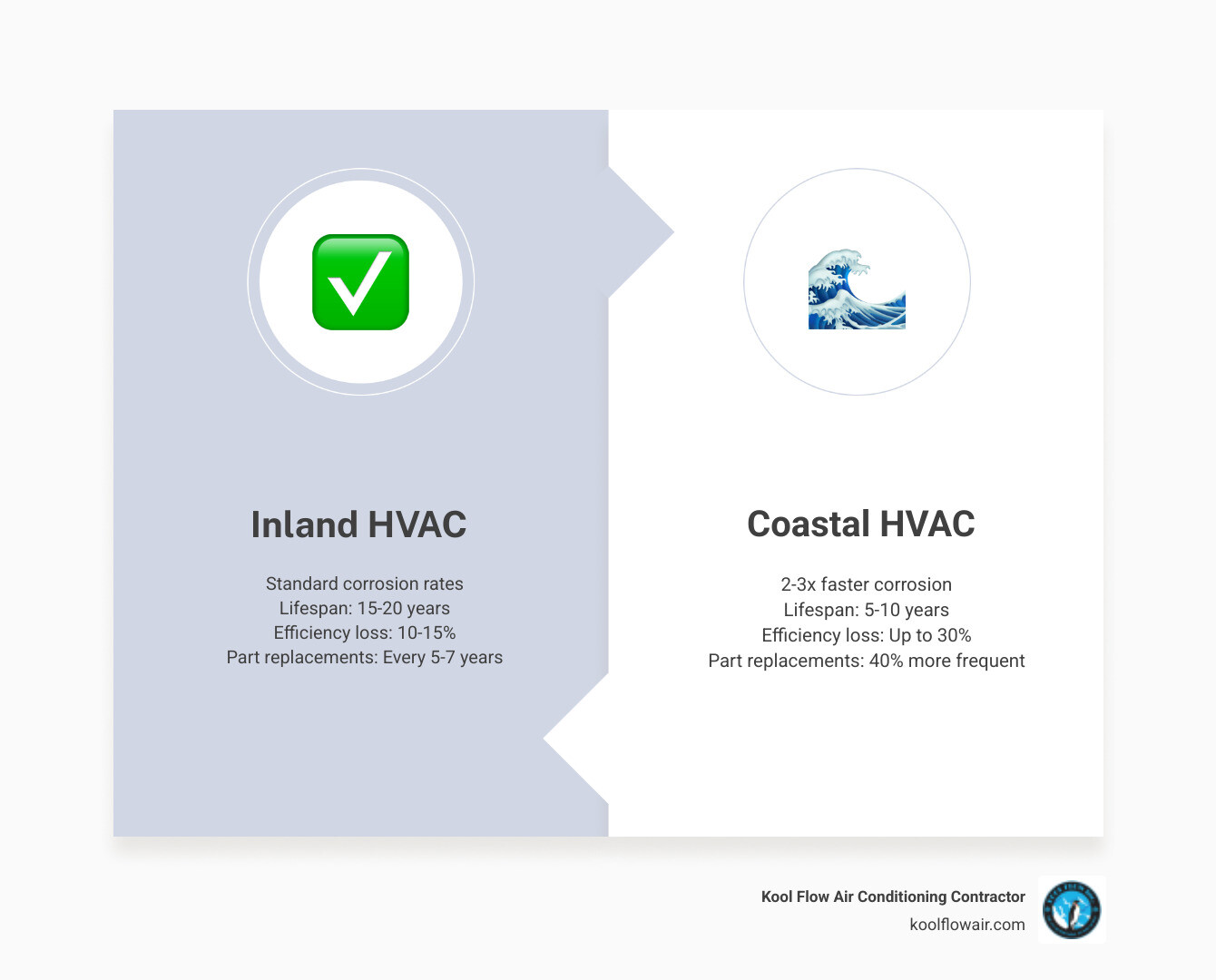
- Salt air corrosion - Salt particles settle on metal components and corrode them 2-3 times faster than in dry inland climates, cutting system lifespan significantly
- High humidity - Forces your system to work harder on dehumidification, raising operating costs by 15-20%
- Reduced efficiency - Salt buildup on coils and fins can drop system efficiency by up to 30% over time
- Faster part failures - Coastal systems need replacement parts up to 40% more often than inland units
- Mold and air quality risks - Excess moisture creates ideal conditions for mold growth inside ductwork
- Storm and wind damage - Flying debris, salt spray, and power surges from coastal storms accelerate outdoor unit wear
- Shorter system lifespan - Without proper protection, standard HVAC units in coastal areas can fail in as little as 5 years
Without the right maintenance and equipment, neglecting these coastal-specific challenges can lead to 25-40% faster equipment degradation — meaning more breakdowns, higher energy bills, and earlier replacement costs for South Florida homeowners.
The Science of Salt: How Coastal Weather Impacts HVAC Performance
When we talk about the "sea breeze," we aren't just talking about a refreshing wind. That air is heavy with microscopic salt particles that act as a catalyst for destruction. The primary reason how coastal weather impacts HVAC performance so aggressively is through a process known as an electrolytic reaction.
When salt settles on the metal surfaces of your outdoor unit—specifically the aluminum fins and copper tubing—it draws moisture from our humid South Florida air. This combination creates a "slow-motion battery" effect on your unit's surface. The salt and water trigger an electrochemical reaction that causes metal pitting and oxidation. Over time, this doesn't just look ugly; it creates microscopic holes in your coils, leading to refrigerant leaks and eventual system failure.
Research shows that salt air accelerates corrosion at rates 2-3 times faster than in dry inland climates. In fact, metals in coastal environments can corrode up to 10 times faster than usual. To catch these issues before they lead to a total shutdown, we utilize Advanced HVAC Diagnostic Technologies & Methods to identify thinning metal and early-stage leaks that the naked eye might miss.
Why Salt Air Accelerates How Coastal Weather Impacts HVAC Performance
The "secret weapon" of salt is its hygroscopic nature. This means salt literally "seeks out" and absorbs water from the atmosphere. In places like Fort Lauderdale or Hollywood, where humidity is a constant companion, the salt on your AC unit is almost always wet. This constant moisture speeds up the degradation of the delicate aluminum fins that are responsible for heat exchange.
When these fins corrode, they become brittle and "flake" away. This reduces the surface area available to cool your home, forcing the compressor to work much harder. This cycle of overwork leads to 25-40% faster equipment degradation. While an inland system might hum along for 15 years, an unprotected coastal unit often struggles to make it past the 5-year mark.
Vulnerable Components and Economic Impacts
It isn't just the coils that suffer. Several specific parts of your HVAC system are on the front lines of the battle against coastal weather:
- Condenser Coils: The most common point of failure due to refrigerant leaks.
- Fan Blades: Salt buildup can unbalance the blades, leading to motor strain and premature bearing failure.
- Electrical Terminals: Salt is conductive. When it builds up on electrical connections, it can cause shorts, "ghost" errors, or total component burnout.
- The Casing: The outer cabinet can rust through, compromising the structural integrity of the entire outdoor unit.
The economic impact of this neglect is significant. Beyond the cost of frequent repairs—coastal systems require replacement parts 40% more frequently—you will see a steady climb in your monthly power bills. As salt buildup insulates the coils, the system loses efficiency. Utilizing HVAC Performance Audits & Energy Optimization can help you quantify these losses and determine if a specialized coastal-rated upgrade is a more cost-effective path forward.
| Component | Inland Lifespan | Coastal (Unprotected) | Coastal (Maintained) |
|---|---|---|---|
| Condenser Coils | 15-20 Years | 5-7 Years | 12-15 Years |
| Fan Motor | 12-15 Years | 4-6 Years | 10-12 Years |
| Exterior Casing | 20+ Years | 5-8 Years | 15+ Years |
| Electrical Parts | 15+ Years | 5-7 Years | 12+ Years |
Humidity and Airflow: The Silent Efficiency Killers
In South Florida, humidity is just as much of a factor as salt. Our tropical climate means your AC isn't just a "cooler"—it's a massive dehumidifier. How coastal weather impacts HVAC performance is often seen in the sheer volume of water the system must remove from the air. When humidity is high, the system has to run longer cycles to reach the desired comfort level, leading to 15-20% higher operating costs compared to drier regions.
High humidity also impacts your Indoor Air Quality. If the system is struggling to keep up, you might notice a "clammy" feeling in the house or musty odors. This is often a sign that moisture is lingering in the ductwork or on the evaporator coil, creating a breeding ground for mold and bacteria. To combat this, many homeowners in areas like Pompano Beach and Davie opt for Air Purification HEPA Whole Home HVAC systems to ensure the air they breathe is as clean as it is cool.
Managing Moisture to Improve How Coastal Weather Impacts HVAC Performance
To keep your home comfortable and your system efficient, the target indoor humidity should stay between 45% and 55%. When humidity regularly climbs above this range, your system is under extreme strain. We often recommend variable-speed compressors for coastal homes. Unlike standard units that are either "on" or "off," variable-speed systems can run at lower speeds for longer periods, which is much more effective at pulling moisture out of the air without "short-cycling."
Another major humidity-related issue is the "algae clog." In our warm, wet environment, algae and slime grow rapidly inside condensate drain lines. If these lines aren't treated regularly, they will back up, potentially causing water damage to your home and triggering safety switches that shut down your AC. We use Advanced HVAC Monitoring & Predictive Maintenance to keep an eye on these performance metrics, catching drainage and humidity issues before they become emergencies.
Storms, Winds, and Salt Crystallization
Coastal living also means dealing with high winds and tropical storms. These events exacerbate the damage to your HVAC system in several ways:
- Wind-Blown Debris: Sand, leaves, and trash can be forced into the outdoor unit, blocking airflow and denting the delicate fins.
- Salt Spray: During storms, salt is atomized into a fine mist that can travel miles inland, coating components that are usually sheltered.
- Power Surges: Lightning and grid fluctuations during South Florida storms can fry sensitive control boards.
- Salt Crystallization: In the winter, salt can dry and crystallize on components, creating friction and blockages that lead to mechanical failure.
To mitigate these risks, we recommend elevated unit placement to avoid localized flooding and the installation of high-quality surge protection. Looking toward Future Smart HVAC Technologies & Sustainability can also provide options for systems that are better designed to withstand these environmental pressures.
Essential Maintenance Strategies for Coastal Homeowners
The good news is that you aren't helpless against the elements. While the coast is harsh, a proactive approach can add 3-5 years to your system's lifespan. The most important tool in your arsenal? A simple garden hose.
Regularly rinsing your outdoor unit with fresh water is the single most effective DIY task you can perform. This removes the salt deposits before they have a chance to bond with the metal and begin the corrosion process. However, it is vital to use low pressure. Using a pressure washer can bend the aluminum fins, which restricts airflow and causes even more damage.
For a comprehensive look at what your system needs to survive the South Florida environment, check out our Broward AC Maintenance Complete Guide.
Monthly Coastal DIY Task List:
- Fresh Water Rinse: Spray the outdoor coils with a low-pressure hose once a month (or after any major storm).
- Clear the Perimeter: Ensure at least two feet of clearance around the unit. Remove any plants, sand buildup, or debris that could block airflow.
- Filter Change: In our humid, dusty environment, filters should be checked monthly and replaced every 30-90 days.
- Visual Inspection: Look for signs of "white rust" (salt buildup) or flaky fins.
While DIY care is essential, it doesn't replace the need for bi-annual professional inspections. A trained technician can apply protective coatings, check refrigerant levels, and tighten electrical connections that have begun to oxidize.
Benefits of Coastal-Rated Equipment and Coatings
If you are replacing a system in a coastal area like Deerfield Beach or Dania Beach, standard equipment simply won't cut it. Investing in coastal-specific HVAC solutions can reduce repair frequency by up to 60% and maintain 15-20% better energy efficiency over the life of the unit.
Look for these "coastal-hardened" features:
- E-Coated Coils: An epoxy or polymer coating applied at the factory that provides a barrier against salt air.
- Stainless Steel Hardware: Prevents the screws and panels from rusting shut, making future repairs possible.
- Copper Fins: While more expensive, copper-on-copper construction eliminates the "galvanic corrosion" that happens when aluminum and copper touch in a salty environment.
- Sacrificial Anodes: Similar to what is used on boat motors, these "zincs" corrode first, protecting the more expensive components of your AC unit.
Specialized coastal HVAC units typically last 30-50% longer than standard models, making them a much smarter long-term investment for waterfront properties.
Frequently Asked Questions about Coastal HVAC Care
How often should I rinse my outdoor unit if I live near the ocean?
If you live within five miles of the coast, you should rinse your outdoor unit with fresh water at least once a month. If you are direct oceanfront or on the Intracoastal, every two weeks is even better. This simple habit can extend your coil life by as much as 30% by preventing salt from "eating" through the metal. Always ensure the power is off or the thermostat is set to "off" before rinsing, and use a low-pressure setting on your hose.
What are the primary signs that coastal weather is harming my HVAC system?
The most obvious sign is visible corrosion—look for a white, powdery substance or rust on the outdoor unit. You might also notice the aluminum fins starting to flake or "shed." Other signs include:
- Rising Energy Bills: A sign the system is losing efficiency.
- Frequent Cycling: The system turns on and off constantly as it struggles with humidity.
- Unusual Noises: Often caused by unbalanced, corroded fan blades.
- Refrigerant Leaks: If your system needs frequent "recharges," salt has likely pitted your coils.
What features should I look for when upgrading a coastal HVAC system?
Look for "Coastal Rated" or "Marine Grade" labels. Specifically, ask for e-coated (epoxy coated) coils and stainless steel cabinets. Variable-speed technology is also a "must-have" for South Florida because of its superior dehumidification capabilities. Finally, don't overlook a smart thermostat; they can cut cooling costs by up to 15% in coastal environments by optimizing run times based on outdoor conditions.
Conclusion
At Kool Flow Air Conditioning Contractor, we've seen how the South Florida climate treats HVAC systems. With over 20 years of experience serving neighbors from Fort Lauderdale to West Park, we understand that a "one-size-fits-all" approach doesn't work here. Our family-owned business is dedicated to providing honest pricing and reliable cooling solutions tailored specifically for our coastal environment.
Living by the water shouldn't mean living with a broken AC. Whether you need a specialized coastal-rated installation or a rigorous maintenance routine to save your current unit, we are here to help. Protect your investment with a professional maintenance plan and enjoy the sea breeze without worrying about your unit freezing up!


Hear what our satisfied
clients have to say

SERVICE AREAS