


The Best AC Systems for Beating the Heat and Humidity

Why Finding the Best AC for Hot Humid Climates Is About More Than Just Cooling
What is the best ac for hot humid climates is one of the most important questions South Florida homeowners can ask — and the answer goes well beyond just picking the most powerful unit on the shelf.
Here are the top AC systems built to handle heat and heavy moisture:
| AC Model | SEER2 Rating | Key Humidity Feature |
|---|---|---|
| Trane XV18 | Up to 18 | Maintains RH as low as 45% |
| Carrier Infinity 26 | Up to 24 | Handles dew points up to 75°F |
| Lennox SL28XCV | Up to 28.2 | Advanced humidity sensors |
| Rheem RA20 | Up to 20.5 | Variable-speed compressor |
| American Standard Platinum 18 | Up to 18 | Consistent latent cooling |
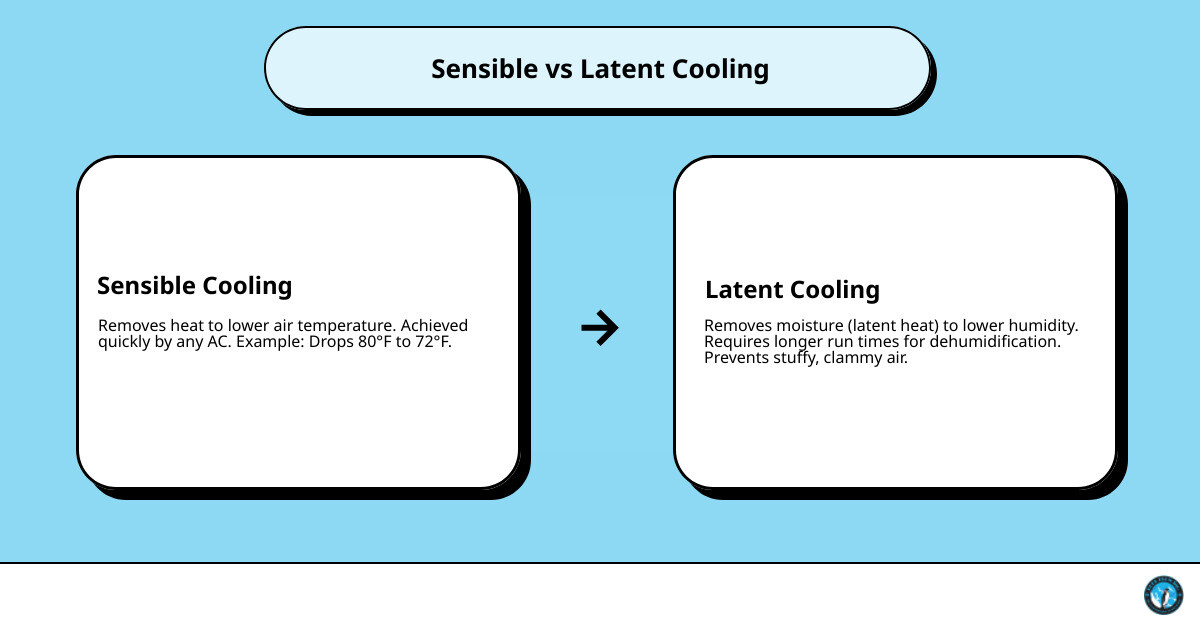
Most people think cooling means lowering the temperature. But in South Florida, the real problem is moisture. When outdoor humidity climbs above 60%, your home can feel stuffy and uncomfortable even if your thermostat reads 72°F.
That's because air conditioning has two jobs: removing heat (called sensible cooling) and removing moisture (called latent cooling). In hot, humid climates, the second job is just as critical as the first. When your AC only handles one of these well, you end up with air that feels damp, clammy, and downright miserable — no matter what the thermostat says.
The relative humidity, dew point, and how long your system actually runs each cycle all determine whether your home feels truly comfortable or just technically cool.
Key Features of the Best AC for Hot Humid Climates
When we talk about the best ac for hot humid climates, we aren't just looking at how much cold air a machine can pump out. In places like Broward County or Miami-Dade, the air often feels more like a warm soup than a breeze. To combat this, a high-performing system needs specific internal components designed to wring moisture out of the air like a sponge.
The most critical feature is the variable-speed compressor. Traditional air conditioners are either "on" or "off." They blast cold air at 100% capacity until the thermostat is satisfied, then they shut down. In a humid environment, this is a recipe for disaster. A variable-speed unit, however, can modulate its output. It might run at 30% or 40% capacity for a longer period. This long, steady run time is exactly what is needed to pull humidity out of your indoor air.
Beyond the compressor, you should look for high SEER2 ratings (Seasonal Energy Efficiency Ratio). Since 2023, SEER2 has become the new standard for measuring efficiency under more realistic external pressures. For our subtropical climate, we generally recommend a SEER2 of 16 or higher.
Another technical term to know is Sensible Heat Ratio (SHR). This measures the percentage of a unit's cooling capacity dedicated to lowering temperature versus removing moisture. In Florida, you want a unit with a lower SHR, meaning it allocates a larger portion of its energy specifically to dehumidification. We also look for ECM motors (Electronically Commutated Motors), which allow the blower fan to adjust its speed, ensuring that air moves across the cooling coils at the perfect pace to maximize condensation and drainage.
Understanding How South Florida Climate Affects Your HVAC System is the first step in choosing a system that won't fail when the dew point hits 75°F.
Why Variable-Speed is the Best AC for Hot Humid Climates
Think of a variable-speed compressor like cruise control on a car. Instead of flooring the gas and then slamming on the brakes (which is what a standard single-stage AC does), a variable-speed system maintains a steady, efficient pace.
Because these units run for longer cycles at lower speeds, they provide continuous operation. This is the secret sauce for comfort. When the AC runs longer, the air is constantly being filtered and passed over the cold evaporator coils. This results in superior moisture extraction. While a standard AC might leave your home at 60% relative humidity, a variable-speed unit can easily maintain a crisp 45% to 50%. This not only feels better on your skin but also protects your home from the "musty" smell common in the South.
The Role of Corrosion-Resistant Coils and Smart Tech
In coastal areas like Pompano Beach, Hollywood, and Fort Lauderdale, the salt in the air is a silent killer for HVAC systems. It eats away at the aluminum fins and copper tubing, leading to refrigerant leaks and premature system failure.
The best ac for hot humid climates often features corrosion-resistant coils, sometimes referred to as "Blue Fin" or "Gold Fin" technology. these are specialized coatings that prevent salt air from bonding to the metal.
Furthermore, smart thermostats and dehumidifying heat pipes play a massive role in modern performance. A smart thermostat can sense when the humidity is rising even if the temperature hasn't changed, telling the AC to run a "dehumidification cycle." Some high-end systems even use heat pipes to pre-cool the air before it hits the main coil, allowing the system to remove significantly more water vapor without over-cooling the room.
Avoiding the Pitfalls of Short Cycling and Oversizing
One of the biggest mistakes a homeowner can make is thinking "bigger is better." In HVAC, an oversized unit is actually a liability. When a system is too large for the space, it reaches the target temperature far too quickly. This is called short cycling.
The unit turns on, blasts the room with cold air for five minutes, and shuts off. While the room is "cool," the AC didn't run long enough to remove any moisture. You end up with a home that is cold and clammy—the perfect breeding ground for mold and mildew.
To avoid this, we always perform a Manual J load calculation. This isn't just a guess based on square footage; it accounts for your home’s insulation, the number of windows, the direction your house faces, and even the local humidity levels. Proper sizing ensures the compressor runs long enough to keep your air dry.
If you are worried about the air quality in your damp home, integrating Air Purification HEPA Whole Home HVAC systems can help scrub the air of mold spores that thrive in high-humidity environments.
The Importance of Proper Sizing for Humidity Control
Square footage myths are rampant in Florida. Just because your neighbor has a 5-ton unit doesn't mean you need one. If your system is properly sized, it will have the correct latent cooling capacity to match the moisture load of your specific home.
Consistent airflow is also key. We often adjust blower fan settings so the fan runs for a few extra minutes after the cooling cycle ends, or runs at a very low speed constantly, to ensure that the air stays moving and the humidity doesn't settle in pockets around the house.
Top-Rated AC Models for High-Humidity Regions in 2025
Choosing the right brand matters because certain manufacturers invest heavily in humidity-specific R&D. Here is how the top contenders for 2025 stack up:
| Brand/Model | Standout Technology | Best For |
|---|---|---|
| Trane XV18 | TruComfort™ Variable Speed | Long-term durability and precise RH control |
| Carrier Infinity 26 | Greenspeed® Intelligence | High dew point management and quiet operation |
| Lennox SL28XCV | Precise Comfort® Technology | Maximum energy efficiency and sensor accuracy |
| Rheem RA20 | EcoNet™ Enabled | Balance of reliability and smart monitoring |
| American Standard Platinum 18 | AccuComfort™ | Heavy-duty performance in extreme heat |
As we look toward Future Smart HVAC Technologies Sustainability, these models are already leading the way with low-GWP refrigerants and hyper-efficient motors that reduce your carbon footprint while keeping you dry.
Choosing the Best AC for Hot Humid Climates Based on Reliability
When we recommend a system for a home in Weston or Pembroke Pines, we look at coastal durability. Trane’s TruComfort™ technology is legendary for its ability to adjust in 1/10th of 1% increments, meaning it stays exactly where you need it to be. Carrier’s Greenspeed Intelligence is specifically designed to handle those oppressive days where the dew point hits 75°F, adapting its speed to pull out every drop of moisture possible.
Alternative Cooling Solutions: Heat Pumps and Mini-Splits
For many South Florida residents, the traditional central AC isn't the only option. Inverter heat pumps have become incredibly popular. Despite the name "heat pump," these systems are actually elite cooling machines. They use the same inverter technology as high-end ACs to provide zoned cooling and exceptional dehumidification.
If you have a home with a sunroom or an addition that always feels "muggy," a ductless mini-split might be the answer. These units don't rely on ducts, which are often a source of efficiency loss and moisture intrusion in humid climates. Plus, they often have a dedicated "Dry Mode" specifically for dehumidification.
If you are considering an upgrade, keep an eye out for the Best AC Installation Deals Broward County FL to make these high-tech systems more accessible.
Benefits of Ductless Systems in Humid Zones
The biggest advantage of a mini-split in a place like Miramar or Sunrise is the lack of ductwork. In many older Florida homes, ducts run through hot, humid attics. If there is even a tiny leak, the vacuum created by the AC pulls that hot, wet attic air directly into your living space. By going ductless, you eliminate that risk entirely. You also get independent zone control, allowing you to keep the bedroom crisp and dry while saving energy in the rest of the house.
Frequently Asked Questions about Humid Climate ACs
Why does my house feel stuffy even when the AC is running?
This usually happens because your relative humidity is too high (above 60%). It’s often a sign of an oversized unit that is short cycling. The AC cools the air so fast that it doesn't have time to remove the moisture. You might also check your thermostat settings; ensure the fan is set to "Auto" rather than "On," as leaving the fan "On" can actually blow moisture back into the house from the wet evaporator coils.
Are heat pumps effective in the humid Deep South?
Absolutely. Modern inverter heat pumps are some of the best tools we have for South Florida. They are essentially high-efficiency air conditioners that can also provide mild heat on those few chilly January nights. Their ability to run at variable speeds makes them world-class at moisture removal.
How does a high SEER2 rating help with humidity?
A high SEER2 rating usually indicates that the system uses advanced blowers and variable-speed compressors. While SEER2 measures efficiency, the technology required to reach those high numbers (like 18 or 20+) naturally results in longer run times and better dehumidification, leading to lower operational costs and a much more comfortable home.
Conclusion
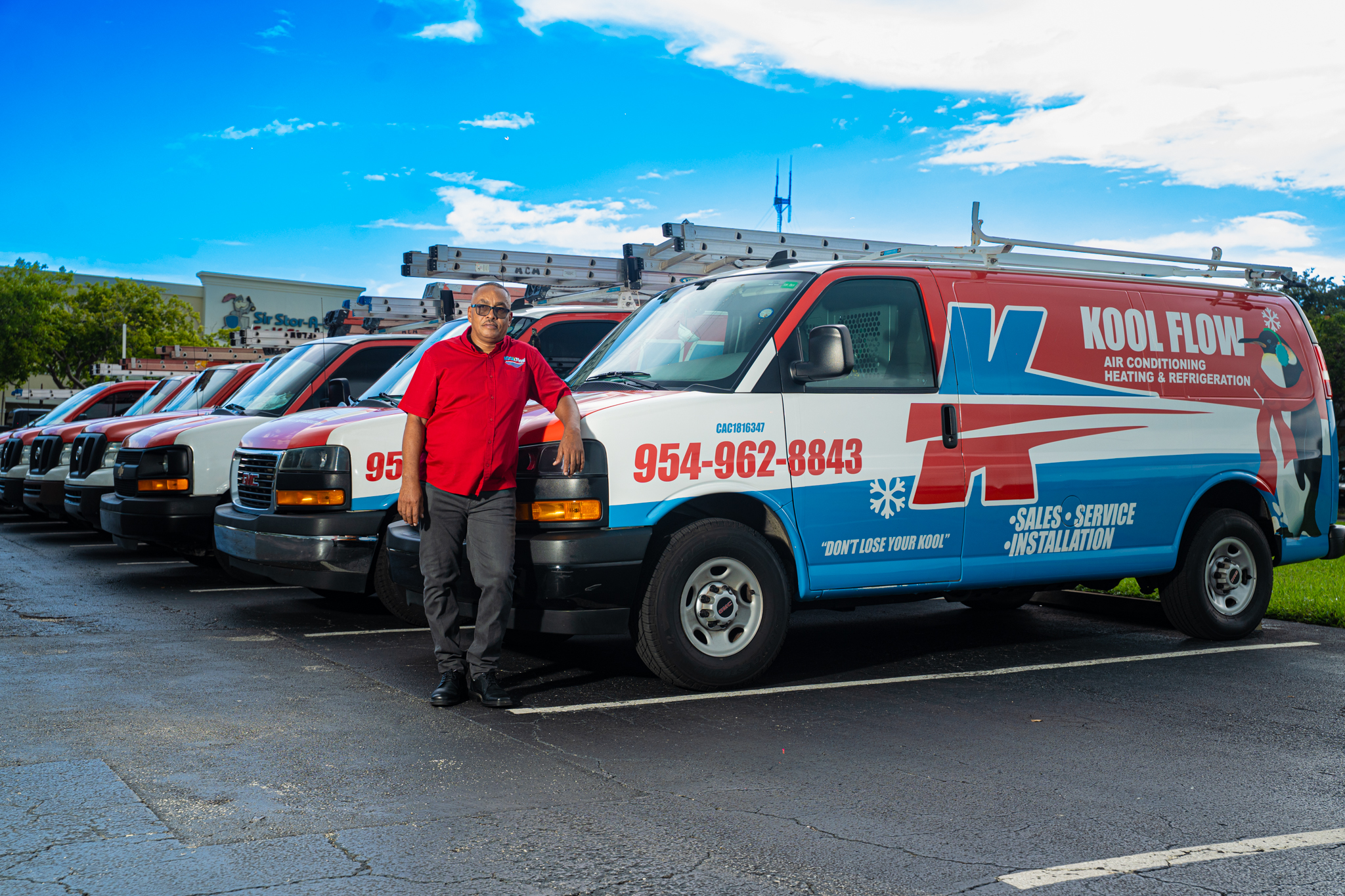
Finding the best ac for hot humid climates is the difference between surviving a Florida summer and actually enjoying your home. At Kool Flow Air Conditioning Contractor, we’ve spent over 20 years helping families in West Park, Pembroke Pines, and throughout Broward and Miami-Dade counties find that perfect balance of temperature and dryness.
We know that a "one-size-fits-all" approach doesn't work here. From performing precise Manual J calculations to selecting units with corrosion-resistant coatings, we ensure your investment stands up to the salt air and the tropical sun. Don't settle for a home that feels like a sauna. Schedule your expert air conditioning consultation today and let us bring the "cool and dry" back to your living space.


Hear what our satisfied
clients have to say

SERVICE AREAS