


Everything You Need to Know About Federal Tax Credits for AC and Heat Pump Upgrades

How Federal Tax Credits for AC and Heat Pump Upgrades Can Save You Money in 2026
Federal tax credits for AC and heat pump upgrades are one of the most valuable — and most overlooked — ways South Florida homeowners can reduce the cost of replacing aging HVAC equipment. If you upgraded your system in 2025 or are planning to in 2026, here is a quick snapshot of what you can claim:
| Equipment Type | Credit Rate | Maximum Credit |
|---|---|---|
| Air-source heat pump | 30% of cost | $2,000/year |
| Central air conditioner | 30% of cost | $600/year |
| Heat pump + other upgrades combined | 30% of cost | Up to $3,200/year |
| Geothermal heat pump (Section 25D) | 30% of cost | No annual cap |
These credits come from the Energy Efficient Home Improvement Credit (Section 25C), which was expanded by the Inflation Reduction Act of 2022. Unlike the old system — which had a $500 lifetime cap — the current rules reset every single year and allow homeowners to claim up to $3,200 in a single tax year by combining the $2,000 heat pump credit with the $1,200 general efficiency credit.
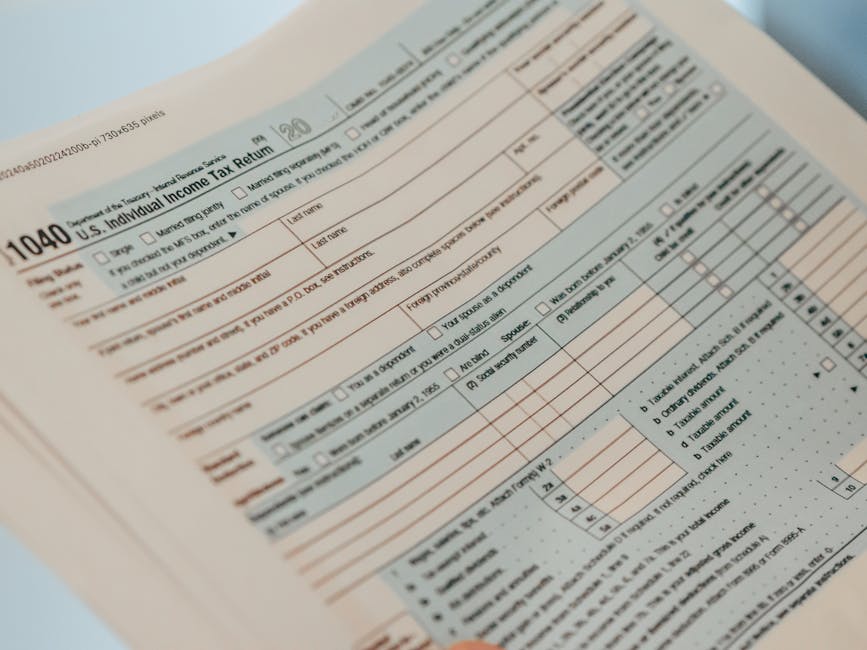
The credits apply to qualifying equipment installed in your home, and they are claimed dollar-for-dollar against your federal tax bill using IRS Form 5695. That means a $2,000 credit directly cuts what you owe the IRS — not just what you deduct from income.
For homeowners in Broward County and Miami-Dade County dealing with rising energy bills and aging AC systems, understanding how these credits work could make a meaningful difference when it comes time to upgrade.
Similar topics to federal tax credits for ac and heat pump upgrades:
Understanding the Federal Tax Credits for AC and Heat Pump Upgrades (Section 25C)
Navigating IRS regulations can feel a bit like trying to program a smart thermostat without the manual—confusing, slightly frustrating, and highly prone to error. However, the Energy Efficient Home Improvement Credit (Section 25C) is incredibly generous once you break down the basics.
Under Section 25C, South Florida homeowners can claim a tax credit equal to 30% of the qualified expenses for energy-efficient upgrades. This isn't a mere deduction that reduces your taxable income; it is a direct, dollar-for-dollar reduction of your federal income tax liability. If you owe the IRS taxes at the end of the year, this credit lowers that bill directly.
The structure of the Section 25C credit is divided into two main baskets:
- The General Efficiency Limit ($1,200): This annual cap covers traditional building envelope improvements (like insulation and windows) as well as qualifying central air conditioners, gas furnaces, and hot water heaters.
- The Heat Pump Limit ($2,000): This is a separate, higher annual cap dedicated specifically to electric or natural gas heat pumps, heat pump water heaters, and biomass stoves.
Because these two limits are distinct, they can be stacked. This means you can claim up to $3,200 per year in total credits if you install a qualifying heat pump alongside other energy-efficient upgrades, such as insulation or a new breaker panel. Understanding these rules is essential when weighing the Upgrading to a High Efficiency AC System Pros and Cons for your South Florida home.
How the $2,000 Heat Pump Credit Works
If you decide to transition to an energy-efficient air-source heat pump, the tax code rewards you handsomely. Heat pumps are incredibly efficient because they move heat rather than creating it, making them perfect for our tropical climate. Under Section 25C, you can claim 30% of the purchase and professional installation costs of an eligible heat pump, up to a maximum of $2,000 per year.
The best part? This $2,000 limit is entirely separate from the standard $1,200 annual cap. If you install a high-efficiency heat pump this year, you can still claim up to $1,200 for other improvements like insulation, exterior doors, or a home energy audit.
For homeowners trying to decide between traditional systems, looking closely at how a heat pump operates in our climate is a smart move. You can read more about this in our comparison of Central AC vs Ductless Mini Split for Florida Homes.
The $600 Limit for Central Air Conditioners
If you prefer to stick with a standard central air conditioning split system or packaged unit rather than a heat pump, you are still eligible for a tax credit, though the cap is lower. Central air conditioners fall under the general $1,200 annual efficiency basket and are subject to a specific $600 per-item limit.
This means that even if 30% of your total installation cost is much higher than $600, the maximum federal tax credit you can claim for a new central AC unit is capped at $600. While $600 is less than the $2,000 available for heat pumps, it still represents a substantial discount on a premium, high-efficiency system.
When planning your budget, it is highly recommended to evaluate whether the long-term utility savings of a premium system make financial sense. To help you decide, check out our guide on Is a High Efficiency AC Worth the Extra Cost in Florida.
Technical Eligibility and Efficiency Standards for 2026
To prevent homeowners from claiming tax credits on cheap, inefficient systems, the federal government enforces strict technical performance criteria. Your new system cannot simply be "newer" than your old one; it must meet or exceed specific efficiency metrics established by the Consortium for Energy Efficiency (CEE) and ENERGY STAR.
The table below outlines the minimum efficiency ratings required to qualify for the federal tax credit in 2026:
| Equipment Type | Configuration | Minimum SEER2 | Minimum EER2 | Minimum HSPF2 |
|---|---|---|---|---|
| Central AC | Split System | $\ge$ 17.0 | $\ge$ 12.0 | N/A |
| Central AC | Packaged Unit | $\ge$ 16.0 | $\ge$ 11.5 | N/A |
| Heat Pump | Split System | $\ge$ 16.0 | $\ge$ 12.0 | $\ge$ 9.0 |
| Heat Pump | Packaged Unit | $\ge$ 16.0 | $\ge$ 11.5 | $\ge$ 8.5 |
Efficiency Requirements for Federal Tax Credits for AC and Heat Pump Upgrades
In South Florida’s demanding, humid climate, paying attention to SEER2 (Seasonal Energy Efficiency Ratio 2) and EER2 (Energy Efficiency Ratio 2) is critical. These ratings measure how efficiently an air conditioner cools your home under varying outdoor temperatures.
To qualify for federal tax credits for ac and heat pump upgrades in 2026, split-system central air conditioners must achieve a SEER2 of 17.0 or greater and an EER2 of 12.0 or greater. Packaged central AC systems (where the compressor and fan are housed in a single outdoor cabinet) must hit a SEER2 of 16.0 or greater and an EER2 of 11.5 or greater.
Because our local weather puts an immense workload on cooling systems, choosing a unit that meets these high standards not only secures your tax credit but also dramatically lowers your monthly Florida Power & Light (FPL) bill. For a deeper dive into which systems excel in our unique environment, explore our recommendations on the Best Air Conditioner for Florida Weather.
Qualifying Properties: Primary vs. Secondary Homes
Where you install the equipment matters just as much as what equipment you install. The rules for the Section 25C Energy Efficient Home Improvement Credit state that the equipment must be installed in an existing home located in the United States that is used as a residence by the taxpayer.
- Principal Residences: Your primary home fully qualifies for all Section 25C credits, including heat pumps, central ACs, insulation, and doors.
- Second Homes / Vacation Homes: You can claim the Section 25C credit for physical building envelope upgrades (like windows and doors) on a second home that you reside in part-time, but you cannot claim the credit for HVAC equipment (such as central ACs or heat pumps) on a secondary residence. The HVAC system must be installed in your primary residence.
- Rentals / Landlords: If you are a landlord upgrading a property you rent out, you cannot claim the Section 25C credit. However, if you are a tenant and pay for a qualifying upgrade yourself for the home you rent and live in, you may be eligible to claim it.
- New Construction: Homes built from the ground up do not qualify for Section 25C credits, as these incentives are designed specifically to encourage retrofitting older, less efficient properties.
Installing a highly efficient system in your primary home is especially beneficial in South Florida, where humidity control is a constant battle. To learn about the technology that keeps your home dry and cool, read about AC Features That Handle Humidity Best.
How to Claim Your Tax Credits and Required Documentation
Claiming your tax credit requires a bit of organization, but keeping a clean paper trail will make your filing process smooth and stress-free. The IRS has implemented strict reporting rules to ensure that claimed systems actually meet federal guidelines.
Step-by-Step Guide to Claiming Federal Tax Credits for AC and Heat Pump Upgrades
When you file your federal income taxes for the year your system was placed in service, you must use IRS Form 5695 (Residential Energy Credits).
Follow these steps to ensure a successful claim:
- Obtain the Manufacturer’s Certification: This is a signed statement from the manufacturer certifying that the specific model number of your outdoor condenser and indoor coil meets the required CEE efficiency tiers.
- Retrieve the QMID or PIN: For systems installed in 2025 and 2026, the IRS requires taxpayers to report the Qualified Manufacturer Identification Number (QMID) or a product-specific PIN on Form 5695. Your installation contractor must provide this documentation.
- Keep Your Detailed Invoice: Save the receipt and installation contract showing the date the system was placed in service, the breakdown of equipment costs, and proof of professional installation.
- Complete Form 5695: Calculate 30% of your eligible expenses, apply the respective $600 or $2,000 caps, and carry the final credit amount over to your main Form 1040.
For a helpful overview of navigating the application process for local and federal incentives, read our guide on How to Apply for Energy Rebates in Florida.
Stacking Federal Credits with Florida State and Utility Rebates
One of the most exciting aspects of upgrading your HVAC system in South Florida is that federal tax credits can be combined with state-level programs and local utility rebates.
Under the Inflation Reduction Act, programs like the High-Efficiency Electric Home Rebate Act (HEEHRA) provide point-of-sale discounts of up to $8,000 on heat pump installations for qualifying low-to-moderate-income households. Additionally, local utilities like FPL offer instant rebates for installing high-efficiency cooling systems.
By combining a utility rebate, a state-level discount, and a 30% federal tax credit, you can significantly reduce the overall cost of your project. To see how these programs work together to maximize your savings, check out our resource on Florida Energy Rebates for AC Upgrades. Upgrading to a qualifying system not only saves you money upfront but also delivers major long-term benefits. Learn more about the High Efficiency AC Benefits for Tropical Weather to see how these systems perform in our local climate.
Frequently Asked Questions About HVAC Tax Credits
Can I claim the tax credit for a rental property I own?
No. The Section 25C Energy Efficient Home Improvement Credit is reserved exclusively for homes used as a residence by the taxpayer claiming the credit. Because a rental property is an investment property and not your personal residence, landlords are ineligible to claim these specific HVAC credits. However, landlords may be eligible for other commercial energy tax deductions under Section 179D or Section 45L.
What is the difference between Section 25C and Section 25D credits?
Section 25C applies to energy-efficient home improvements (like air-source heat pumps, central ACs, insulation, and water heaters) and is subject to strict annual caps ($1,200 for general improvements, $2,000 for heat pumps).
Section 25D is the Residential Clean Energy Credit, which covers renewable energy systems such as solar panels, wind turbines, battery storage, and geothermal heat pumps. Section 25D provides a 30% credit with no annual or lifetime dollar limits and is available for both primary and secondary residences through 2032.
Do these tax credits expire after 2026?
Fortunately, no! The Inflation Reduction Act extended both the Section 25C and Section 25D credits for a full decade. The 30% credit rate for Section 25C remains active through December 31, 2032. After 2032, the credit is scheduled to phase down to 26% in 2033 and 22% in 2034 before expiring, giving you plenty of time to plan your home comfort upgrades.
Conclusion
Upgrading your home's cooling and heating system is a significant investment, but federal tax credits, state rebates, and utility incentives make high-efficiency comfort more accessible than ever. By selecting a system that meets the strict 2026 CEE efficiency tiers, you can claim up to $2,000 for a heat pump or $600 for a central air conditioner, while enjoying lower monthly energy bills.
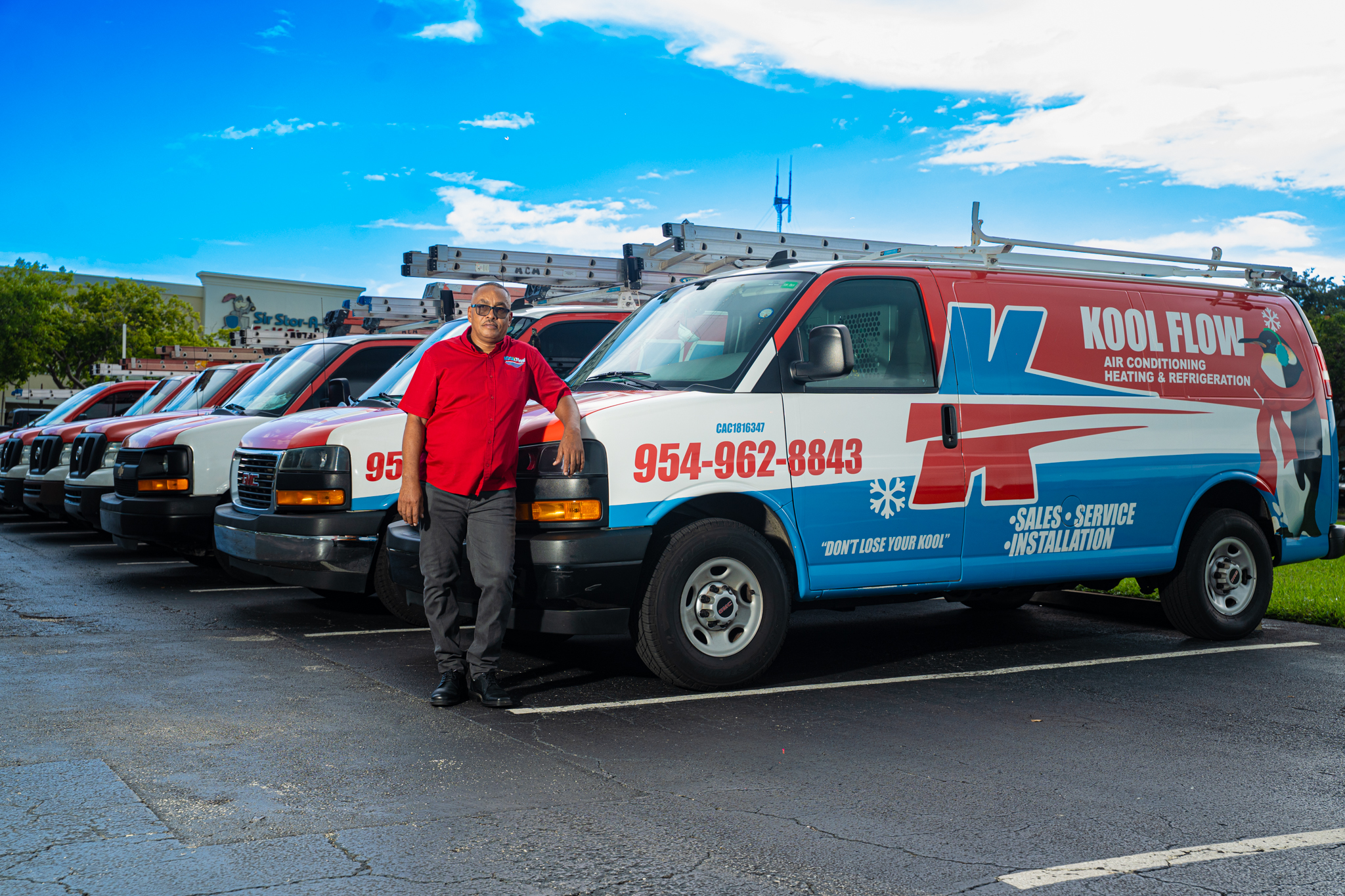
At Kool Flow Air Conditioning, we have spent over 20 years helping our neighbors across Broward, Miami-Dade, and Palm Beach counties stay cool and comfortable. As a family-owned business based in West Park, FL, we pride ourselves on honest pricing, flexible financing, and expert installations that meet all federal tax credit guidelines.
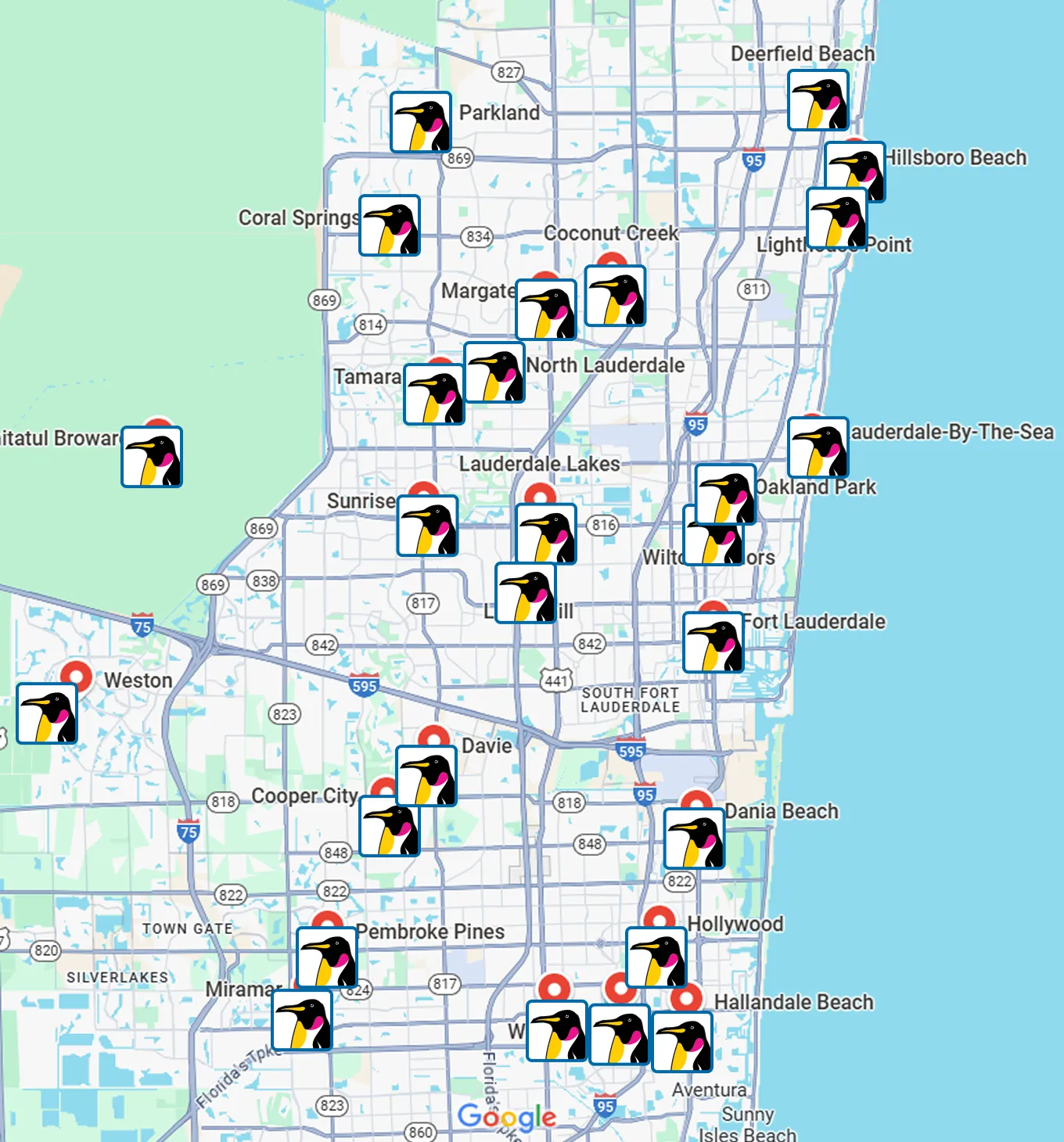
Whether you reside in Fort Lauderdale, Hollywood, Pembroke Pines, Miramar, or Weston, our team is ready to help you select the perfect qualifying system for your home and provide all the documentation you need to claim your credits.
Ready to maximize your tax savings and upgrade your home comfort? Contact us today at Kool Flow Air Conditioning to schedule a consultation with our friendly, local HVAC experts!


Hear what our satisfied
clients have to say

SERVICE AREAS