


The Complete Guide to AC and Humidity Control in Tropical Climates

Why AC and Humidity Control Tips for Tropical Climates Matter More Than You Think
If you're looking for ac and humidity control tips for tropical climates, here's what works in South Florida:
- Keep indoor humidity between 30–50% RH (aim for the lower end in summer)
- Set your AC airflow to around 350 CFM per ton for better moisture removal
- Use exhaust fans in bathrooms and kitchens every time you shower or cook
- Run your AC on a humidity setpoint, not just a temperature setpoint
- Keep doors between rooms open to improve air circulation
- Use a hygrometer to monitor indoor humidity levels daily
- Consider a whole-home dehumidifier if your AC alone can't keep up
Step outside on a July afternoon in Fort Lauderdale or Miami and the air hits you like a warm, wet towel. That feeling doesn't stay outside — it follows you indoors. In Broward County and Miami-Dade County, where outdoor humidity regularly pushes above 80% for most of the year, your air conditioner is doing two jobs at once: cooling the air and pulling moisture out of it. When it fails at either one, your home feels sticky and uncomfortable — even if the thermostat reads 72°F.
What makes South Florida especially challenging is that humidity is not just a summer problem. The moisture load here is relentless. Modern energy-efficient homes trap moisture inside tighter building envelopes. Daily routines — cooking, showering, even breathing — add water vapor to the air constantly. And when indoor relative humidity climbs above 60%, you're not just uncomfortable. You're creating conditions where mold, dust mites, and other biological pollutants thrive.
The good news is that most humidity problems in South Florida homes are solvable. Often, it comes down to how your AC system is configured, how you use it, and a few simple daily habits. This guide covers all of it — from thermostat settings and airflow adjustments to ventilation strategies and when to consider extra equipment.
Understanding the Ideal Indoor Humidity for Tropical Homes
In May 2026, as we look at the climate trends across Pompano Beach and Hollywood, the standard for indoor comfort remains clear but difficult to hit. The EPA recommends keeping indoor relative humidity (RH) between 30% and 50%. In a tropical climate like ours, staying on the lower end of that range — around 30% to 40% in the summer — is often the "sweet spot" for comfort.
Why does this specific range matter so much? It’s a balance of health and physics. When humidity exceeds 60%, the air becomes a breeding ground for biological pollutants. Mold spores, which are always present in the Florida air, find the moisture they need to grow on your drywall, furniture, and inside your ducts. Dust mites also thrive in high humidity, which can trigger asthma and allergies for many residents in Miami-Dade and Broward.
Conversely, if the air gets too dry (below 30%), you might experience itchy eyes, dry skin, or respiratory irritation. However, in our coastal environment, "too dry" is rarely the issue. Usually, the struggle is preventing that "sticky" feeling. Understanding How Humidity Affects Your AC Performance is the first step in taking control. Proper moisture management is a cornerstone of Indoor Air Quality, ensuring that the air you breathe is as healthy as it is cool.
Why Energy-Efficient Homes Struggle with AC and Humidity Control Tips for Tropical Climates
It sounds like a paradox: why would a newer, more energy-efficient home in Coral Springs or Weston have more humidity problems than an older, drafty one? The answer lies in the "sensible" versus "latent" cooling loads.
- Sensible Load: This is the heat you can feel on your skin and measure with a thermometer.
- Latent Load: This is the moisture in the air.
Modern homes are built with incredible insulation and tight seals. This means they don't "leak" cool air, so the AC doesn't have to run as long to reach the temperature setpoint. This is great for your electric bill, but bad for dehumidification. Because the AC reaches the target temperature quickly and shuts off (a "short cycle"), it doesn't run long enough to pull significant moisture out of the air.
This problem is most noticeable during "shoulder seasons" or part-load conditions — those days in Pembroke Pines when it’s 78°F and cloudy. It’s not "hot" enough for the AC to run constantly, but it’s incredibly muggy. In these scenarios, standard systems often fail to manage the latent load. To combat this, we often recommend looking into AC Features That Handle Humidity Best, such as variable-speed blowers. Understanding the High Efficiency AC Benefits For Tropical Weather helps homeowners realize that efficiency isn't just about lower bills; it's about smarter moisture management.
Technical Adjustments: Optimizing Your HVAC for Maximum Dehumidification
If your home feels clammy, your system might need a "tropical tune-up." Most AC systems come from the factory set for a standard airflow of 400 cubic feet per minute (CFM) per ton of cooling. While this is fine for dry climates, it’s often too fast for South Florida.
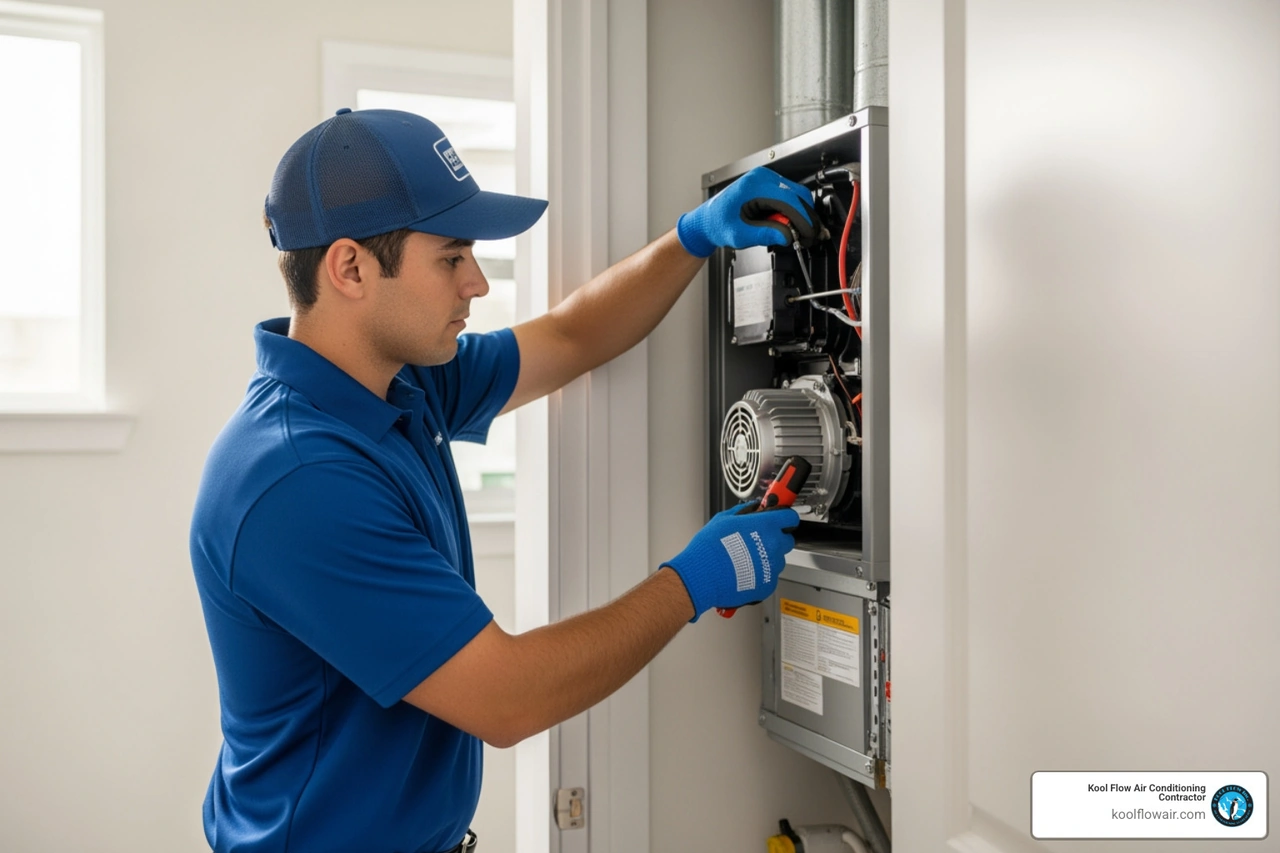
By lowering the cooling airflow to approximately 350 CFM per ton, we allow the air to spend more time in contact with the cold evaporator coil. This makes the coil colder and significantly increases its "latent capacity" — its ability to turn water vapor into liquid condensate. Research shows that dropping airflow to this level can improve moisture removal by 16% or more.
Other technical factors include:
- Thermal Expansion Valves (TXV): These valves regulate refrigerant flow to ensure the entire evaporator coil is used effectively, maximizing dehumidification.
- Clean Coils: A dirty coil can't transfer heat or moisture efficiently. Regular maintenance is vital because How South Florida Climate Affects Your HVAC System includes heavy salt and dust buildup.
When choosing a new system, asking What Is The Best AC For Hot Humid Climates will lead you toward units designed specifically for high latent loads.
Implementing AC and Humidity Control Tips for Tropical Climates via Ramping Modes
Modern high-efficiency systems often feature "Ramping Profiles." Instead of the fan hitting 100% speed the moment the compressor kicks on, it starts slowly.
- Start-up: The fan runs at a very low speed (perhaps 50%) for the first few minutes. This quickly chills the evaporator coil so it begins dehumidifying almost instantly.
- Normal Cooling: The fan ramps up to its optimized speed (like that 350 CFM per ton we mentioned).
- Dehumidification (DH) Mode: If a humidistat senses that the humidity is still above 55%, it can trigger the system to stay in a low-airflow mode even if the temperature is close to the target.
These modes are essential because How Florida Heat and Humidity Affect AC Lifespan is often tied to how hard the system has to work to overcome moisture. Ramping modes reduce the "stop-and-start" stress on the motor while keeping you drier.
Smart Thermostat Settings and AC and Humidity Control Tips for Tropical Climates
Your thermostat is the brain of your comfort system. In places like Miramar and Sunrise, a basic "On/Off" thermostat isn't enough. You need a smart thermostat that supports humidity sensing.
- Humidity Setpoints: Set your target RH to 45-50%.
- Overcooling: Some thermostats have a feature that allows the AC to keep running even if the temperature goal is met (usually up to 2 or 3 degrees lower) if the humidity is still too high.
- On-Off Bands: Adjusting the "differential" can prevent the system from cycling too frequently, allowing for longer run times that favor moisture removal.
While these systems might seem like a larger upfront investment, many homeowners find that Is A High Efficiency AC Worth The Extra Cost In Florida because of the sheer comfort and mold prevention they provide.
Practical Daily Strategies for Managing Indoor Moisture in South Florida
Technical settings are only half the battle. Your daily habits in your Davie or Plantation home contribute significantly to the moisture load.
Exhaust Fans are Non-NegotiableEvery time you shower or boil water for pasta, you are dumping pints of water into the air. Always run your bathroom and kitchen exhaust fans. More importantly, leave them running for 10–15 minutes after you finish to ensure the moisture is fully vented outside.
Prioritized VentilationIn energy-efficient homes, we sometimes use "prioritized ventilation." This means the system brings in fresh outdoor air only when the AC is already running. This ensures that the incoming humid air is immediately processed by the cooling coils.
Check Your DuctsLeaky ducts in a hot attic can pull in humid, unfiltered air, bypassing your AC’s dehumidification process entirely. Our Ductwork Services focus on sealing these leaks to keep the "outside" air outside. This is especially critical for coastal homes, where How Coastal Weather Impacts HVAC Performance means dealing with both moisture and corrosive salt air.
Choosing Between AC Optimization and Whole-Home Dehumidifiers
Sometimes, even the best-tuned AC can't keep up with the Florida swamp. This is common in homes with very low cooling needs but high moisture (like a shaded house in Coconut Creek).
| Feature | Optimized Central AC | Supplemental Whole-Home Dehumidifier |
|---|---|---|
| Primary Goal | Temperature control + basic drying | Dedicated moisture removal |
| Best For | Most standard South Florida homes | Homes with persistent "musty" smells |
| Energy Impact | Uses existing system more effectively | Adds a secondary power draw |
| Control | Thermostat-based | Dedicated humidistat |
If you have a specific area that stays damp, a Mini Split vs Central AC For Humid Climates comparison might show that a ductless unit is better for localized control. For the ultimate in air quality, integrating Air Purification HEPA Whole Home HVAC systems alongside a dehumidifier can create a hospital-grade environment in your own living room.
Frequently Asked Questions about Tropical Humidity Control
Why is my house still sticky when the AC is at 72 degrees?
This is almost always due to short-cycling. If your AC unit is oversized, it blasts the house with cold air so quickly that it reaches 72°F in 5 or 10 minutes and then shuts off. Dehumidification requires long, steady run times. If your system is too big, it never gets the chance to pull water out of the air. This is a common reason people consider Central AC vs Ductless Mini Split For Florida Homes, as mini-splits are excellent at running at low, constant speeds.
How does salt air affect my dehumidification system?
For our neighbors in Lauderdale-By-The-Sea and Hillsboro Beach, salt is a major enemy. Salt air accelerates corrosion on the aluminum fins of your outdoor condenser and can even affect the indoor evaporator coils over time. When coils corrode, they lose their ability to transfer heat and moisture efficiently. Regular rinsing and professional maintenance are key. Learn more about How Salt Air Affects Your HVAC System to protect your investment.
What is the best AC for Florida's extreme humidity?
The Best Air Conditioner For Florida Weather is typically a variable-speed or two-stage system. Unlike standard units that are either "100% on" or "off," variable-speed systems can run at 30% or 40% capacity for hours. This creates a continuous "squeeze" on the air, pulling out moisture all day long without overcooling your home.
Conclusion
Managing humidity in South Florida is about more than just avoiding a "sticky" feeling; it’s about protecting your home’s structure and your family’s health. By implementing these ac and humidity control tips for tropical climates, you can turn your home into a true sanctuary from the Broward and Miami-Dade heat.
At Kool Flow Air Conditioning, we’ve spent over 20 years helping our neighbors in West Park, Fort Lauderdale, and throughout the tri-county area stay comfortable. As a family-owned business, we understand that every home has its own "micro-climate." Whether you need a technical airflow adjustment, a smart thermostat upgrade, or a complete high-efficiency installation, we’re here to provide honest pricing and reliable expertise.
Don't let the humidity win this summer. Contact us today to ensure your system is optimized for the unique challenges of our tropical paradise.


Hear what our satisfied
clients have to say

SERVICE AREAS