


Step-by-Step Guide to Reducing Refrigeration Energy Costs

Why Understanding How Commercial Refrigeration Affects Energy Bills Can Save Your Business Thousands
How commercial refrigeration affects energy bills is one of the most underestimated cost drivers for South Florida businesses. If you run a restaurant, convenience store, or any food service operation, here is what you need to know right away:
Quick Answer: How Commercial Refrigeration Impacts Your Energy Bill
| Factor | Impact |
|---|---|
| Share of kitchen electricity | Refrigeration accounts for roughly 50% of total kitchen electricity load |
| Annual energy consumption | Commercial refrigerators and freezers average 55,000 kWh per year combined |
| Comparison to residential | A home fridge uses 1-2 kWh per day; commercial units run 24/7/365 |
| Efficiency upgrades | ENERGY STAR-certified models can reduce energy bills by up to 40% |
| Maintenance neglect | Dirty coils, failing motors, and ice buildup force systems to work harder and consume more power |
| South Florida factor | High ambient humidity and heat increase refrigeration workload compared to cooler climates |
Most business owners focus on the sticker price of refrigeration equipment. That is the wrong number to watch. The electricity a commercial refrigeration system consumes over its lifetime almost always costs more than the unit itself — and in South Florida's warm, humid climate, that meter runs faster than almost anywhere else in the country.
Small inefficiencies that might be minor in a dry, cool climate become serious cost problems here. A refrigeration system working against 90-degree kitchen heat and high humidity has to run longer cycles, stress its compressor harder, and pull more electricity from the grid — month after month, year after year.
This guide walks you through exactly how to identify what is driving your refrigeration energy costs, what design and maintenance factors matter most, and what steps you can take to bring those bills down.
How Commercial Refrigeration Affects Energy Bills in South Florida
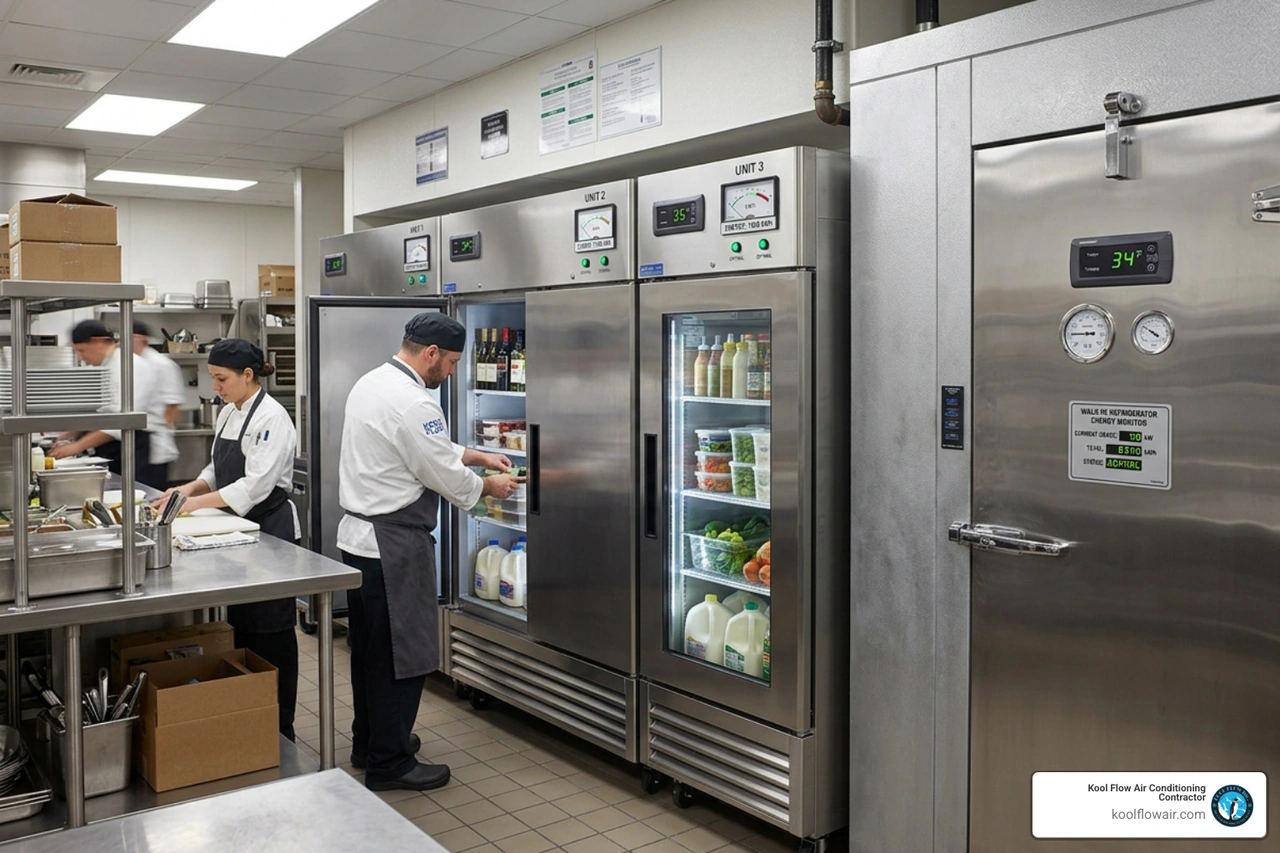
Operating a commercial kitchen or food retail space in places like Fort Lauderdale, Hollywood, or West Park, FL, presents a unique set of thermodynamic challenges. Unlike businesses in northern states, South Florida businesses must contend with relentless heat and heavy humidity year-round. This external climate directly impacts indoor ambient conditions, which in turn dictates how hard your refrigeration systems have to work.
When ambient temperatures in a kitchen rise, your refrigeration compressors must run longer cycles to extract heat from the cabinet. If your air conditioning system is already struggling with the Florida humidity, your refrigeration units are essentially fighting a losing battle. This is why understanding How to Reduce Refrigeration Energy Costs for Your Business is so critical for local operators.
Furthermore, regional utility rate variations mean that a single inefficient unit can cause dramatic swings in your monthly operating expenses. While some states enjoy lower commercial power rates, Florida’s rates coupled with high consumption mean that any mechanical inefficiency instantly translates into noticeable spikes on your monthly utility statement.
Understanding How Commercial Refrigeration Affects Energy Bills
To put things in perspective, let’s look at the sheer scale of energy consumption. While a standard household refrigerator uses a modest 1 to 2 kWh per day, commercial refrigerators and freezers consume a staggering combined average of 55,000 kWh per year.
Why is the gap so massive?
- Constant Run Hours: Commercial units run 24 hours a day, 7 days a week, 365 days a year. They never get a break.
- Ambient South Florida Humidity: Every time a kitchen staff member opens a reach-in or walk-in door, warm, moisture-laden air rushes inside. The evaporator coils must work overtime not only to cool this air but also to freeze out the moisture, which acts as an insulating barrier on the coils and triggers frequent, energy-intensive defrost cycles.
- High Foot Traffic: In a busy restaurant or convenience store, doors are opened hundreds of times a day, forcing the compressor to cycle back on repeatedly.
How Commercial Refrigeration Affects Energy Bills When Maintenance is Neglected
When preventive care falls by the wayside, your equipment doesn't just break down overnight; it slowly and silently bleeds energy. Neglecting basic upkeep directly leads to several major efficiency-draining issues:
- Dirty Condenser Coils: The condenser coil's job is to release the heat extracted from inside the unit. In a kitchen, these coils quickly become coated in grease, dust, and airborne debris. This layer of grime acts like a thermal blanket. Because the heat cannot escape, the compressor has to run much longer and hotter to maintain safe food storage temperatures.
- Failing Evaporator and Condenser Motors: When fan motors begin to wear out, their rotational speed drops, reducing critical airflow. This forces the compressor to draw more electrical current (amps) to achieve the same cooling effect.
- Ice Build-Up: When warm, humid South Florida air leaks into a freezer through a bad door gasket, it rapidly condenses and freezes on the evaporator coils. This ice buildup restricts airflow and forces the unit into extended, highly inefficient defrost cycles.
- Airflow Restrictions: Overcrowded shelves or poorly positioned stock can block internal air channels. When cold air cannot circulate freely, the thermostat reads inaccurate temperatures, keeping the compressor running far longer than necessary.
To understand how to prevent these issues from quietly draining your operating capital, consult our Commercial Refrigeration Maintenance Complete Guide.
Key Factors Influencing Commercial Cooling Efficiency
When selecting or evaluating refrigeration equipment, several key design and operational elements dictate how much power the unit will draw. Understanding these factors allows you to make informed decisions that keep your utility bills manageable.
- Compressor Location: Bottom-mounted compressors tend to operate more efficiently in standard environments because cooler air rests near the floor, reducing the workload required to condense the refrigerant. However, in greasy kitchen environments, top-mounted compressors may be preferred to prevent grease and dust from clogging the coils too quickly.
- Insulation Thickness and Quality: Modern high-efficiency cabinets feature advanced, high-density polyurethane insulation. Thicker insulation prevents heat infiltration, allowing the cabinet to hold its temperature longer without cycling the compressor.
- Door Configuration: Solid doors provide superior thermal insulation compared to glass doors. If visibility isn't strictly necessary for your operations, opting for solid doors is always the more energy-efficient route. Additionally, half-height doors (or split doors) are more efficient than full-height doors because they prevent the entire column of cold air from escaping when only one section is accessed.
- Refrigerant Type (R-290 Hydrocarbons): Upgrading to modern units that utilize R-290 hydrocarbon refrigerant is one of the most effective ways to lower daily operating costs. R-290 is a natural refrigerant with excellent thermodynamic properties. It allows compressors to cycle less frequently and run cooler, resulting in a 15% to 30% increase in energy efficiency compared to older HFC refrigerants.
If you are planning to upgrade or install new equipment in the Broward County area, our Commercial Refrigeration Installation Guide West Park FL provides excellent local insights on selecting the right setup for our unique climate.
Calculating Energy Consumption from the Data Plate
You don't have to guess how much your equipment is costing you. You can calculate the estimated energy consumption of any unit using the technical specifications printed on its data plate (usually located inside the cabinet wall or near the compressor compartment).
To calculate your annual consumption, use this simple formula:
$$\text{Amps} \times \text{Volts} = \text{Watts}$$
$$\frac{\text{Watts} \times \text{Daily Run Hours}}{1000} = \text{Daily kWh}$$
$$\text{Daily kWh} \times 365 = \text{Annual kWh}$$
Note: While a compressor doesn't run 24 hours a day, a typical commercial unit under normal kitchen conditions has an average run-time duty cycle of about 10 to 14 hours per day, depending heavily on ambient kitchen temperatures and door-opening frequency.
To see how different equipment footprints stack up, review the average operational metrics below:
| Equipment Type | Typical Amp Draw (115V) | Average Run Hours/Day | Est. Annual kWh |
|---|---|---|---|
| Reach-In Refrigerator (2-Door) | 3.2 – 5.5 Amps | 10 Hours | 1,300 – 2,200 kWh |
| Reach-In Freezer (2-Door) | 7.0 – 11.0 Amps | 12 Hours | 3,500 – 5,500 kWh |
| Walk-In Cooler (8x10) | 12.0 – 16.0 Amps | 14 Hours | 11,000 – 14,000 kWh |
| Walk-In Freezer (8x10) | 18.0 – 24.0 Amps | 15 Hours | 35,000 – 42,000 kWh |
Regulatory Compliance and Environmental Standards
Energy efficiency isn't just about saving money; it is also a matter of regulatory compliance. The EPA’s AIM (American Innovation and Manufacturing) Act has phased down high-GWP (Global Warming Potential) hydrofluorocarbons (HFCs).
Under these evolving rules, commercial refrigeration systems containing 15 pounds or more of regulated refrigerants are subject to strict annualized leak-repair triggers. Specifically, if a commercial system has a leak rate that exceeds 20% on an annualized basis, the operator is legally required to repair the leak within a strict timeframe or face heavy non-compliance penalties.
Staying on top of these environmental regulations is crucial for business owners in South Florida. You can learn more about local enforcement and requirements in our detailed guide on Commercial Refrigeration Compliance in Florida.
Actionable Steps to Reduce Commercial Utility Expenses
Now that you understand the mechanics of how commercial refrigeration affects energy bills, let's look at the practical, high-impact strategies you can implement to drive those costs down.
Upgrading to High-Efficiency Components
If your budget allows for strategic upgrades, focusing on key components can yield rapid payback periods:
- ENERGY STAR-Certified Models: Investing in ENERGY STAR-qualified commercial refrigerators and freezers can slash your refrigeration energy consumption by up to 40%. Over the lifespan of the equipment, these savings quickly compound, easily offsetting any initial purchase premium.
- Electronically Commutated (EC) Motors: Traditional shaded-pole fan motors are notoriously inefficient, converting much of their energy into waste heat (which the refrigeration system then has to work to remove). Replacing them with EC motors is a game-changer. EC motors operate at an impressive 80% to 90% efficiency rating, run cooler, and use a fraction of the electricity.
- Smart Controls and Demand Defrost: Standard commercial controllers rely on simple, mechanical timers to trigger defrost cycles (e.g., running a defrost cycle every 6 hours, whether the coil needs it or not). Modern electronically operated controllers monitor coil temperatures and only trigger defrost cycles when ice is actually present. Installing these smart controllers can reduce walk-in cooler and freezer energy consumption by 3% to 5% almost instantly.
To explore how these smart upgrades fit into a broader corporate sustainability plan, check out our guide on Why Regular Refrigeration Maintenance Matters for Businesses.
Implementing a Strict Maintenance Schedule
You don't always need to buy new equipment to see lower utility bills. A disciplined preventive maintenance schedule keeps your existing systems operating at peak performance:
- Clean Condenser Coils Monthly: This is the single highest-leverage maintenance task. Keeping the coils free of dust and kitchen grease ensures optimal heat transfer and prevents the compressor from overworking.
- Inspect and Replace Worn Door Gaskets: A torn or compressed gasket allows warm, humid air to seep into the cabinet constantly. Check your seals regularly by placing a flashlight inside the unit and looking for light leaks around the door frame.
- Install Auto-Close Door Springs and Strip Curtains: For high-traffic walk-ins, heavy-duty plastic strip curtains act as an effective barrier, keeping the cold air inside when employees are carrying inventory in and out.
- Optimize Thermostat Setpoints: Setting your coolers or freezers colder than necessary is a common and expensive mistake. Ensure your reach-ins and walk-ins are calibrated to the exact holding temperatures required by food safety codes (typically 36°F to 38°F for medium-temperature refrigeration, and -5°F to 0°F for low-temperature freezers).
For a complete checklist of tasks you can perform to keep your operating costs low, read our Commercial Refrigeration Maintenance Guide for Business Owners.
Frequently Asked Questions About Commercial Cooling Efficiency
What are the signs that a commercial refrigeration system is losing efficiency?
If your system is beginning to struggle, it will usually let you know through several observable warning signs before a catastrophic breakdown occurs:
- Climbing Utility Bills: A gradual, unexplained rise in your monthly energy bills is often the first indicator that your compressor is running longer cycles to maintain temperature.
- Inconsistent Internal Temperatures: If food products are spoiling faster, or if you notice slight temperature swings on your digital displays, the system is struggling to keep up with the thermal load.
- Recurring Ice Build-Up: Frequent frost accumulation on the evaporator coils or around the door frames points to faulty gaskets, failing defrost heaters, or restricted airflow.
- Frequent Repair Calls: If you find yourself calling for service multiple times a year to patch leaks or replace components, the system's overall efficiency has likely degraded significantly.
- Loud or Constantly Running Compressor: A healthy compressor should cycle on and off. If yours runs continuously without stopping, it is consuming excess electricity and wearing itself out prematurely.
When should a business repair versus replace an aging refrigeration unit?
According to ASHRAE data, the median service life for commercial refrigeration equipment is approximately 10.5 years. Deciding whether to invest in another repair or replace the unit entirely depends on a few critical factors:
- Cabinet vs. Mechanical Condition: If the cabinet's physical structure, insulation, and door frames are in excellent shape, replacing a failed fan motor or compressor is often highly cost-effective. However, if the cabinet walls are saturated with moisture or the doors are warped, the unit will never run efficiently again, and replacement is the smartest move.
- Age-Related Efficiency Losses: Older units from a decade ago use significantly more power than modern, R-290 equipped models. Replacing an aging unit often pays for itself within a few years solely through reduced electricity bills.
- Frequency of Breakdowns: If the cost of cumulative repairs over a 12-month period approaches the cost of a new unit, it is time to upgrade.
If you operate in the Pembroke Pines area and want to explore your options, our Commercial Refrigeration Installation Guide Pembroke Pines FL is an excellent resource for evaluating replacement equipment.
How do glass door merchandisers compare to solid door units in energy use?
Glass door merchandisers are fantastic for driving impulse sales in retail spaces, convenience stores, and cafes, but they are inherently less energy-efficient than solid-door units.
Because glass does not insulate as effectively as solid, polyurethane-filled metal doors, heat constantly conducts through the glass pane into the refrigerated space. This causes glass door units to run longer cycles and consume more energy.
To mitigate these losses, always look for glass door models with double- or triple-pane thermal glass, low-E coatings, and LED interior lighting (which emits far less heat than old fluorescent bulbs). If you run open-front multideck or display cases, drawing an insulating night blind over the opening during non-business hours can reduce overnight energy consumption by an impressive 30% to 40%.
Conclusion
Managing how commercial refrigeration affects energy bills is a continuous process that requires a mix of smart equipment choices, operational discipline, and professional oversight. In South Florida's demanding climate, letting refrigeration maintenance slide is a direct path to inflated utility bills and unexpected operational headaches.
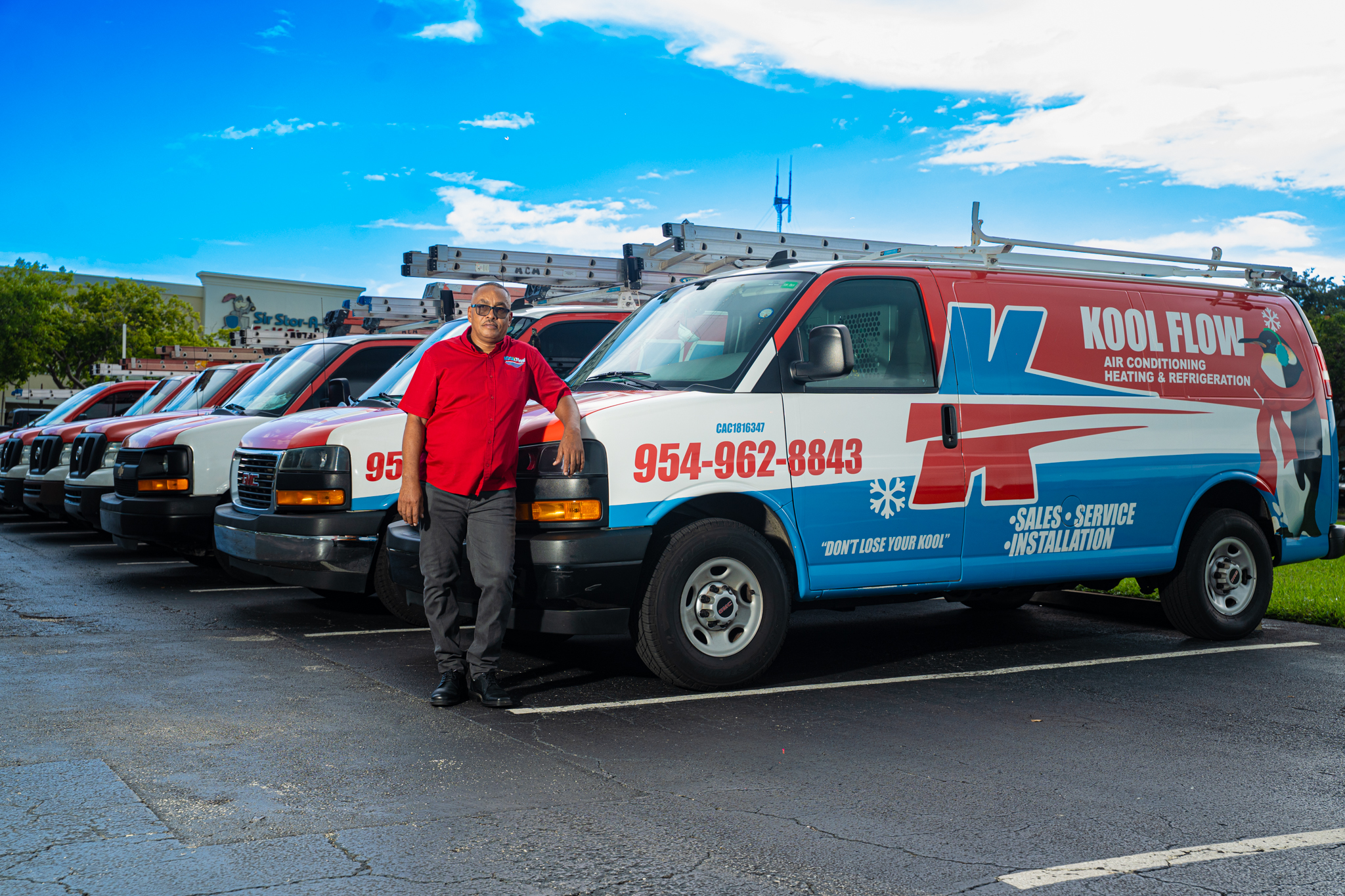
At Kool Flow Air Conditioning Contractor, we have spent over 20 years helping local businesses throughout Broward, Miami-Dade, and Palm Beach counties keep their commercial cooling systems running at peak efficiency. Whether you need a precision system tune-up, an emergency repair, or a high-efficiency equipment upgrade, our experienced, family-owned team is here to help you protect your bottom line.
Don't let inefficient cooling run up your utility costs. Schedule professional commercial refrigeration services with Kool Flow Air Conditioning Contractor today, and let us help you keep your kitchen running cool, compliant, and cost-effective.


Hear what our satisfied
clients have to say

SERVICE AREAS