


Detailed Guide to How Refrigerant Regulations Affect Restaurants


Why Refrigerant Regulations Are a Big Deal for Restaurants and Food Businesses
How refrigerant regulations affect restaurants and food businesses is one of the most pressing operational questions facing foodservice operators right now. Here's a quick summary:
- What's changing: The EPA's AIM Act is phasing down high-GWP refrigerants like R-404A and R-22 by 85% before 2036
- Who's affected: Restaurants, grocery stores, convenience stores, and any food business running commercial refrigeration
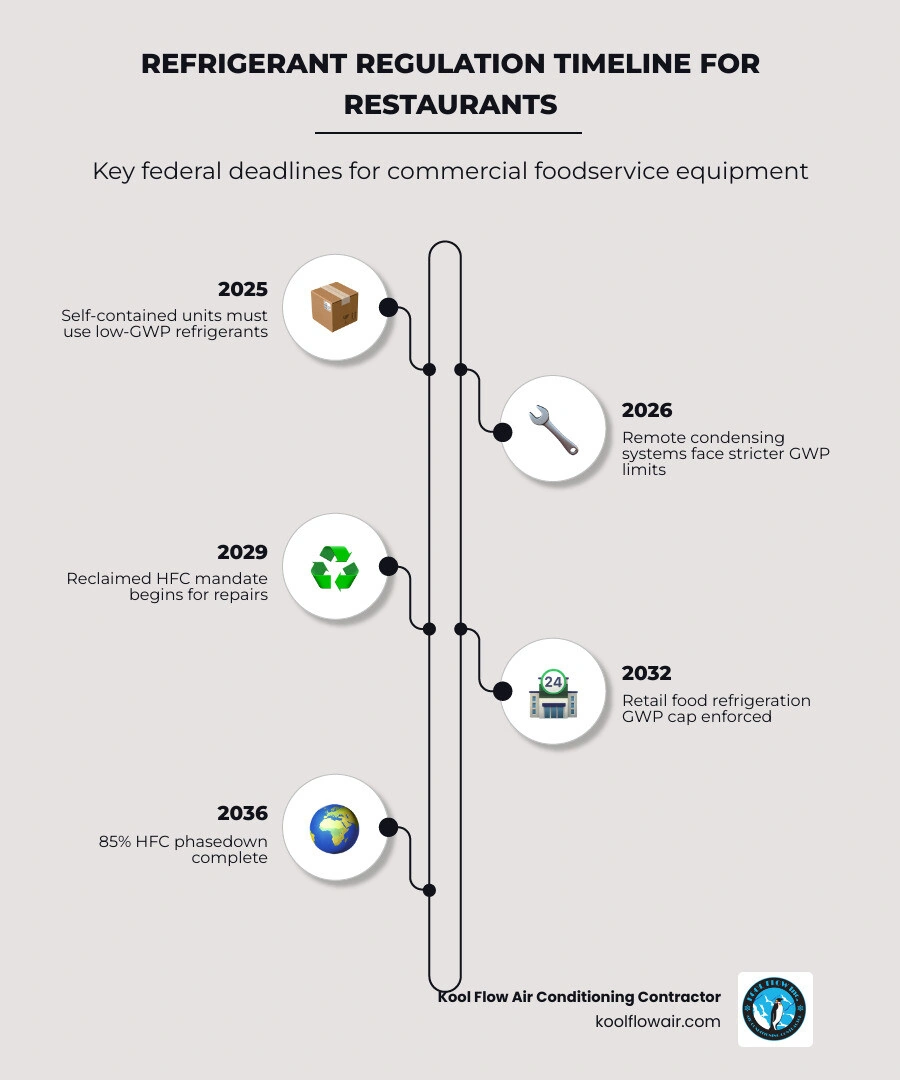
- Key deadlines: New self-contained units required low-GWP refrigerants starting January 2025; remote refrigeration systems face stricter rules from January 1, 2026; retail food refrigeration has an extended deadline of January 1, 2032
- Cost risk: R-404A prices have already risen 40–70% since 2022, and reclaimed refrigerant supply is limited
- Compliance risk: EPA fines for venting refrigerant can reach up to $56,460 per day per violation
- What to do now: Audit your equipment, plan retrofits, and work with a certified HVAC contractor
If you run a restaurant or food business, your refrigeration equipment is the backbone of your operation. It keeps food safe, prevents spoilage, and keeps your health inspection scores where they need to be. But right now, the rules governing the refrigerants inside that equipment are changing faster than many operators realize — and the cost of being caught off guard can be significant.
The federal AIM Act is systematically reducing the production of hydrofluorocarbons (HFCs), the refrigerants that power most commercial refrigeration systems in use today. Refrigerants like R-404A — which has a Global Warming Potential of 3,922 and was once the industry standard for food retail — are becoming harder to source, more expensive to buy, and increasingly regulated at both the federal and state level. Some states, like New York, are moving even faster than federal timelines with their own bans and supply restrictions.
For restaurant owners and facility managers in South Florida and across the country, this isn't a distant regulatory issue. It's a present-day operational challenge that affects repair costs, equipment decisions, and long-term business planning.
How Refrigerant Regulations Affect Restaurants and Food Businesses: The Federal Landscape
To understand how we arrived at this point, we have to look at the federal regulatory environment. The United States has been actively transitioning away from ozone-depleting substances and high-Global Warming Potential (GWP) greenhouse gases for several decades.
The primary driver of the current transition is the American Innovation and Manufacturing (AIM) Act, which was enacted by Congress with strong bipartisan support. The AIM Act directs the Environmental Protection Agency (EPA) to phase down the production and consumption of HFCs by 85% relative to a baseline level by the year 2036.
For local business owners in Broward, Miami-Dade, and Palm Beach Counties, navigating this shifting landscape requires a clear grasp of both federal rules and local building codes. Staying ahead of these changes is the only way to avoid unexpected downtime and costly emergency repairs. For a deeper look at local compliance, check out our guide on Commercial Refrigeration Compliance in Florida.
Understanding How Refrigerant Regulations Affect Restaurants and Food Businesses Under the AIM Act
The AIM Act focuses heavily on the Global Warming Potential (GWP) of the chemical compounds used in refrigeration systems. GWP is a relative measure of how much heat a greenhouse gas traps in the atmosphere compared to carbon dioxide (which has a GWP of 1).
Historically, commercial kitchens relied on HFCs like R-404A (GWP of 3,922) and R-507A (GWP of 3,985). Because these gases trap thousands of times more heat than CO₂, they are the primary targets of the EPA’s phasedown. Globally, about 80% of HFC emissions come from refrigeration, air conditioning units, and vehicles. This makes commercial refrigeration a major focal point for environmental regulators.
As the production of virgin high-GWP HFCs is systematically cut, the supply of these refrigerants is shrinking rapidly. This artificial supply squeeze is designed to encourage food businesses to transition to low-GWP alternatives. However, it also means that maintaining older, leak-prone systems is becoming increasingly difficult and expensive. This is why keeping your current units in peak operational shape is so critical. You can learn more about protecting your existing setup in our article on Why Regular Refrigeration Maintenance Matters for Businesses.
Self-Contained vs. Remote Refrigeration Deadlines
One of the most confusing aspects of the EPA’s Technology Transitions program is how the deadlines apply to different types of equipment. The regulations draw a sharp distinction between self-contained refrigeration units and remote refrigeration systems.
- Self-Contained Systems: These are plug-in appliances where all refrigeration components (compressor, condenser, evaporator) are housed within the same physical unit. Examples include reach-in coolers, prep tables, undercounter fridges, and stand-alone ice machines. The manufacturing and installation deadline for these systems was January 1, 2025. New self-contained equipment must now utilize refrigerants with a GWP under specified thresholds (typically under 150 or 300, depending on the application).
- Remote Systems: These systems locate the compressor and condenser units away from the actual refrigerated space—usually on the roof of the restaurant or in a back mechanical room. Walk-in coolers and freezers with remote condensing units fall into this category. The compliance deadline for installing new remote condensing systems with legacy high-GWP refrigerants was initially set for January 1, 2026. However, recent EPA revisions in May 2026 have extended the final compliance timeline for many retail food refrigeration and remote condensing systems to January 1, 2032, before the strictest GWP limits phase in.
To help you visualize these differences, here is a breakdown of how the rules apply:
| Equipment Type | Typical Examples | GWP Limit (New Systems) | Key Compliance Deadline |
|---|---|---|---|
| Self-Contained Units | Reach-ins, prep tables, ice machines | Under 150 or 300 (varies) | January 1, 2025 |
| Remote Systems | Walk-in coolers/freezers, rack systems | Under 150 or 300 (varies) | January 1, 2026 (Certain safety rules) / January 1, 2032 (Final GWP limits) |
| Reclaimed HFC Mandate | Servicing existing legacy systems | Must use reclaimed gas for certain repairs | January 1, 2029 |
Phasing Out Legacy Refrigerants and Adopting Low-GWP Alternatives
The transition away from legacy refrigerants means that certain common gases are being phased out entirely, while others are stepping in to take their place.
- R-22 (HCFC-22): The production and import of virgin R-22 ended on January 1, 2020. While you can legally continue to run an existing R-22 system, servicing it requires reclaimed gas, which is becoming incredibly scarce.
- R-404A and R-507A: These have been the workhorses of the commercial kitchen for decades. Because of their high GWPs, they are the primary targets of the current phasedown. Prices for R-404A have surged by 40–70% since 2022, and this upward trend is expected to accelerate as HFC production allowances tighten further.
To replace these legacy gases, the industry is turning to several low-GWP alternatives:
- R-290 (Propane): A highly efficient, natural refrigerant with a GWP of only 3.3. It conducts heat beautifully, allowing for lower compressor pressures and reduced energy consumption. However, because it is an A3 (highly flammable) refrigerant, its charge sizes are strictly limited by safety standards, making it ideal for self-contained units but less practical for large remote systems.
- A2L Refrigerants (e.g., R-454C, R-454B): These are "mildly flammable" synthetic refrigerants. They have a much lower burning velocity and flammability profile than R-290, which allows for much larger charge sizes. A2Ls are quickly becoming the standard choice for remote condensing units and larger walk-in systems.
Navigating these new chemical profiles requires specialized knowledge during service and installation. For practical advice on managing these modern systems, see our Commercial Refrigeration Maintenance Guide for Business Owners.
Safety and Installation Requirements for Remote Systems
Because many of the new low-GWP alternatives (especially A2Ls) carry mild flammability ratings, the safety and installation requirements for remote refrigeration systems have become significantly more stringent. If you are planning an equipment upgrade or a new kitchen build, your mechanical designs must account for these updated safety protocols:
- Refrigerant Leak Detection: Remote systems using A2L refrigerants must be equipped with active leak detection systems. These sensors must trigger audible and visual alarms to alert kitchen staff of a leak before the gas can concentrate to a flammable level.
- Dedicated Safety Valves: Remote systems installed after the regulatory transition must feature a dedicated safety shut-off valve for each individual evaporator coil, rather than sharing a single valve across the entire system.
- Shaft Enclosures: If your refrigerant piping passes through two or more ceiling or floor assemblies, building codes now require fire-rated shaft enclosures to protect the lines and prevent gas migration in the event of a leak.
- Enhanced Ventilation: Mechanical rooms housing compressors must have continuous or sensor-activated ventilation systems designed to exhaust any leaking refrigerant safely outdoors.
Implementing these systems correctly requires an experienced hand. If you are located in Broward County, you can reference our Commercial Refrigeration Installation Guide for West Park FL for localized installation best practices.
Operational and Financial Impacts on Food Businesses
The financial realities of how refrigerant regulations affect restaurants and food businesses extend far beyond the initial cost of purchasing new equipment. The shrinking supply of older HFCs has created a "supply cliff" that is driving up the cost of routine maintenance.
If your kitchen relies on an older R-404A walk-in cooler, a simple refrigerant leak can turn into a major financial headache. Not only has the price of the gas itself skyrocketed, but the labor required to locate, repair, and verify the leak under strict EPA guidelines has also increased. Furthermore, because virgin gas production is restricted, the industry is relying heavily on reclaimed refrigerant. However, the nationwide supply of reclaimed gas is incredibly tight, meaning you may face service delays if your contractor cannot source the necessary refrigerant.
On the bright side, upgrading to modern, compliant equipment can yield significant operational savings. Modern systems utilizing R-290 or A2L refrigerants are far more energy-efficient than their predecessors. In fact, retrofitting or replacing an older system can reduce your refrigeration-related energy costs by 5% to 20%, helping to offset the initial capital expenditure over time.
To learn more about maximizing these savings, read our guide on How to Reduce Refrigeration Energy Costs for Your Business.
How Refrigerant Regulations Affect Restaurants and Food Businesses in Florida and Other States
For multi-state operators, managing compliance is particularly challenging because state-level rules often differ from federal requirements.
While the federal AIM Act sets the baseline nationwide, states like New York have implemented even stricter rules. For example, New York’s 6 NYCRR Part 494 regulation includes a bulk sales ban on certain virgin HFCs and mandates a 14-day leak repair window for large systems—twice as fast as the federal 30-day requirement.
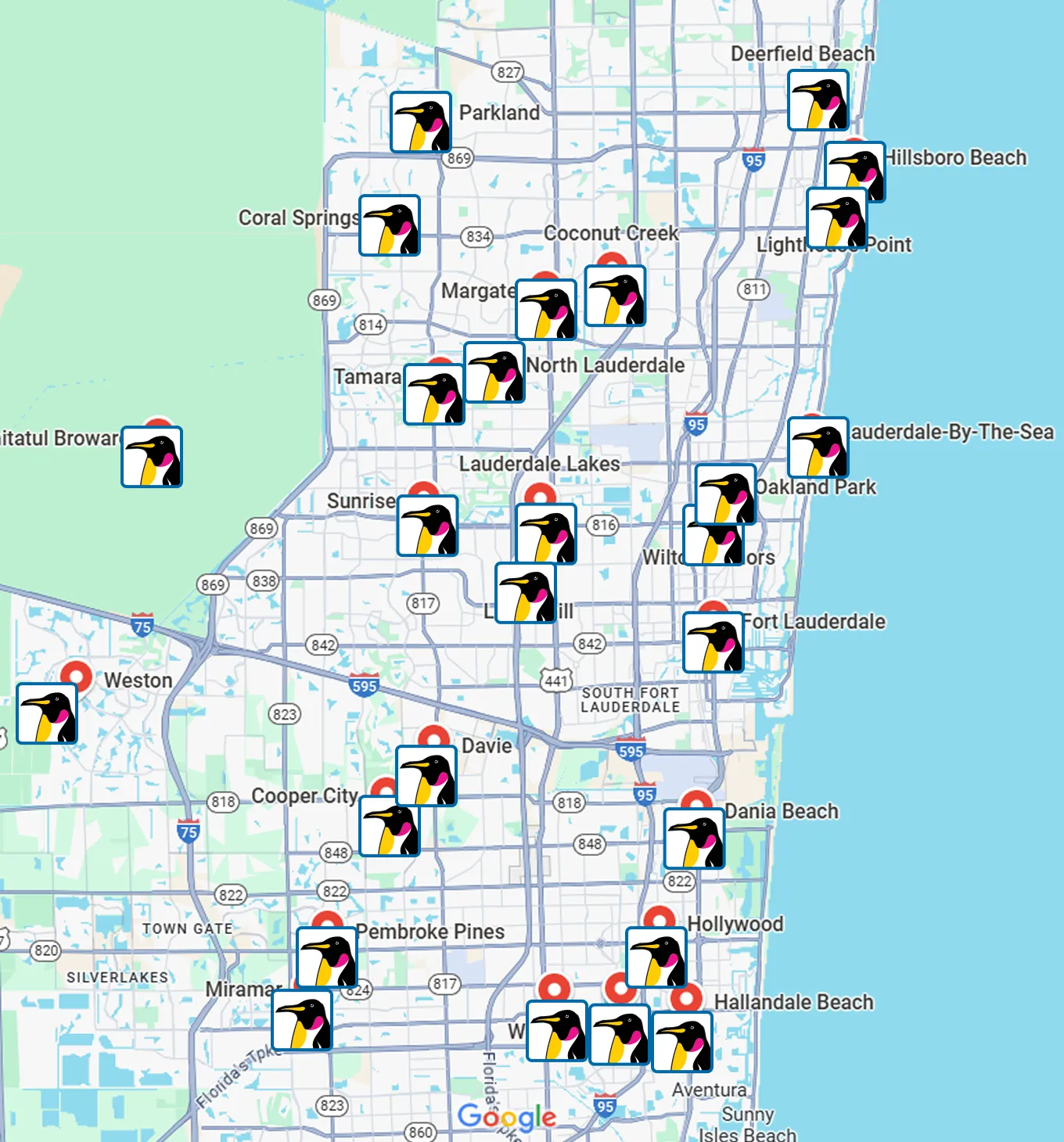
In Florida, compliance is governed primarily by the federal AIM Act in tandem with the Florida Building Code. While Florida has not implemented a state-specific ban on the level of New York's Part 494, local inspectors in Broward and Miami-Dade counties strictly enforce the safety, electrical, and ventilation codes associated with A2L and A3 refrigerants. Multi-state operators must ensure their standard operating procedures are flexible enough to accommodate these regional variations. For local tips on keeping your systems compliant in our primary service area, check out our Commercial Refrigeration Maintenance Tips for West Park FL.
Managing Existing Equipment and Retrofit Strategies
If you aren't ready to replace your entire refrigeration setup, you aren't completely out of luck. Many existing R-404A systems can be retrofitted to run on lower-GWP HFC blends like R-448A or R-449A. These retrofits typically require changing the system's expansion valves, adjusting pressure switches, and replacing the compressor oil, but they can extend the operating life of your existing equipment by 5 to 8 years.
Before deciding whether to repair, retrofit, or replace, we highly recommend conducting a comprehensive equipment audit. Document the age, refrigerant type, charge size, and leak history of every unit in your kitchen. This structured approach allows you to prioritize your capital investments and avoid unexpected equipment failures during your busiest shifts. For professional assistance with your South Florida commercial systems, consult our Refrigeration Repair Commercial Fort Lauderdale Guide.
Frequently Asked Questions About Restaurant Refrigerant Regulations
Navigating environmental compliance can feel like learning a completely new language. To help clear up the confusion, we’ve compiled answers to the most common questions restaurant owners ask us.
What are the EPA leak repair requirements for commercial systems?
Under Section 608 of the Clean Air Act, the EPA enforces strict leak repair rules for commercial refrigeration systems containing 50 or more pounds of refrigerant charge:
- Leak Threshold: If a system's annual leak rate exceeds 20%, the owner must repair the leak.
- Repair Window: The leak must be repaired within 30 days of discovery.
- Verification Tests: Technicians must perform an initial and a follow-up verification test to prove the repair is holding before the system can be fully recharged.
- Record Keeping: You must maintain detailed records of all service work, refrigerant additions, and leak calculations for at least three years.
Even if your systems are smaller than 50 pounds, ignoring a leak is a bad idea. Knowing venting of any ozone-depleting or HFC refrigerant is strictly illegal and subject to severe daily civil penalties. If you suspect a leak in your system, get professional help immediately by reviewing our 24hr Refrigeration Repair Fort Lauderdale Guide.
Do these regulations require immediate replacement of existing equipment?
No. Neither the federal AIM Act nor state-level rules require you to immediately tear out and replace operational equipment simply because it uses an older refrigerant. You are legally permitted to run your existing systems until the end of their useful lifespans.
However, the practical challenge is servicing those systems when they break down. As virgin supplies of R-404A and R-22 continue to dry up, repairs will become increasingly difficult and costly. Planning a gradual transition is always a smarter business strategy than waiting for a catastrophic system failure during a busy weekend. To keep your current units running smoothly as long as possible, read our advice on How Often Should Commercial Refrigeration Be Serviced.
How do recent policy changes affect the compliance timeline?
The regulatory landscape is constantly evolving. In May 2026, the EPA revised portions of its Technology Transitions Rule under the AIM Act. These revisions extended the compliance timeline for many retail food refrigeration and remote condensing systems to January 1, 2032.
This extension was designed to provide economic relief to small businesses, independent grocers, and restaurants by preventing premature equipment replacements. However, this does not mean the regulations have disappeared. The phasedown of HFC production is still actively occurring, and the long-term shift toward natural and low-GWP refrigerants remains inevitable. Smart operators are using this extra time to plan orderly, budget-friendly upgrades rather than delaying action. For guidance on selecting compliant equipment for your next project, see our Commercial Refrigeration Installation Guide for Pembroke Pines FL.
Conclusion
Understanding how refrigerant regulations affect restaurants and food businesses is the first step toward safeguarding your business's future. The transition away from high-GWP HFCs is well underway, and while recent timeline extensions offer some breathing room, the economic pressure of rising refrigerant prices and limited parts availability is already here.
At Kool Flow Air Conditioning, we have spent more than 20 years helping South Florida business owners keep their cool. As a family-owned business serving Broward, Miami-Dade, and Palm Beach Counties, we specialize in helping local restaurants, convenience stores, and food businesses navigate these complex transitions with honest advice and reliable service. Whether you need to audit your existing equipment, perform a critical leak repair, or design a fully compliant remote refrigeration system, our experienced team is here to help.
Don't wait for a costly breakdown or a surprise inspection to address your refrigeration compliance. Schedule a consultation with Kool Flow Air Conditioning today, and let us help you build a proactive, worry-free compliance plan for your kitchen.


Hear what our satisfied
clients have to say


SERVICE AREAS