


Beating the Swamp and How Different AC Systems Handle Humid Air


Why Humidity Control Is the Real AC Test in South Florida
mini split vs central ac for humid climates is one of the most important decisions a South Florida homeowner can make — because in places like Broward County, the air isn't just hot, it's wet.
Here's a quick answer to help you compare the two systems at a glance:
| Feature | Mini Split | Central AC |
|---|---|---|
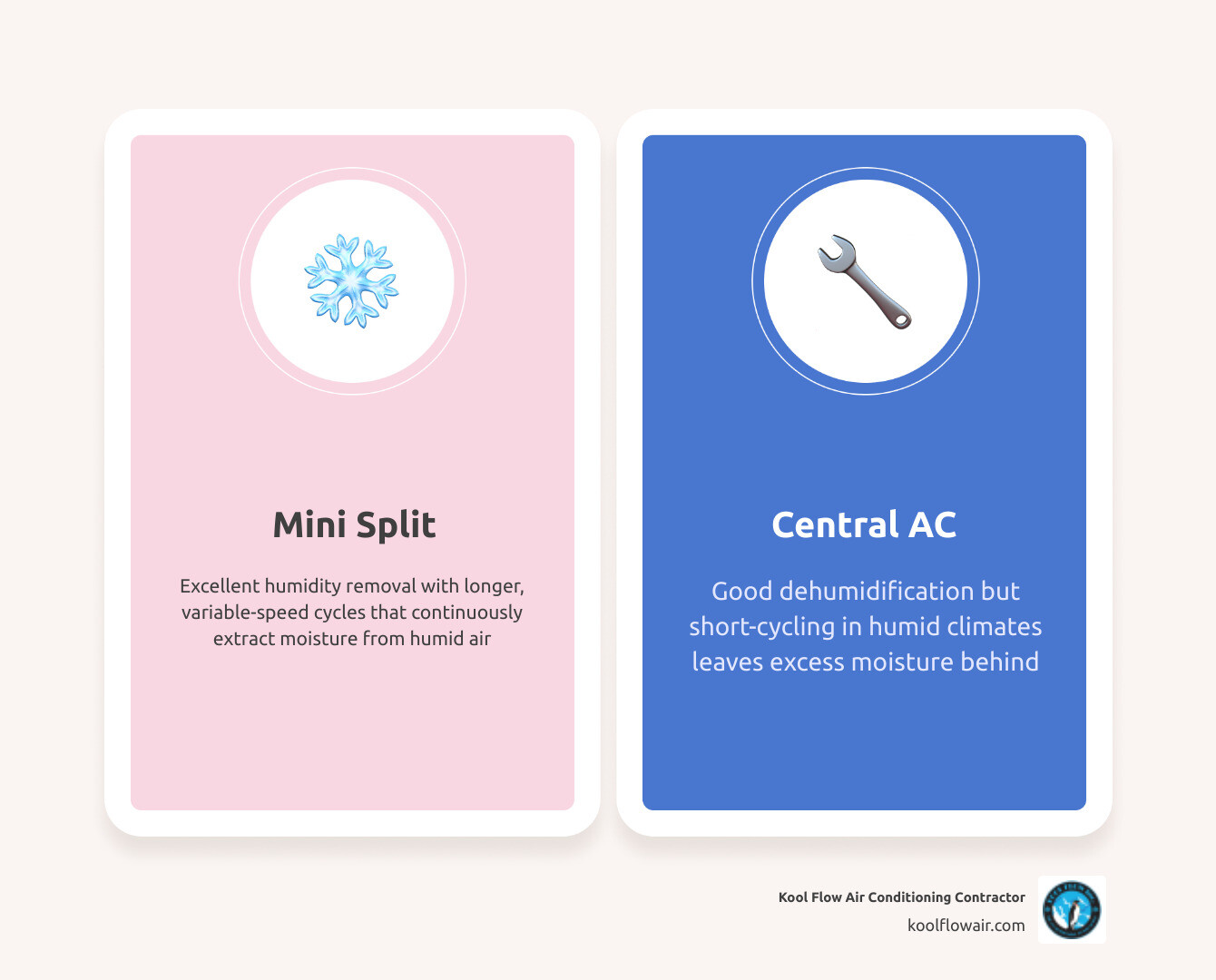
| Humidity removal | Excellent — runs longer, steadier cycles | Good — but short cycles can leave moisture behind |
| Energy efficiency | Higher SEER2 ratings (up to 38+) | Lower SEER2 ratings (up to 21+) |
| Duct energy loss | None | Up to 20–30% loss through leaky ducts |
| Zoning | Built-in per room | Requires costly add-ons |
| Best for | Older homes, additions, part-time residents | Larger homes with existing ductwork |
| Mold risk | Lower with consistent operation | Higher if system short-cycles |
In South Florida, humidity isn't a seasonal nuisance — it's a year-round challenge. The cooling season runs 8 to 10 months per year, and the air is loaded with moisture even on mild days. That moisture isn't just uncomfortable. Left unchecked, it feeds mold, damages surfaces, and makes your home feel muggy no matter how low you set the thermostat.
The AC system you choose plays a direct role in how well your home manages that moisture. And the differences between mini splits and central AC go far deeper than initial considerations or brand names.
This guide breaks down exactly how each system handles humid air — so you can make a smart choice for your home and your health.
The Science of Dehumidification: Mini Split vs Central AC for Humid Climates
To understand how to beat the Florida "swamp" feeling, we have to look at how air conditioners actually work. They don't just "make cold air"; they are essentially giant sponges that soak up heat and moisture. In scientific terms, we call this "latent heat" removal. When the warm, wet air in your living room hits the freezing cold evaporator coils of your AC, the water vapor turns into liquid (condensation) and drips away.
However, the way the system runs determines how much water it actually catches.
Inverter Technology: The Secret Weapon
Most modern ductless mini-splits use something called inverter technology. Think of a traditional central AC like a light switch—it’s either 100% on or 100% off. When it hits the target temperature, it slams shut. In a humid place like Fort Lauderdale, this is a problem. The air might get cool quickly, but the system doesn't run long enough to pull the moisture out. This leads to "short-cycling," leaving you with a home that is cold but clammy.
In contrast, mini-splits act more like a dimmer switch. The variable-speed compressor slows down and speeds up as needed. Instead of turning off, it runs at a low, steady hum for hours. This consistent operation allows the evaporator coils to stay cold and keep pulling gallons of water out of your air all day long.
Moisture Extraction and Evaporator Coils
Because mini-splits are often sized for specific rooms, they can maintain a very precise coil temperature. In our experience providing Residential AC Maintenance Guide Broward County FL, we’ve seen that systems that run longer cycles are far less likely to suffer from biological growth on the coils. When a system stops and starts constantly, the coils warm up, providing a damp, tepid environment where mold loves to move in.
Efficiency and Performance in High-Moisture Environments
When we talk about mini split vs central ac for humid climates, we have to talk about SEER2 ratings. SEER2 (Seasonal Energy Efficiency Ratio) measures how much cooling you get for every watt of electricity you use.
- Central AC Systems: Typically range from 14 to 16 SEER2, with high-end models reaching 21+.
- Mini-Split Systems: Often start at 18 SEER2 and can soar to 38+ SEER2.
In a climate where the AC runs 9 months a year, that gap in efficiency translates to a massive difference in your overall energy usage.
The Hidden Cost of Ductwork
One of the biggest "efficiency killers" in South Florida is the attic. Most central AC systems rely on a network of ducts snaking through an attic that can reach 140 degrees in the summer. Research shows that central air systems lose 20% to 30% of their conditioned air through duct leaks, gaps, and simple heat transfer through the duct walls.
Imagine buying a gallon of milk but spilling 30% of it on the way to the fridge every single time. That’s what happens with ducted systems in humid climates. Mini-splits eliminate this problem entirely because there are no ducts. The cooling is delivered directly into the room. For those considering a new setup, our AC Installation Coral Springs FL Guide goes into more detail about how avoiding ductwork can simplify your home's infrastructure.
| Efficiency Factor | Ductless Mini-Split | Central AC (Ducted) |
|---|---|---|
| Typical SEER2 | 18 - 38+ | 14 - 21 |
| Duct Energy Loss | 0% | 20% - 30% |
| Energy Reduction | 30% - 50% lower | Standard |
| Technology | Always Variable Speed | Often Single or Two-Stage |
Why Mini Split vs Central AC for Humid Climates Matters for Energy Bills
Because mini-splits use inverter-driven performance and avoid the "attic tax" of ductwork, they can significantly reduce energy consumption compared to traditional units. In South Florida, where cooling is a constant necessity, these efficiency gains are substantial.
Comparing Mini Split vs Central AC for Humid Climates in Zoned Spaces
Have you ever had a "thermostat battle" in your house? One person is freezing in the bedroom while the other is sweating in the kitchen? Central AC treats your whole house as one giant bubble. To get the kitchen comfortable, you end up over-cooling the bedrooms, which wastes energy and can actually lead to localized humidity issues.
Mini-splits offer built-in zoning. Each indoor unit has its own thermostat. If you aren't using the guest room or the home office, you can turn that unit down or off. This targeted cooling ensures that you aren't paying to dehumidify empty space. According to the U.S. Department of Energy, zoned systems can cut energy usage by about 30% just by eliminating unnecessary cooling.
Structural Considerations: Older Homes and Ductwork Challenges
South Florida is full of beautiful older homes—from the historic bungalows in Wilton Manors to mid-century gems in Hollywood. Many of these homes were built before central AC was standard.
Retrofitting an older home with central AC is a massive undertaking. It often involves:
- Cutting into original plaster walls or ceilings.
- Building "soffits" (those boxy drops in the ceiling) that ruin the aesthetic of the room.
- The extensive labor and structural modifications required for the ductwork itself.
Mini-splits are a game-changer for these properties. All that is required is a small 3-inch hole in the wall to connect the indoor unit to the outdoor compressor. This makes the AC Installation Wilton Manors FL Guide a popular resource for homeowners looking to preserve their home's character while staying cool.
Indoor Air Quality and Maintenance in the Tropics
In a humid climate, your AC is your primary line of defense against indoor air pollutants. Dust, pollen, and mold spores thrive in moist air.
Filtration Levels
Central AC systems generally have larger, thicker filters. Because they move a larger volume of air through a single point, you can often use high-MERV filters that catch very fine particles. However, if the ducts themselves are dirty or leaky, the system might actually be sucking in dust and allergens from your attic or crawlspace and blowing them into your living room.
Mini-splits have smaller, washable filters in each unit. While they require more frequent cleaning (we recommend checking them every 2–4 weeks), they don't have the risk of "duct-borne" allergens.
Mold Prevention and Drainage
The biggest enemy of South Florida HVAC systems is biological growth. When a system doesn't drain properly, water sits in the drain pan and becomes a breeding ground for mold.
- Central AC: Often has a single primary drain line. If it clogs, the whole system shuts down (if you have a float switch) or, worse, leaks into your ceiling.
- Mini-Splits: Each indoor unit has its own drainage. Because they run longer cycles at lower speeds, the moisture removal is steady, which helps prevent the "flash-drying" of gunk in the pan that causes clogs.
If you ever find yourself dealing with a sudden leak or a system that smells "musty," our AC Repair 24 Hour Fort Lauderdale Guide can help you troubleshoot the issue before it turns into a major mold problem.
Frequently Asked Questions about Humidity and AC
Which system is better for mold prevention in Florida?
Generally, the mini-split is the winner here due to its variable-speed operation. By running longer, lower-intensity cycles, it keeps the humidity levels consistent. Central systems that "short-cycle" (turn on and off rapidly) leave the air feeling damp, which is exactly what mold needs to grow. However, any system—regardless of type—needs a proper Manual J load calculation to ensure it isn't oversized. An oversized AC is a mold factory because it cools the room so fast it never has time to dehumidify.
Do mini-splits provide better air filtration than central systems?
It’s a toss-up. Central systems can use much more robust filters (like MERV 13 or HEPA add-ons) because they have powerful blowers designed to push air through thick material. Mini-splits use smaller, simpler filters. However, mini-splits win on "clean delivery" because there are no dusty ducts involved. If you have severe allergies, a central system with high-end filtration and sealed ducts is excellent, but for most people, the localized filtration of a mini-split is more than sufficient.
Can a central AC handle extreme humidity without short-cycling?
Yes, but it requires the right technology. If you prefer a central system, we recommend looking for two-stage or variable-speed compressors. These behave more like mini-splits, allowing the system to run at 60% capacity on "normal" days to pull out moisture without over-cooling the house. Pairing a central unit with a whole-home dehumidifier is the "gold standard" for comfort, though it is a more complex setup.
Conclusion
Choosing between mini split vs central ac for humid climates really comes down to your home's "bones" and your lifestyle. If you live in a large, modern home in Parkland with existing, well-insulated ductwork, a high-efficiency central AC upgrade is a fantastic choice. It provides uniform comfort and stays out of sight.
However, if you are dealing with an older home, a new addition, or a garage conversion in West Park or Miramar, a mini-split is almost always the smarter move. The energy savings, superior humidity control, and ease of installation make it the "swamp-killer" of choice for many South Floridians.
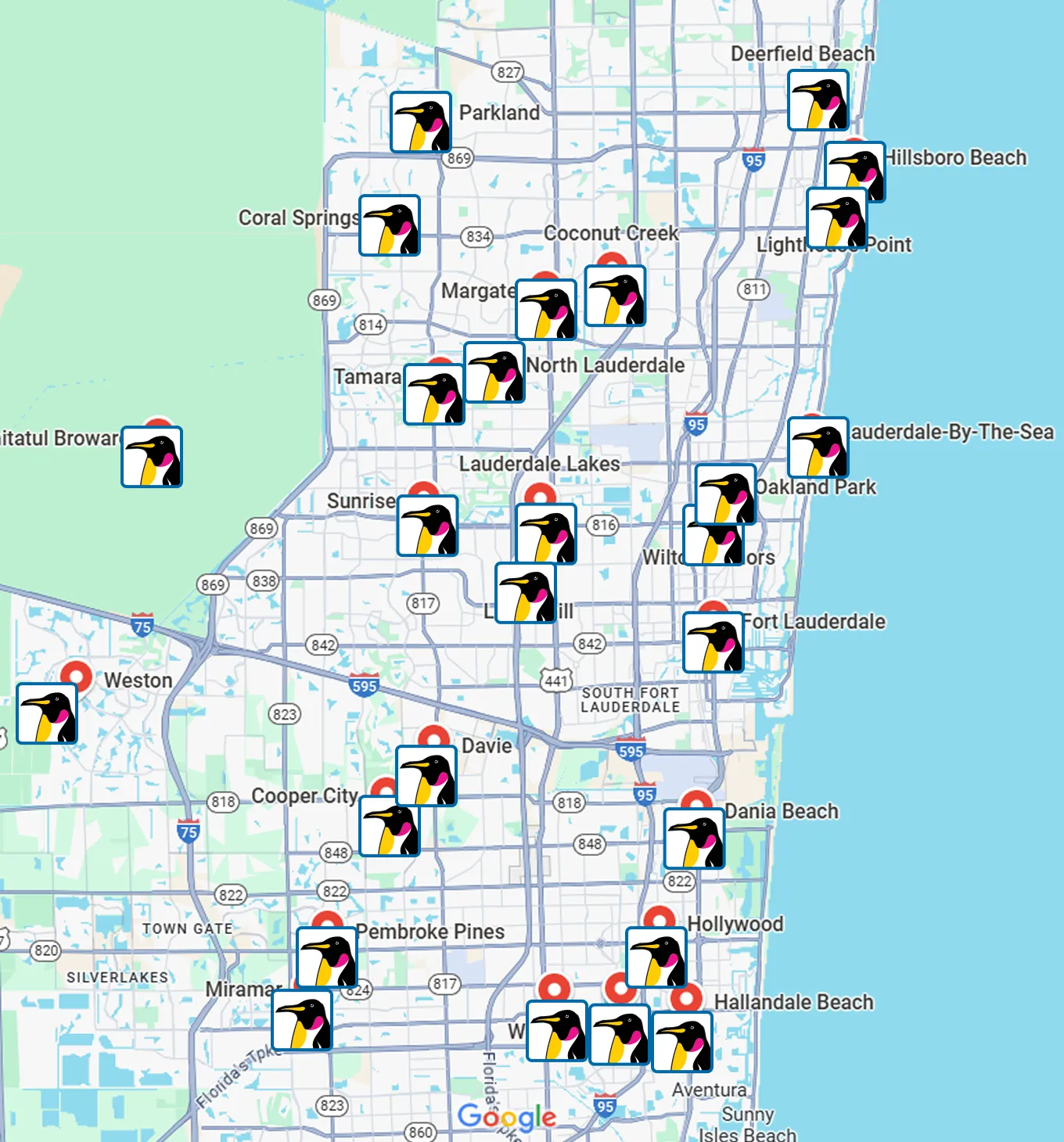
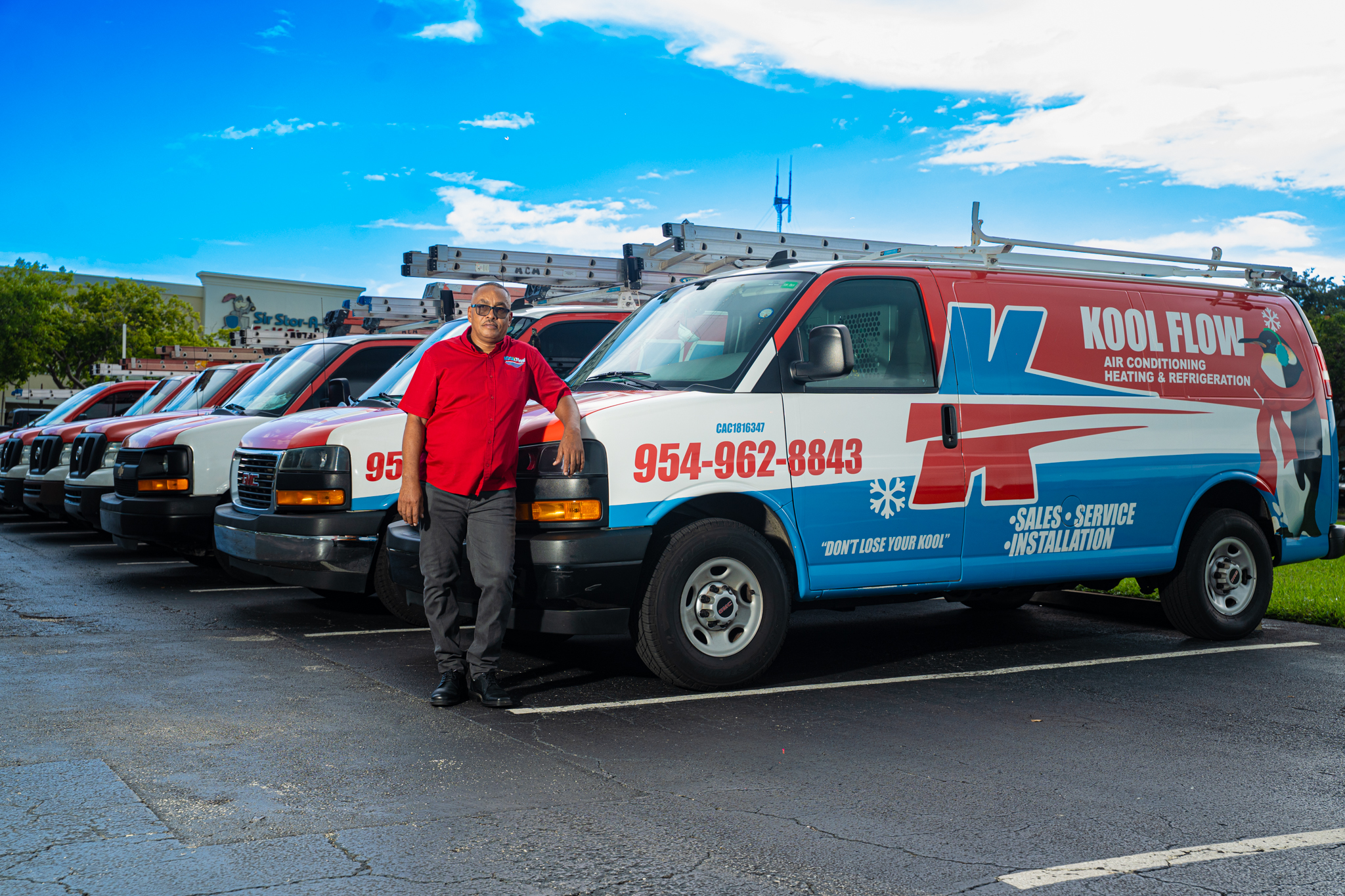
At Kool Flow Air Conditioning Contractor, we’ve spent over 20 years helping our neighbors in Broward and Miami-Dade counties stay comfortable. As a family-owned business based in West Park, we know exactly what the Florida sun and humidity can do to a home. We pride ourselves on transparent service and reliable cooling. Whether you need a precision installation or a 5-year maintenance plan to keep your air fresh, we are here to help.
Ready to take control of your indoor climate? Explore our Professional Air Conditioning Services or give us a call to find the perfect fit for your home. Don't let the humidity win—stay cool, stay dry, and breathe easy with Kool Flow.


Hear what our satisfied
clients have to say

SERVICE AREAS