


How to Reduce Refrigeration Energy Costs: 7 Proven Methods

Why Your Business's Energy Bill Keeps Climbing — And What to Do About It
If you're trying to figure out how to reduce refrigeration energy costs for your business, you're not alone — and the savings potential is bigger than most owners realize. Here are the most effective methods to get started:
- Clean condenser and evaporator coils regularly (every 90 days)
- Inspect and replace worn door gaskets to stop cold air from escaping
- Set temperatures correctly — 38°F for refrigerators, 0°F for freezers
- Train staff to minimize door-open time and load only pre-chilled items
- Upgrade to LED lighting and EC motors for immediate efficiency gains
- Install demand defrost controls to eliminate unnecessary defrost cycles
- Replace aging units with ENERGY STAR certified models when repairs no longer make financial sense
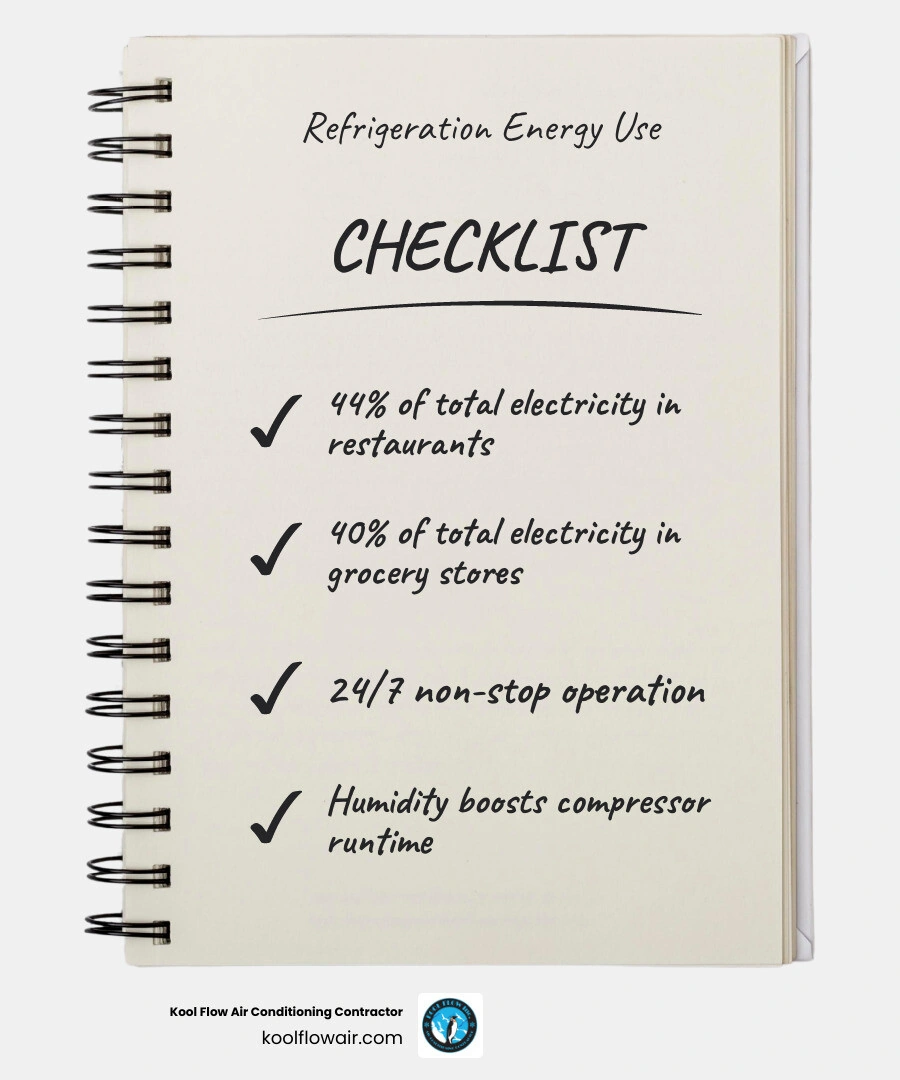
Commercial refrigeration runs around the clock, seven days a week. For restaurants, that non-stop operation can consume up to 44% of total electricity use. For grocery stores, it's as high as 40%. In South Florida, where heat and humidity are relentless year-round, refrigeration systems work even harder than average — driving up energy bills faster than business owners often expect.
The good news is that a combination of simple maintenance habits, smart operational changes, and targeted upgrades can cut refrigeration energy use by 20–30%, according to industry data. Whether you run a restaurant in Fort Lauderdale or a retail shop in Pembroke Pines, those savings add up fast.
This guide walks you through seven proven methods to reduce what your business spends keeping things cold.
Why Refrigeration is Your Business's Largest Energy Expense
In commercial overhead, refrigeration is a unique beast. Unlike your HVAC system, which might cycle down at night, or your kitchen appliances that get turned off after the dinner rush, your reach-ins and walk-ins never sleep. This 24/7 operation is why refrigeration represents such a massive slice of the energy pie—accounting for 44% of energy use in foodservice and 40% in grocery stores.
The primary driver of these costs is compressor run-time. The compressor is the heart of the system, and every time warm air sneaks into your unit, that compressor has to kick on to pull the temperature back down. In our neck of the woods—from West Park to Hollywood, FL—we face a double whammy: high ambient temperatures and thick humidity.
When the air is humid, your system has to work twice as hard. Not only is it cooling the air, but it’s also dealing with moisture that can turn into frost on the coils. This "latent heat" load means your units in Miami-Dade or Broward County are naturally under more stress than a unit in a drier climate. Understanding Why Regular Refrigeration Maintenance Matters for Businesses is the first step in realizing that your fridge isn't just a box—it's a complex machine that needs a little TLC to keep your profits from melting away.
How to Reduce Refrigeration Energy Costs for Your Business with Routine Maintenance
If we told you that you could save nearly $1,000 a year just by doing a bit of cleaning, you’d probably grab a scrub brush right now, wouldn't you? Well, that's exactly what the data shows. For an average-sized food service facility, simple maintenance can lead to a 17% energy reduction.
When your system is dirty or poorly maintained, airflow is restricted. This forces the motor to run longer and hotter, which not only spikes your bill but also leads to premature equipment failure. We’ve seen it happen all over South Florida: a business ignores their maintenance, and suddenly they’re facing a total system breakdown in the middle of a July heatwave. Following a Commercial Refrigeration Maintenance Complete Guide is the best insurance policy for your bottom line.
Cleaning Condenser and Evaporator Coils
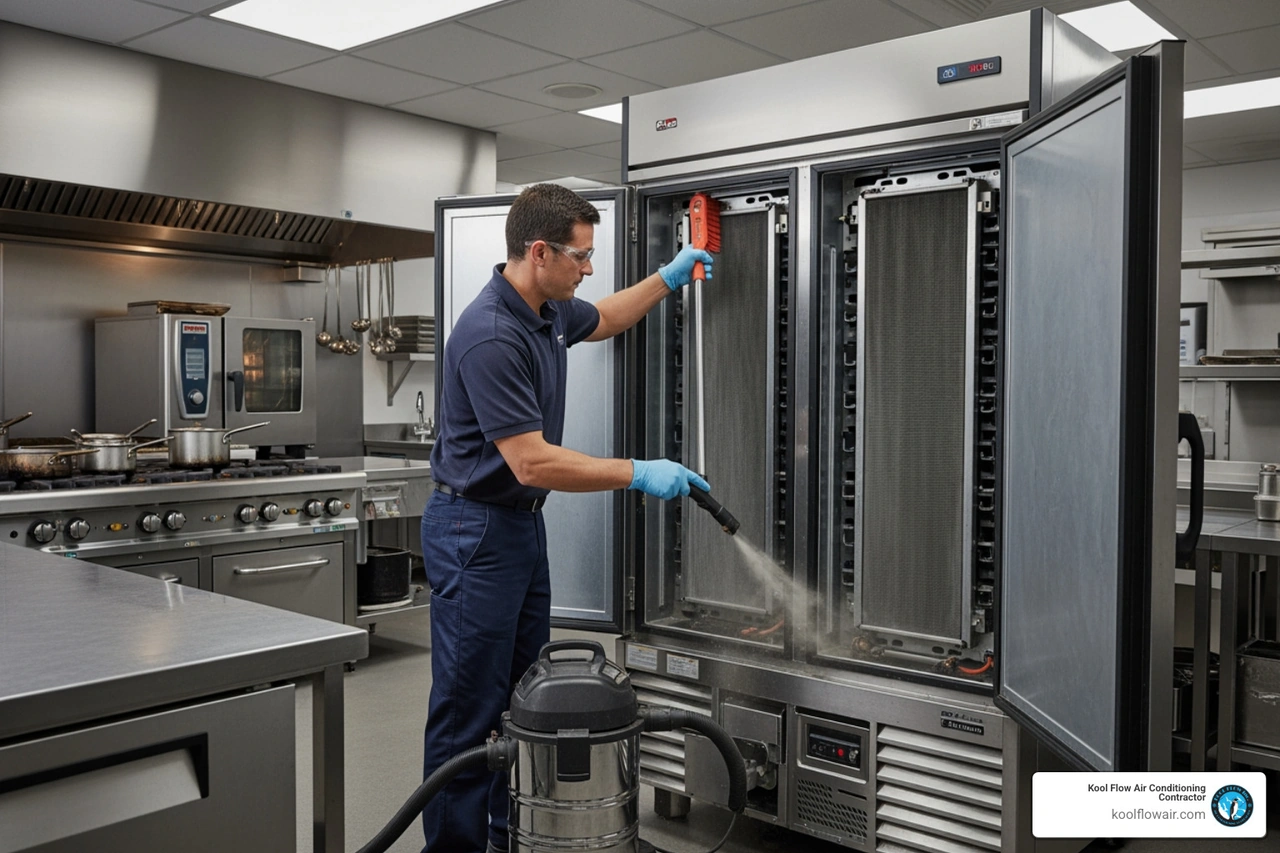
Think of your condenser coils like the lungs of your refrigerator. If they’re clogged with dust, dirt, or kitchen grease, the system can’t "breathe" out the heat it’s trying to remove from the cabinet. This buildup acts as an insulator, trapping heat and forcing the compressor to work overtime.
In a busy kitchen in West Park or Fort Lauderdale, grease is the enemy. It creates a sticky film on the coils that magnets dust. We recommend a strict 90-day cleaning schedule. Units with heavy buildup can see energy consumption drop by as much as 49% after a thorough cleaning! For a detailed checklist on keeping things running smoothly, check out our Refrigeration Maintenance Guide West Park FL.
Inspecting and Replacing Door Gaskets
Those rubber seals around your doors—the gaskets—are the only thing standing between your cold products and the 90-degree Florida humidity. Over time, gaskets get brittle, cracked, or simply dirty, allowing cold air to pour out and warm air to seep in.
Even a tiny leak can increase your refrigeration costs by 1–5%. We recommend the "dollar bill test": close the door on a dollar bill. If you can pull it out easily, your seal is weak and needs attention. Keeping these seals tight is a "quick win" for anyone looking for Refrigeration Maintenance Best Tips Fort Lauderdale.
Operational Tweaks for Immediate Energy Savings
Sometimes the best way to save money doesn't involve a toolkit at all—it involves changing habits. How your team interacts with your refrigeration equipment can have a massive impact on your monthly utility bill.
| Equipment Type | Energy Impact | Solution |
|---|---|---|
| Open Display Cases | 75% energy loss to ambient air | Install night curtains or glass doors |
| Frequent Door Openings | Constant compressor cycling | Staff training & door-open alarms |
| Walk-in Doors | Massive "dumping" of cold air | Strip curtains or air curtains |
Using strip curtains on walk-ins is a no-brainer. They act as a secondary barrier, keeping the cold air inside even when the main door is open for loading. Combined with automatic door closers, these low-cost additions can pay for themselves in just a few months.
How to Reduce Refrigeration Energy Costs for Your Business by Optimizing Temperatures
One of the most common mistakes we see is "over-cooling." Many business owners think that setting the fridge to its coldest possible setting is safer for the food. However, every degree you drop below the recommended temperature increases your energy costs by 2–4%.
The FDA standard for food safety is keeping refrigerated food below 40°F. We generally recommend a "sweet spot" of 38°F for refrigerators and 0°F for freezers. This provides a safety buffer for food quality without burning through unnecessary electricity. For more on balancing safety and savings, read our Commercial Refrigeration Maintenance Guide for Business Owners.
Smart Loading and Airflow Management
Your refrigerator needs to breathe on the inside, too. If you jam-pack your shelves so tight that air can't circulate, you'll end up with "hot spots" where food might spoil, while the compressor keeps running because the thermostat thinks it's still too warm.
Always maintain a 4-inch clearance around evaporator fans to ensure proper airflow. Additionally, never put hot food straight into the fridge; let it reach room temperature (safely) or use a blast chiller first. Loading only pre-chilled items reduces the "heat shock" to the system. For more localized tips, see our Refrigeration Maintenance Pembroke Pines FL Guide.
High-Efficiency Upgrades and Smart Technology
If your equipment is more than a decade old, you might be throwing money away every single month. Modern technology has made leaps and bounds in efficiency. Upgrading specific components can offer a fantastic Return on Investment (ROI), often paying for themselves in energy savings within a year or two.
Knowing How Often Should Commercial Refrigeration Be Serviced will help you identify when it’s time to stop repairing and start upgrading.
Upgrading to EC Motors and LED Lighting
Older refrigeration units often use shaded-pole motors for their fans. These are notoriously inefficient. Electronically Commutated (EC) motors, on the other hand, are 60-70% more efficient. They can adjust their speed based on the cooling demand, which is a game-changer for businesses in Broward and Miami-Dade Counties.
Similarly, switching to LED lighting inside your units is a double win. LEDs use 75% less energy than traditional bulbs, but more importantly, they produce almost no heat. Old-school incandescent bulbs are essentially little heaters inside your fridge, forcing the compressor to work even harder to counteract the light! We cover these upgrades in detail in our Commercial Refrigeration Maintenance Tips West Park FL.
How to Reduce Refrigeration Energy Costs for Your Business with Demand Defrost Controls
Most commercial freezers use a simple timer to trigger a defrost cycle. This means the heater kicks on every few hours, whether there's ice on the coils or not. It's a massive waste of energy—you're literally paying to heat up your freezer!
Demand defrost controls use sensors to monitor pressure and humidity. They only trigger a defrost cycle when it’s actually needed. This can save 5–10% on your total refrigeration costs and significantly reduce the "temperature spikes" that can affect food quality.
Investing in ENERGY STAR and Modern Refrigerants
When it's finally time to buy new equipment, look for the ENERGY STAR label. These units are, on average, 20% more efficient than standard models. Over the lifetime of a single reach-in freezer, an ENERGY STAR model can save you thousands of dollars in electricity.
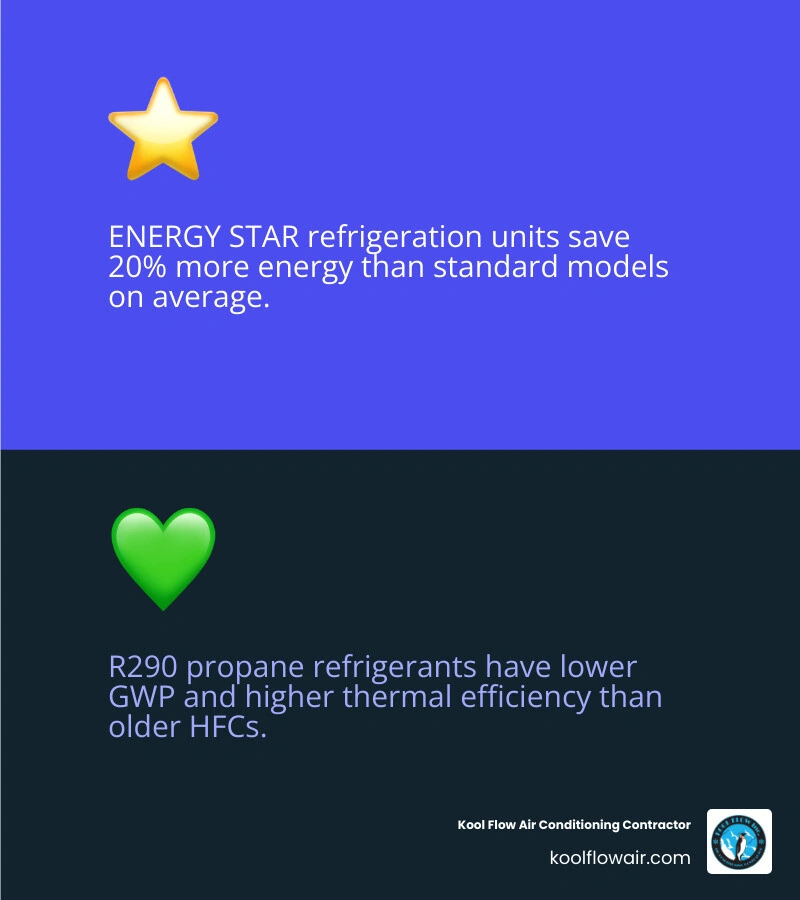
Furthermore, the industry is moving toward "green" refrigerants like R290 (propane). These have a much lower Global Warming Potential (GWP) and are actually more thermally efficient than older HFC refrigerants. When you combine efficient refrigerants with automated leak detection systems, you're not just helping the environment—you're ensuring your system never has to "struggle" due to a low refrigerant charge, which is a major cause of high energy bills.
Frequently Asked Questions about Business Refrigeration Costs
What is the most effective low-cost way to save energy?
The most effective low-cost strategy is a combination of coil cleaning and staff training. Cleaning your coils every 90 days can save up to 17% on energy, and training staff to keep doors closed and avoid overstocking costs nothing but a few minutes of your time.
How often should I have my commercial units professionally serviced?
For businesses in South Florida, we recommend professional servicing at least twice a year. Because of our high humidity and heat, components like compressors and fans work harder here than in other parts of the country. Regular tune-ups catch small refrigerant leaks or electrical issues before they lead to an expensive emergency.
Is it better to repair an old unit or replace it with an ENERGY STAR model?
A good rule of thumb is the "50% rule." If a repair costs more than 50% of the price of a new unit, or if the unit is over 10 years old, replacement is usually the smarter financial move. Modern ENERGY STAR units are so much more efficient that the monthly energy savings will often cover the cost of a new unit in just a few years.
Conclusion
Reducing your business's refrigeration costs isn't just about saving a few dollars—it's about increasing your profit margins and ensuring your equipment lasts as long as possible. By staying on top of maintenance, training your team, and investing in smart upgrades, you can take control of your utility bills even in the peak of the Florida summer.
At Kool Flow Air Conditioning, we’ve spent over 20 years helping businesses across West Park, Pembroke Pines, and the greater Fort Lauderdale area keep their cool without breaking the bank. Whether you need an emergency repair or a comprehensive maintenance plan to lower your overhead, we’re here to help.
Ready to start saving? Explore our Professional Commercial Refrigeration Services or give us a call today to schedule a maintenance visit. Let’s keep your business running efficiently!


Hear what our satisfied
clients have to say


SERVICE AREAS