


A Practical Guide to Commercial Refrigeration Compliance in Florida

Why Commercial Refrigeration Compliance in Florida Is Critical for Your Business
Commercial refrigeration compliance in Florida requires businesses to meet overlapping federal, state, and local regulations — from EPA refrigerant rules to the Florida Building Code's energy efficiency standards. Here's a quick overview of what's involved:
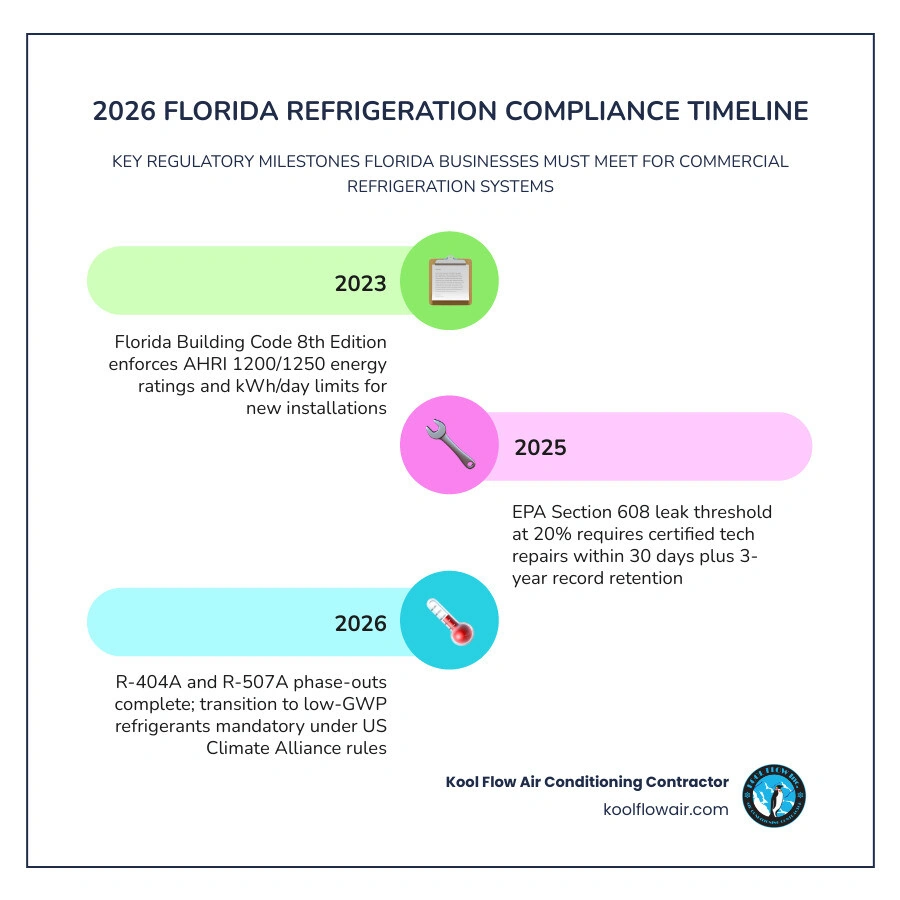
- EPA Section 608: Requires certified technicians, leak repairs within 30 days if the leak rate exceeds 20%, and at least 3 years of service recordkeeping
- Florida Building Code (2023, 8th Edition): Mandates energy consumption limits calculated per AHRI Standard 1200 and AHRI 1250 for all commercial refrigeration equipment
- Refrigerant Restrictions: High-GWP refrigerants like R-404A and R-507A are being phased out under US Climate Alliance commitments and CARB-influenced policies
- Leak Detection: Automatic leak detection systems can replace mandatory quarterly or annual inspections if audited and calibrated yearly
- Technician Certification: All refrigerant handling must be performed by EPA Section 608-certified technicians
Running a restaurant, grocery store, cold storage warehouse, or any food-service business in South Florida means your refrigeration systems are working hard — every single day. The heat and humidity here don't forgive equipment that's underpowered, inefficient, or out of code.
But the stakes go beyond equipment performance. The average leak rate for commercial refrigeration appliances in the retail food and cold storage sectors sits at around 35% — well above the 20% federal threshold that triggers mandatory repairs. For Florida businesses, that gap between industry reality and regulatory requirements is where serious compliance risk lives.
Staying on top of the rules isn't just about avoiding fines. It's also one of the most reliable ways to cut energy costs, protect your inventory, and keep operations running without interruption.
This guide breaks down exactly what Florida businesses need to know — from building code energy ratings to refrigerant phase-outs to recordkeeping rules.
Florida Building Code and Energy Efficiency Standards
When we talk about commercial refrigeration installation guide West Park FL, we aren't just talking about plugging in a cooler. We are talking about meeting the strict requirements of the 2023 Florida Building Code (FBC), 8th Edition. This code is the law of the land for any business from Fort Lauderdale to Miami.
The FBC mandates that all commercial refrigeration equipment be tested and rated according to specific industry standards—namely AHRI Standard 1200 for display cases and AHRI 1250 for walk-in systems. These standards ensure that the equipment you buy is actually capable of maintaining temperatures without draining the local power grid.
One of the most technical aspects of commercial refrigeration compliance in Florida involves calculating maximum daily energy consumption. For many units, this is based on the Total Display Area (TDA) or the internal volume (V). For example, a vertical closed transparent (VCT) remote unit has a specific formula: 0.15 x TDA + 1.95 kWh/day. If your unit uses more than that, it doesn't meet Florida's energy conservation standards.

Meeting Commercial Refrigeration Compliance in Florida Energy Ratings
To stay compliant, we have to look at how equipment is classified. The FBC uses codes like "VOP.RC.M," which stands for Vertical Open, Remote Condensing, Medium temperature. Each of these categories—whether it’s a self-contained reach-in or a massive remote condensing system—has its own energy budget.
The 2024 Supplement to the 8th Edition of the FBC further clarifies these rules, especially as they relate to newer A2L (lower flammability) refrigerants. But efficiency isn't the only concern; accessibility is also a legal requirement. Under the Florida Accessibility Code, at least 50% of freezer space in certain combination units must be located no higher than 54 inches above the finished floor. If your shelves are too high, you might be failing an inspection before you even turn the power on.
Federal EPA Section 608 and Commercial Refrigeration Compliance in Florida
While the state handles the building codes, the federal government—via the EPA—handles the gas inside the machines. If you've looked into a refrigeration repair commercial Fort Lauderdale guide, you’ve likely seen mentions of Section 608 of the Clean Air Act.
This is the "big one" for environmental compliance. For any system containing 50 pounds or more of refrigerant, the EPA has set a mandatory leak rate threshold of 20%. If your system leaks more than that in a year, you are legally required to repair it within 30 days.
The process isn't just "fix it and forget it." You must perform:
- An Initial Verification Test: To prove the repair holds immediately.
- A Follow-up Verification Test: Usually conducted once the system has returned to normal operating conditions.
Staying Ahead of Commercial Refrigeration Compliance in Florida Inspections
In South Florida, municipal enforcement can be strict. To avoid massive fines, meticulous recordkeeping is your best friend. You are required to keep service records, leak rate calculations, and appliance disposal documentation for at least three years.
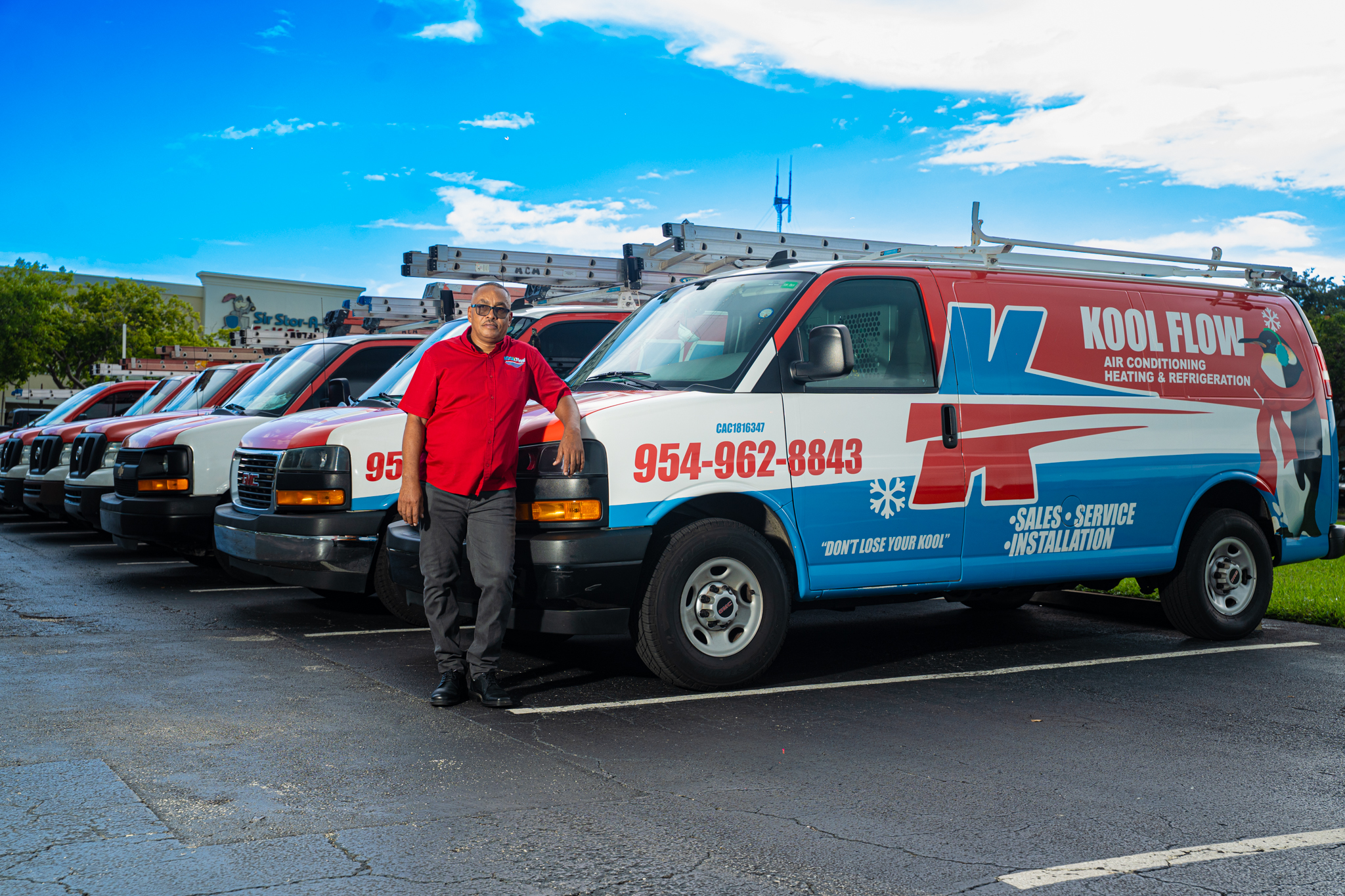
If a leak is simply too large or the part is unavailable, you can sometimes "mothball" a system. This involves legally taking it out of service to stop the 30-day repair clock. However, this must be documented properly. Only EPA Section 608-certified technicians—like the team at Kool Flow—are authorized to open these high-pressure systems. Attempting a DIY repair or hiring an uncertified handyman isn't just risky for the equipment; it’s a federal violation.
Refrigerant Phase-Downs and HFC Restrictions
The world of refrigerants is changing fast. As part of our commercial refrigeration maintenance complete guide, we often help businesses navigate the transition away from high-GWP (Global Warming Potential) gases.
Florida is part of the US Climate Alliance, which has committed to reducing greenhouse gas emissions. This means that older, common refrigerants like R-404A and R-507A are on the chopping block. These gases were industry standards for decades, but their high environmental impact means they are being phased out in favor of more sustainable options.
| Refrigerant Type | GWP Level | Status in Florida (May 2026) |
|---|---|---|
| R-404A / R-507A | Very High (>3,900) | Banned for most new installations; being phased out |
| R-448A / R-449A | Medium (~1,400) | Common "bridge" refrigerants for retrofits |
| CO2 (R-744) | Ultra Low (1) | Growing use in new supermarket "rack" systems |
| Ammonia (R-717) | Zero | Standard for large industrial/warehouse use |
The industry is moving toward A2L refrigerants and HFO blends. While these are better for the planet, they require different safety standards (like ASHRAE 15) because some are slightly flammable.
Transitioning to Low-GWP Refrigerants in South Florida
For businesses in places like Miramar or Pembroke Pines, the question is often: "Do I retrofit or replace?" While SNAP Rules 20 and 21 have faced legal hurdles at the federal level, many states (influenced by California's CARB standards) are moving forward with their own bans.
In Florida, we are seeing a push toward natural refrigerants like CO2 and Ammonia for large-scale operations. If you are planning a new build or a major renovation, choosing a system designed for low-GWP refrigerants now will save you from an expensive "forced" retrofit five years down the line.
Mandatory Leak Detection and Monitoring Requirements
If there is one thing we emphasize in our commercial refrigeration maintenance guide for business owners, it’s that you cannot manage what you do not measure.
The EPA and Florida codes are increasingly favoring Automatic Leak Detection (ALD) systems. These systems can detect refrigerant concentrations as low as 1 ppm (part per million). Here is why they are a game-changer for commercial refrigeration compliance in Florida:
- Inspection Relief: If you have a certified ALD system that is audited and calibrated annually, you can often skip the mandatory quarterly or annual manual leak inspections.
- Inventory Protection: A slow leak can lead to a "warm" walk-in overnight, ruining thousands of dollars in product. ALD catches the leak when it's a tiny hiss, not a total failure.
- Predictive Maintenance: Modern monitors can integrate with your building management system to alert us at Kool Flow before your equipment actually breaks down.
Best Practices for Long-Term Compliance and Efficiency
We often get asked, "how often should commercial refrigeration be serviced?" In the South Florida heat, the answer is usually "more often than you think." Between the salt air in Hollywood and the extreme humidity in West Park, your coils and compressors are under constant assault.
To stay compliant and efficient, we recommend following these best practices:
- Maintain HACCP Logs: Keep digital or manual temperature logs. Not only is this a health department requirement, but it also helps prove your refrigeration is working correctly during a compliance audit.
- Monthly Coil Cleaning: Dirty coils force the system to run longer, which can lead to overheating and refrigerant leaks.
- Backflow Prevention: Florida law requires annual backflow testing for systems connected to the potable water supply (like ice machines or water-cooled condensers).
- Tax Allocations: Per Florida Department of Revenue TAA 09A-035, the way your maintenance contract is written matters. Maintenance on "real property" (built-in walk-ins) is taxed differently than "tangible personal property" (reach-in coolers). Proper documentation can save you money on your tax bill.
Frequently Asked Questions
What is the maximum allowable leak rate for commercial refrigeration in Florida?
For commercial refrigeration systems containing 50 pounds or more of refrigerant, the maximum allowable leak rate is 20% per year. Industrial process refrigeration has a slightly higher threshold of 30%. If you exceed these numbers, you must perform repairs within a 30-day window.
How long must Florida businesses keep refrigerant service records?
Under EPA Section 608, owners and operators must maintain records of all service, refrigerant additions, and disposal for at least three years. We recommend keeping digital backups to ensure these records aren't lost to water damage or heat.
Are there specific accessibility requirements for commercial freezers in Florida?
Yes. The Florida Accessibility Code requires that in combination refrigerator/freezer units, at least 50% of the freezer space must be no higher than 54 inches above the floor to ensure it is reachable for all employees and users.
Conclusion
Navigating commercial refrigeration compliance in Florida can feel like a full-time job, but it doesn't have to be your burden alone. At Kool Flow Air Conditioning, we bring over 20 years of experience to businesses across Broward, Miami-Dade, and Palm Beach Counties.
Whether you are in West Park, Fort Lauderdale, or Pembroke Pines, our family-owned team is here to provide the reliable cooling and honest pricing you need to stay compliant and profitable. From refrigeration installs that meet the latest FBC energy codes to emergency repairs that keep your 30-day EPA clock from ticking, we have you covered.
Don't wait for a leak or a failed inspection to take action. Contact us today to learn more about our maintenance plans and how we can help your South Florida business stay cool, compliant, and cost-effective.


Hear what our satisfied
clients have to say

SERVICE AREAS