


Beating the Heat When Your AC Simply Can't
What to Do When Your AC Cant Keep Up With the Heat
When your AC cant keep up with the heat, you are not alone — and in South Florida, where summer temperatures regularly push into the 90s and beyond, it is one of the most common problems homeowners face. Before you panic, here is a quick answer to what is likely going on:
Quick Answer: Why Your AC Is Struggling
- It's a design limit - AC systems are built to cool your home roughly 15-20 degrees below the outdoor temperature. At 100°F outside, expect indoor temps around 80-85°F at best.
- Dirty filters or coils - Restricted airflow is the most common fixable cause.
- Low refrigerant - A leak reduces cooling power significantly.
- Leaky ducts - Up to 30% of cooled air can escape before reaching your living space.
- Wrong system size - An undersized unit simply cannot handle your home's heat load.
- Aging equipment - Systems over 10-15 years old lose efficiency even when maintained.
- High indoor heat gain - Sunlight, poor insulation, and heat-generating appliances all add load.
Most South Florida homeowners are surprised to learn that a perfectly working AC may still leave their home at 80°F when it is scorching outside. That is not always a broken system — that is physics. But sometimes, something is genuinely wrong, and knowing the difference can save you from unnecessary discomfort, high energy bills, and costly repairs.
This guide walks you through exactly what to check, what to fix yourself, and when to call a professional.
Understanding Why Your AC Cant Keep Up With the Heat
It is a frustrating feeling: you set the thermostat to 72°F, but the display stubbornly stays at 78°F while the vents blow air that feels "cool-ish" at best. To understand why this happens, we have to look at how air conditioning actually works. Your AC doesn't "create" cold; it removes heat from the air inside your home and dumps it outside.
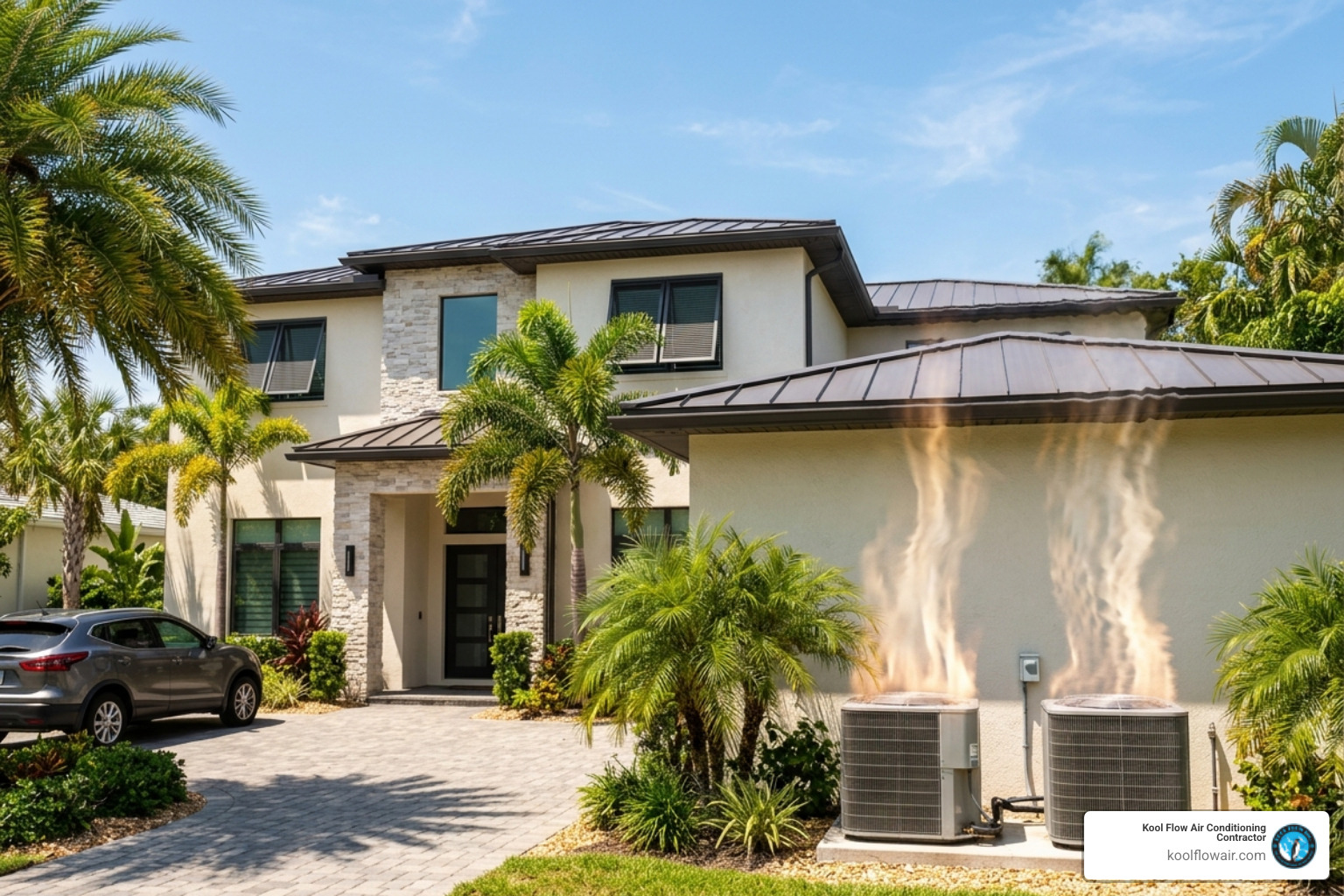
When the temperature in places like Fort Lauderdale or Hollywood climbs into the triple digits, the "heat load" on your house increases exponentially. Your walls, roof, and windows absorb solar radiation all day long. Eventually, the amount of heat entering your home exceeds the speed at which your AC can move it out. This is when you notice your system running nonstop without hitting the target temperature.
The 20-Degree Rule: When Your AC Cant Keep Up With the Heat by Design
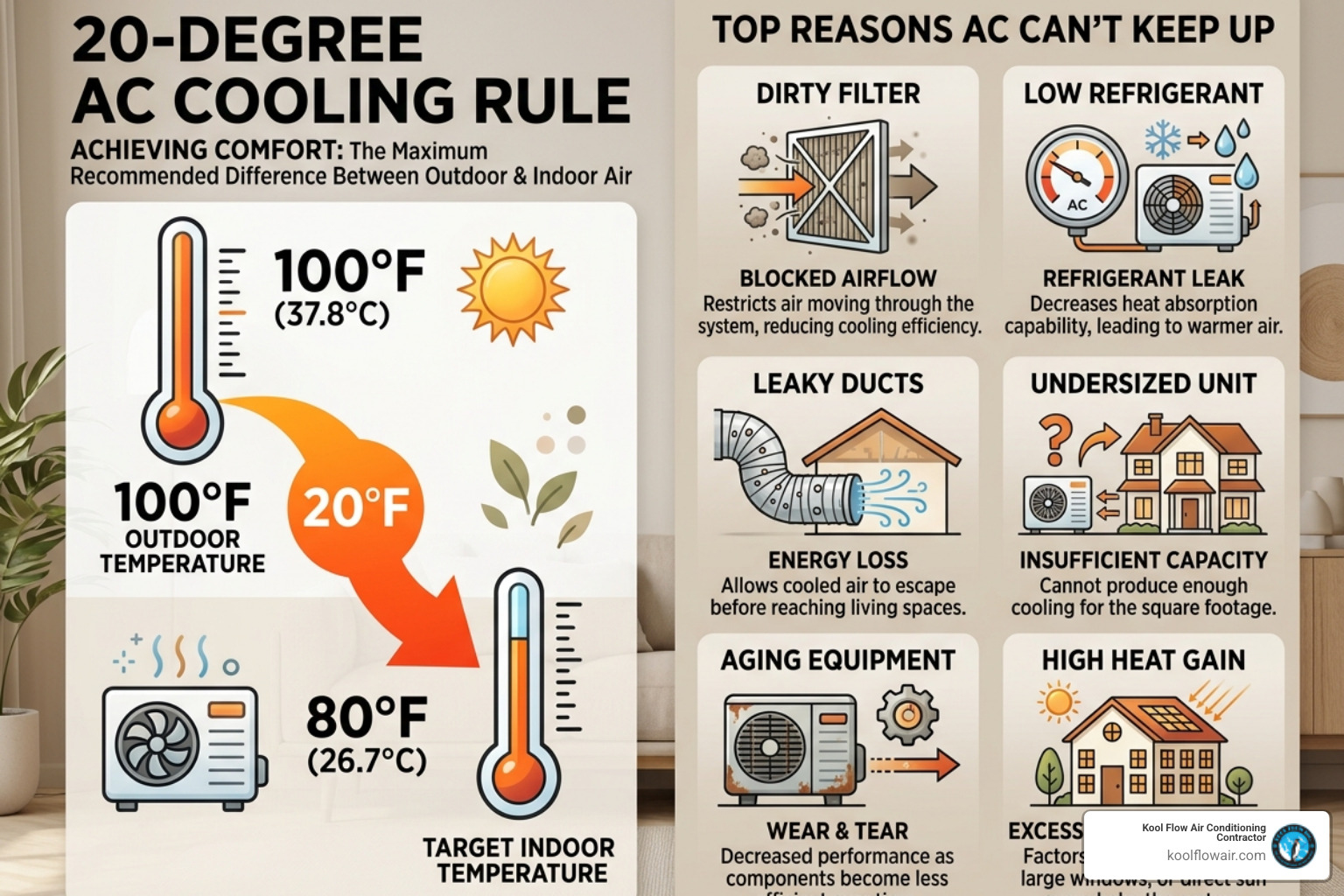
One of the most important industry facts we share with our neighbors in Broward County is the "20-degree rule." Most residential air conditioning systems are designed to create a maximum temperature differential of about 20 degrees between the outdoor air and the indoor air.
This means if it is a blistering 100°F afternoon in Miramar or Pompano Beach, your AC is technically doing its job perfectly if it keeps your living room at 80°F. While 80°F might feel a bit warm, the system is performing at its mechanical limit. Pushing the thermostat down to 65°F won't make the air coming out of the vents any colder; it will only force the compressor to run indefinitely, leading to frozen coils or a burnt-out motor.
Environmental Factors and Home Heat Gain
Your home is constantly fighting a battle against the sun. Factors like poor attic insulation or old, single-pane windows allow heat to pour in faster than a standard AC can handle.
| Outdoor Temperature | Expected Indoor Temp (Well-Maintained System) | Expected Indoor Temp (Poor Insulation/Leaky Ducts) |
|---|---|---|
| 85°F | 65-68°F | 72-75°F |
| 90°F | 70-72°F | 75-78°F |
| 95°F | 75-77°F | 80-82°F |
| 100°F | 80-82°F | 85°F+ |
In South Florida, humidity is the silent partner in this struggle. High humidity makes 78°F feel like 85°F. Since your AC must spend energy removing moisture from the air before it can effectively lower the temperature, a humid home puts a much higher strain on the equipment.
Common Culprits Behind Poor Cooling Performance
If the weather is only moderately hot (say, 88°F) and your system still can't reach 75°F, you likely have a performance issue rather than a design limit. We see several common "culprits" when providing air conditioning services to our clients.
Dirty Filters and Clogged Coils
Airflow is the lifeblood of your HVAC system. A dirty air filter is like trying to breathe through a thick sweater; it forces the blower motor to work harder and reduces the amount of "heat exchange" that can happen. Research shows that a dirty filter can increase energy use by up to 15%.
Similarly, the outdoor condenser coils can become "blanketed" in dust, grass clippings, or salt air corrosion. If the coils are dirty, the heat trapped in the refrigerant can't escape into the outdoor air. This causes the system to cycle longer and cool less effectively. Common airflow obstructions include:
- Heavy dust buildup on the pleated filter.
- Furniture or curtains blocking return vents.
- Overgrown shrubs or weeds surrounding the outdoor unit.
- Pet hair clogging the indoor evaporator coil.
Refrigerant Leaks and Mechanical Failures
Refrigerant (often called Freon) is the medium that carries heat out of your home. Unlike gas in a car, refrigerant is not "used up." If your levels are low, it means you have a leak. Signs of a leak include hissing sounds near the unit, ice buildup on the copper lines, or air that feels lukewarm coming from the vents.
Mechanical wear and tear also plays a role. As systems age—typically lasting 10 to 15 years in our salty Florida environment—components like capacitors and fan motors lose efficiency. A weak fan motor won't move enough air over the coils, leading to a house that never quite gets comfortable.
Leaky Ducts and Poor Insulation
You might be surprised to learn that leaking air ducts can reduce your HVAC system’s efficiency by as much as 30%. In many South Florida homes, ductwork runs through a scorching attic. If there are holes or disconnected joints in those ducts, you are paying to cool your attic while your bedrooms stay warm. This "lost" air forces the AC to run much longer to compensate for the 20-30% of cooled air that never reaches your living space.
Immediate Steps to Take When Your AC Cant Keep Up With the Heat
When the heat is on, you don't always need to wait for a technician to find some relief. There are several DIY strategies to help when your ac cant keep up with the heat.
Reducing the Indoor Heat Load
The goal is to stop heat from entering the home so the AC has less work to do.
- Close the Blinds: Up to 30% of unwanted heat comes through your windows. Use blackout curtains or reflective films, especially on south- and west-facing windows.
- Use Ceiling Fans: A fan doesn't lower the room temperature, but it makes you feel 4–6°F cooler via the wind-chill effect. Ensure they are spinning counter-clockwise.
- Limit Appliance Use: Ovens, dryers, and dishwashers generate massive amounts of heat. Try to grill outside or run large appliances after 9:00 PM.
- Check Your Lighting: Traditional incandescent bulbs are essentially small heaters. Switching to LEDs can marginally reduce the heat load in a room.
Simple Maintenance Checks for Homeowners
Before calling for service, run through this quick checklist:
- Change the Filter: If you haven't changed it in the last 30 days, do it now.
- Clear the Outdoor Unit: Ensure there is at least 2 feet of clear space around your condenser. Spray it down gently with a garden hose to remove loose dirt.
- Check the Vents: Make sure no rugs or sofas are covering the supply or return registers.
- Thermostat Settings: Ensure it is set to "Cool" and "Auto." Setting the fan to "On" during high humidity can actually blow moisture back into the house.
When to Call a Professional for HVAC Repair
While DIY tips help, some issues require the specialized tools and knowledge of a professional. If you've tried the basics and your home is still climbing toward 85°F, it’s time to look into air conditioning repair.
Identifying Signs of Actual System Failure
It is time to call us if you notice any of the following "red flags":
- Short Cycling: The system turns on and off every few minutes. This puts immense strain on the compressor.
- Unusual Noises: Grinding, squealing, or loud banging usually indicates a mechanical failure in the motor or compressor.
- Ice Formation: If you see ice on the indoor or outdoor lines, turn the system off immediately and call a pro. Running an iced-over system can destroy the compressor.
- Burning Smells: This could indicate electrical components are overheating or wires are melting.
Evaluating System Sizing and Replacement
Sometimes the problem isn't a broken part; it's the wrong equipment. If you’ve recently added a sunroom or converted a garage in your Davie or Weston home, your original AC may now be undersized.
HVAC professionals use a "Manual J" calculation to determine exactly how much cooling power a home needs based on square footage, window count, and insulation quality. If your system is over 12 years old and constantly struggling, an upgrade to a high-efficiency unit (SEER 18+) could reduce your energy bills by 40% or more while finally keeping you cool on those 100-degree days.
Frequently Asked Questions about AC Performance
Why won't my AC cool below 75 degrees when it's 100 outside?
As we discussed with the 20-degree rule, most systems reach their physical limit when the outdoor temperature is 20-25 degrees higher than the indoor target. At 100°F, the heat transfer process slows down significantly. If your system is maintaining 75-77°F during a record-breaking heatwave, it is likely performing as well as it possibly can.
Is it normal for my air conditioner to run all day during a heatwave?
Yes. During extreme heat, it is actually more efficient for a system to run at a steady pace than to cycle on and off. Constant operation helps maintain a steady "dehumidification" process. However, if it runs all day and the temperature inside continues to rise, that indicates the heat gain of the home is higher than the cooling capacity of the unit.
How often should I change my air filter during the summer?
In South Florida, we recommend checking your filter every 30 days during the peak summer months. If you have pets or live near a dusty area (like new construction in Parkland or West Park), you may need to replace it every 30-45 days to maintain optimal airflow.
Conclusion
Living in South Florida means respecting the power of the sun. When your ac cant keep up with the heat, it’s often a combination of environmental limits and maintenance needs. By managing your home's heat load and keeping up with basic filter changes, you can help your system survive the worst of the summer.
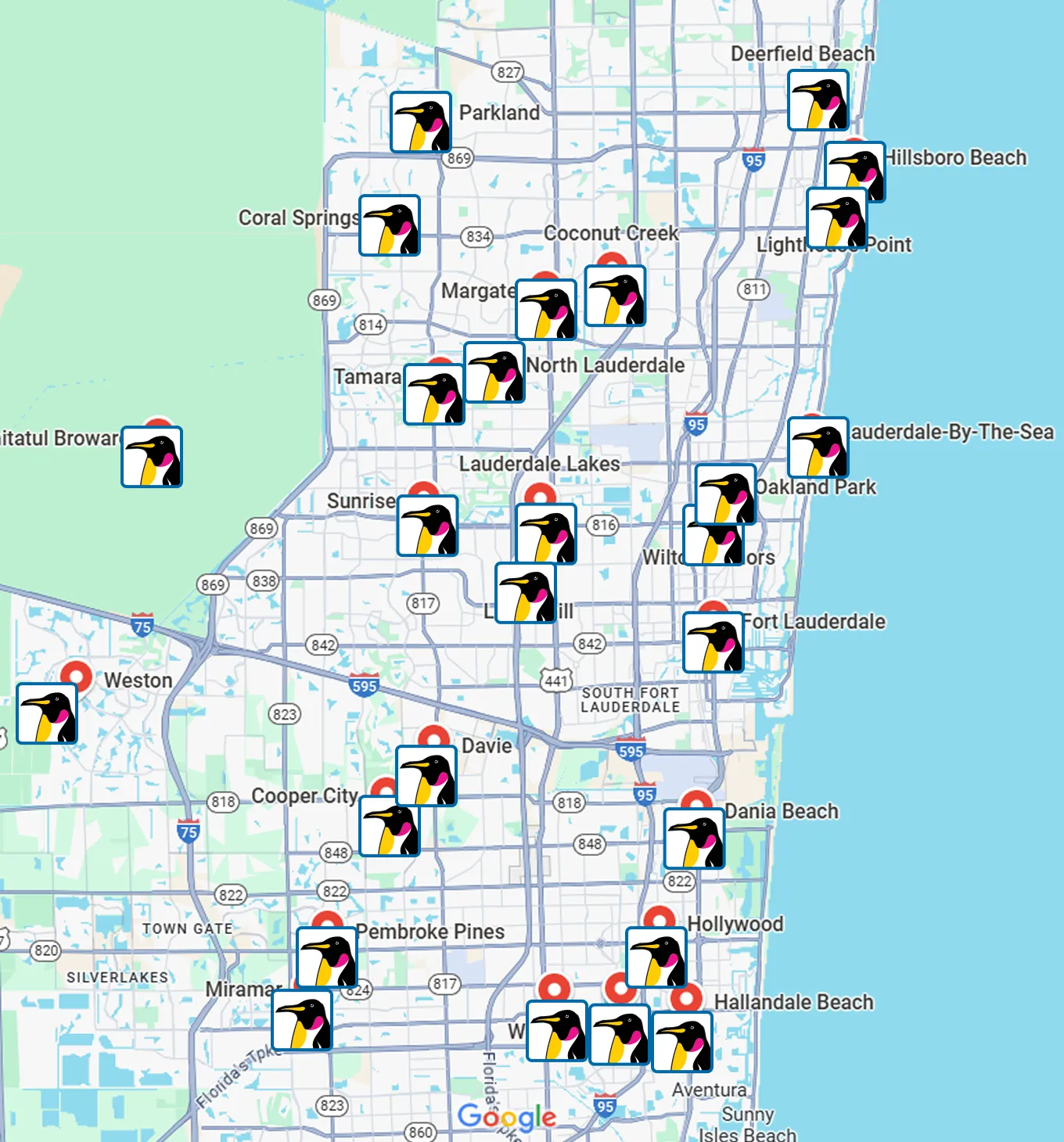
At Kool Flow Air Conditioning Contractor, we have spent over 20 years helping families in Broward, Miami-Dade, and Palm Beach Counties stay comfortable. As a family-owned business based in West Park, FL, we understand the unique challenges of our local climate. Whether you need a quick tune-up, a complex repair, or a full system replacement with flexible financing, we are here to ensure your home remains a sanctuary from the heat.
Don't spend another afternoon sweating in your own living room. Schedule your professional air conditioning service today and let us get your system back to peak performance.


Hear what our satisfied
clients have to say

SERVICE AREAS