


How to Tell if Your AC Needs a Refrigerant Recharge

Low Refrigerant Signs in Your AC System: What South Florida Homeowners Need to Know
If you've noticed your home staying warm no matter how low you set the thermostat, low refrigerant signs in your ac system could be the reason — and in South Florida's intense heat and humidity, that's a problem you can't afford to ignore.
Here's a quick overview of the most common warning signs:
| Sign | What You Might Notice |
|---|---|
| Warm air from vents | Air blowing but not cooling the room |
| Ice buildup | Frost or ice on copper lines or the indoor coil |
| Hissing or bubbling sounds | Audible noise near the indoor or outdoor unit |
| Longer run times | AC runs constantly but never reaches the set temperature |
| Higher energy bills | Unexplained spike in monthly electricity costs |
| Water puddles | Pooling water near the furnace or air handler |
| High indoor humidity | Home feels sticky even with the AC running |
Refrigerant is the substance that makes cooling possible — it absorbs heat from inside your home and releases it outside. Unlike fuel in a car, refrigerant doesn't get "used up" during normal operation. So if levels are low, it almost always means there's a leak somewhere in the system. Left unchecked, that leak can quietly cause serious damage to your compressor and other critical components.
The good news is that catching these signs early gives you the best chance of a straightforward repair. This guide walks you through exactly what to look for.

Common Low Refrigerant Signs in Your AC System
Living in areas like Broward County or Miami-Dade, we rely on our air conditioning units as more than just a luxury; they are a necessity for health and comfort. To understand why low refrigerant signs in your ac system manifest the way they do, it helps to think of your AC as a heat mover rather than a cold air maker.
The refrigerant inside your system cycles through a continuous loop. In the evaporator coil (the indoor part), it absorbs heat from your indoor air. It then travels to the outdoor condenser unit, where that heat is released into the Florida sun. When the refrigerant level drops, this heat exchange process breaks down. The system can no longer "grab" enough heat from your living room, leading to a cascade of symptoms that range from annoying to system-threatening.
One of the most immediate signs is a sudden lack of cooling power. You might feel air coming out of the vents, but it feels more like a lukewarm breeze than a refreshing blast. Because the system is struggling to reach the temperature you've set on the thermostat, it will work overtime. In our experience providing AC Repair Fort Lauderdale, we often see systems that have been running for 24 hours straight just to keep a house at 78 degrees.
Another critical sign is high indoor humidity. Here in South Florida, the average relative humidity can be incredibly high. A properly functioning AC system acts as a dehumidifier, pulling moisture out of the air as it cools. When refrigerant is low, the evaporator coil doesn't get cold enough to effectively condense moisture, leaving your home feeling "sticky" or "heavy," even if the temperature is somewhat tolerable.
Identifying Low Refrigerant Signs in Your AC System Through Performance
When we talk about performance-based low refrigerant signs in your ac system, we are looking at how the unit behaves over time. Your AC is designed to be efficient, but low refrigerant turns it into an energy-hungry monster.
- Slow Cooling and Long Run Times: If you notice that your AC takes three hours to drop the temperature by just two degrees, you likely have a refrigerant issue. Because there isn't enough "medium" (refrigerant) to carry the heat away, the system has to move air over the coils much longer to achieve the same result. It's like trying to empty a swimming pool with a teaspoon instead of a bucket.
- Short Cycling: On the flip side, some systems are equipped with low-pressure switches. If the refrigerant pressure drops below a certain point, the switch will trip to protect the compressor, causing the unit to shut off abruptly. It may then try to restart a few minutes later, leading to a "start-stop" pattern known as short cycling. This puts immense strain on the motor and electrical components.
- Utility Bill Spikes: Have you checked your FPL or local utility bill lately? A sudden, unexplained jump in energy consumption is often a red flag. When your unit runs constantly or struggles through short cycles, it consumes significantly more electricity. If your usage has doubled but your habits haven't changed, it’s time for a professional inspection. Residents seeking AC Repair Lighthouse Point often discover that a simple leak repair pays for itself in energy savings within just a few months.
Auditory and Visual Low Refrigerant Signs in Your AC System
Sometimes, your AC will literally scream for help. Because refrigerant is held under high pressure, a leak often produces distinct sounds and visual cues that you can spot without any special tools.
Hissing and Bubbling NoisesIf you stand near your indoor air handler or the outdoor condenser and hear a faint hissing sound, you might be hearing refrigerant gas escaping through a tiny hole. If the leak is in a line where the refrigerant is still in a liquid state, it might sound more like bubbling or gurgling. These sounds are never normal. Unlike a car that might have a small exhaust leak you can ignore for a while, an AC leak will eventually lead to a total system shutdown.
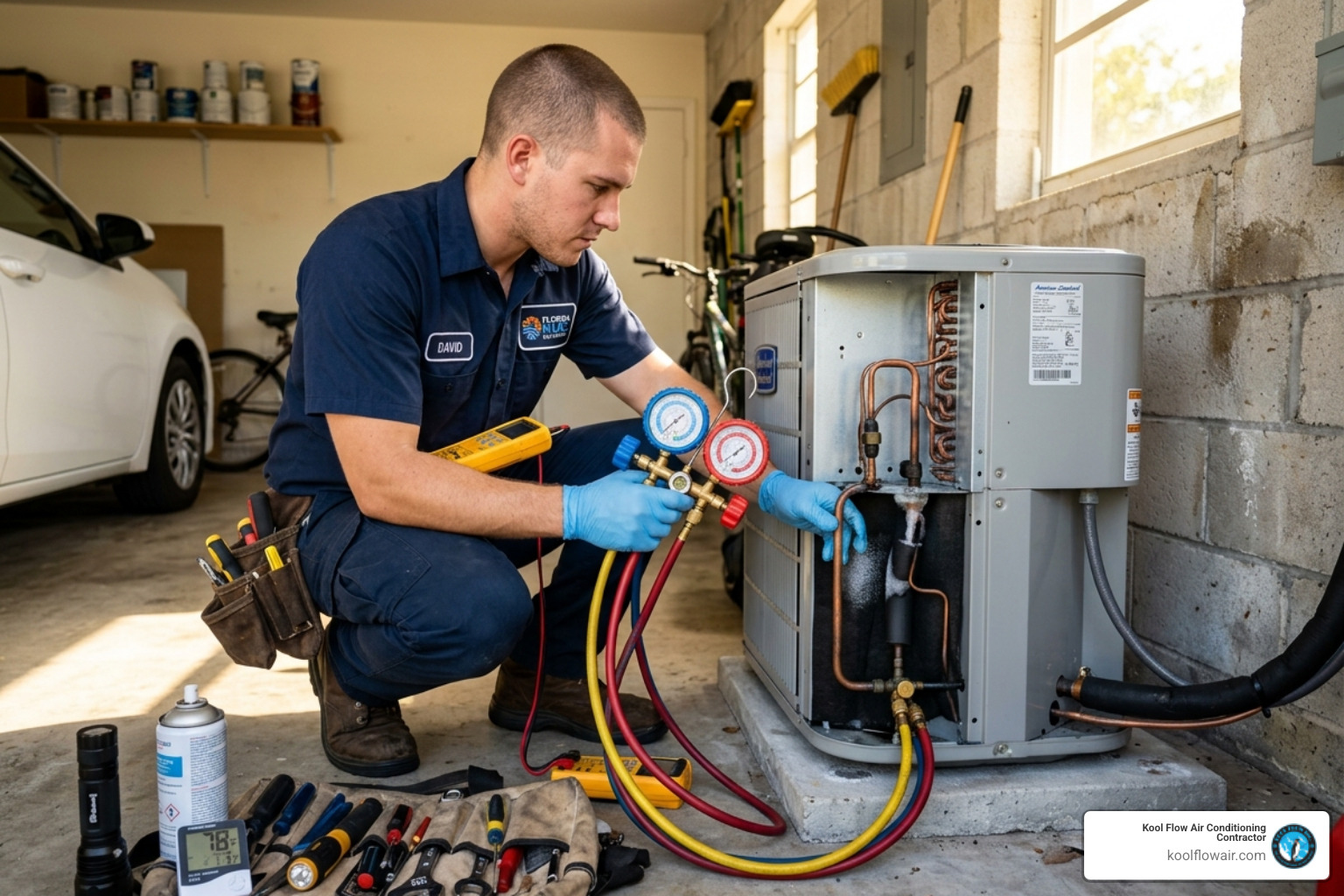
Ice on Copper LinesIt seems counterintuitive — how can a system that isn't cooling properly be covered in ice? When refrigerant levels are low, the pressure inside the evaporator coil drops significantly. According to the laws of physics, lower pressure leads to lower temperatures. The coil becomes so cold that it drops below the freezing point, causing the moisture it pulls from the air to flash-freeze into ice. This ice can travel all the way down the copper "suction line" to the outdoor unit. If you see white frost or a block of ice on those copper pipes, turn the system off immediately and call for AC Repair Deerfield Beach. Running the unit with a frozen coil can cause liquid refrigerant to "slug" back into the compressor, which is a death sentence for the motor.
Water PuddlesWhen that ice eventually melts — either because the system cycled off or because it finally gave up — it creates a lot of water. If you see puddles forming around the base of your indoor unit or water dripping from your ceiling, it could be a sign that a frozen coil has thawed and overwhelmed the condensate drain pan.
Why Refrigerant Levels Drop: Understanding Leaks
It is a common myth that air conditioners "consume" refrigerant like a car consumes gasoline. In reality, your AC is a "closed-loop" system. The refrigerant is sealed inside copper lines and components, meant to circulate indefinitely. If you are low on refrigerant, you have a leak. Period.
Understanding why these leaks happen can help you prevent them through better maintenance. In South Florida, our environment is particularly harsh on HVAC hardware.
- Formicary Corrosion: This is a major issue in humid climates. Formicary corrosion occurs when copper tubing reacts with volatile organic compounds (VOCs) found in household products like air fresheners, cleaning supplies, and even building materials. This reaction creates microscopic "pinhole" leaks in the evaporator coil that are incredibly difficult to see with the naked eye but allow refrigerant to seep out over time.
- Vibration Damage: Your AC system contains moving parts, primarily the compressor and the fan. Over years of operation, constant vibration can cause copper lines to rub against the unit's frame or against each other. Eventually, this friction wears a hole in the metal.
- Aging Seals and Joints: Most AC units have a useful life of 10-15 years. Over that decade, the rubber seals and the soldered joints (welds) that hold the system together can degrade. High temperatures can cause welds to expand and contract, eventually leading to cracks.
- Physical Punctures: We’ve seen it all — from a weed whacker hitting a line outside to a stray nail during a home renovation. Physical damage is a quick way to lose an entire charge of refrigerant.
To keep your system in top shape and catch these issues before they become catastrophic, we recommend regular AC Maintenance Southwest Ranches to ensure all joints are secure and the system is operating within manufacturer specifications.
The Risks and Professional Solutions for Low Refrigerant
Ignoring low refrigerant signs in your ac system is a gamble that rarely pays off. The longer you wait, the more expensive the final bill will likely be.
| Feature | Normal Operation | Low Refrigerant Operation |
|---|---|---|
| Compressor Temperature | Cool and stable | Overheating (risk of burnout) |
| Evaporator Coil | Cold and dehumidifying | Frozen or lukewarm |
| Energy Usage | Efficient cycles | Constant running (high cost) |
| System Lifespan | 10-15 years | Significant reduction |
| Indoor Comfort | Consistent and dry | Humid and uneven |
The Danger to the CompressorThe compressor is the "heart" of your AC. It is also the most expensive part to replace. Refrigerant doesn't just cool your home; it also helps cool the compressor motor as it cycles through. When refrigerant is low, the compressor runs hotter and longer. Eventually, the internal lubrication breaks down, and the motor seizes. At that point, you aren't just looking at a recharge; you're looking at a major repair or a full system replacement.
Professional Diagnosis and EPA RegulationsHandling refrigerant is not a DIY job. In fact, under EPA Section 608 regulations, it is illegal for anyone without proper certification to purchase or handle most types of refrigerant. This is because refrigerants are potent greenhouse gases.
When a professional from Kool Flow Air Conditioning Contractor arrives, we don't just "top it off." Adding refrigerant to a leaking system without fixing the leak is irresponsible and often illegal for larger systems. Our process involves:
- Electronic Leak Detection: Using sensitive "sniffers" to find the exact source of the leak.
- Dye Testing: Injecting a UV-reactive dye into the system to spot leaks that only appear under pressure.
- Evacuation: Removing the remaining refrigerant safely so repairs can be made.
- Vacuum Testing: Pulling a vacuum on the system to ensure it is completely sealed before adding new refrigerant.
We also ensure you are using the correct type for your system. Most modern units use R-410A, which is more eco-friendly than the older R-22 (Freon). Newer units are even moving toward R-32, which offers even higher efficiency and a lower global warming potential. For more on how to care for your system, check out our AC Maintenance Broward County Guide or explore our full range of Air Conditioning Services.
Frequently Asked Questions about AC Refrigerant
Can I recharge my home AC system myself?
We strongly advise against this. While you might see "DIY recharge kits" at some hardware stores, these are typically intended for automotive use and are still risky. Home AC systems are far more complex and operate at higher pressures.
Attempting a DIY recharge carries several risks:
- Safety: Refrigerant can cause "frostbite" burns on the skin and is toxic if inhaled.
- Overcharging: Adding too much refrigerant is just as bad as having too little. It can slug the compressor and cause immediate mechanical failure.
- Wrong Refrigerant: Mixing different types of refrigerants (like R-22 and R-410A) will chemically react and destroy your entire system.
- Legal Risks: Without EPA certification, you are violating federal law by intentionally venting or mishandling these chemicals.
If you suspect an issue, it is much safer to contact a licensed expert for AC Repair Parkland.
How do I know if it is a refrigerant leak or a dirty filter?
This is a great question! Both issues can cause an AC to blow warm air or even freeze up. A dirty air filter restricts airflow, meaning the cold air stays "trapped" at the coil, causing it to freeze.
To tell the difference:
- Check the Filter: If it’s caked in dust, replace it. Wait for the ice to melt, and then turn the AC back on. If it works fine, it was just the filter.
- Listen: A dirty filter won't cause hissing or bubbling sounds.
- Check the Temperature: Use a thermometer to check the air coming out of the vents. If the filter is clean and the air is still 10-15 degrees warmer than it should be, it’s likely a refrigerant issue.
For a definitive answer, our AC Service Cooper City team can perform a static pressure test to rule out ductwork or filter blockages.
Is it worth fixing a leak in an older AC unit?
This depends on the age of your unit and the type of refrigerant it uses. If your system was built before 2010, it likely uses R-22 (Freon). The EPA has completely phased out the production and import of R-22 because it depletes the ozone layer. This has made R-22 extremely expensive and difficult to find.
If your unit is 12-15 years old and has a major leak in the evaporator coil, the cost of the repair plus the cost of the rare R-22 refrigerant often approaches the cost of a new, energy-efficient system. In these cases, we often recommend a replacement to save you money on future repairs and energy bills. If you're in this boat, we can help you evaluate your options through our AC Maintenance Hollywood services.
Conclusion
Recognizing low refrigerant signs in your ac system is the first step toward protecting your home’s comfort and your wallet. Whether it's the subtle rise in your utility bill or the literal block of ice forming on your unit, these symptoms are your system’s way of telling you that something is wrong.
At Kool Flow Air Conditioning Contractor, we bring over 20 years of experience to every job. As a family-owned business based in West Park, FL, we understand exactly what South Florida weather does to an HVAC system. We pride ourselves on honest pricing, reliable cooling, and expert technicians who get the job done right the first time.
Don't let a small leak turn into a total system failure. If you've noticed any of the signs mentioned in this guide, we are here to help. From AC Maintenance Pembroke Pines to emergency repairs across Broward and Palm Beach counties, our team is ready to restore your home's chill.
Schedule your professional Air Conditioning Services today and experience the Kool Flow difference. We offer flexible financing and a 5-year maintenance plan to ensure your peace of mind for years to come.


Hear what our satisfied
clients have to say


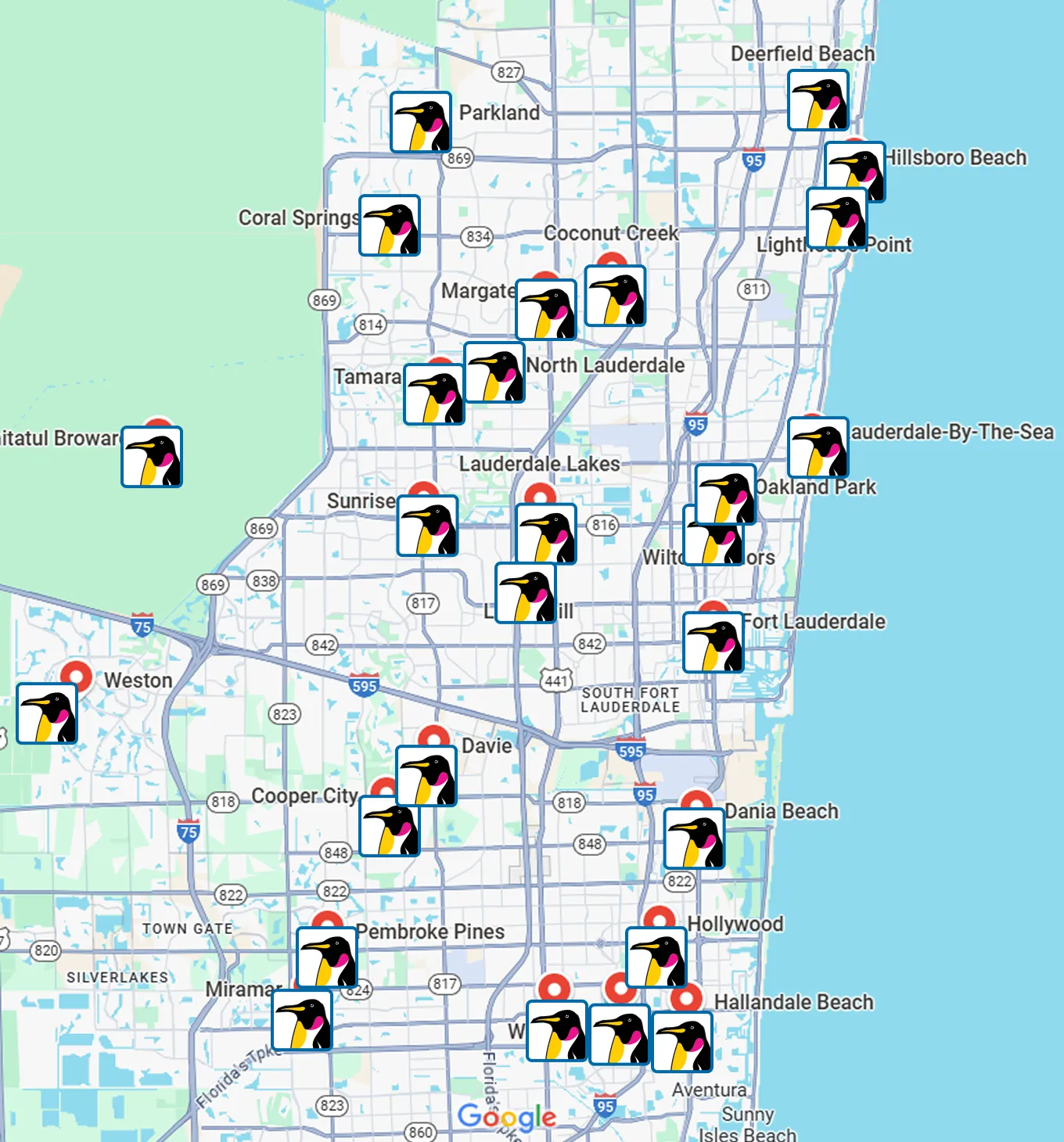
SERVICE AREAS